You're changing a dressing for the third time this week, or pulling off your shoes at night to find deep sock marks and legs that feel heavy despite a normal day. It's easy to call that aging, standing too long, or poor sleep. Sometimes it is. Sometimes it's venous reflux, where damaged valves let blood fall backward and pool in your lower legs instead of returning cleanly to your heart.
Knowing when to see a vein specialist comes down to pattern, persistence, and skin or wound changes, not appearance alone. The signs below are ranked by urgency, with a concrete first action for each. Same day means seek urgent or emergency assessment today. Within days means call promptly and don't let it drift for weeks. Routine means book an evaluation, track symptoms meanwhile, and escalate if the picture changes.
Table of Contents
- 1. Leg or Ankle Wound That Is Not Healing (Venous Leg Ulcer)
- 2. Persistent Leg Swelling That Does Not Fully Resolve
- 3. Aching, Heaviness, Cramping, or Restless Legs with Visible Varicose Veins
- 4. Skin Changes From Venous Disease Including Discoloration, Dermatitis, and Hardening
- 5. Painful, Red, or Hard Cord Along a Vein (Superficial Thrombophlebitis)
- 6. Bleeding From a Varicose Vein or Venous Wound
- 7. Slow or Stalled Healing After Surgery, Trauma, or in Diabetic Leg and Foot Wounds
- How each red flag compares on urgency, warning sign, and next step
- Next Steps Before a Small Problem Becomes a Wound
1. Leg or Ankle Wound That Is Not Healing (Venous Leg Ulcer)
Urgency: within days, and same day if infection signs appear. An open sore near the ankle that keeps weeping, crusting, and reopening isn't usually a dressing problem. With chronic venous insufficiency, blood pools under pressure, fluid and blood products leak into tissue, and the skin gets too little effective circulation to close and stay closed.
The NICE varicose veins guidance defines a venous leg ulcer as a break in the skin below the knee that has not healed within 2 weeks, and it recommends referral for both active and healed venous ulcers. That last point matters. A sore that finally closed last month can still signal reflux that will reopen it.
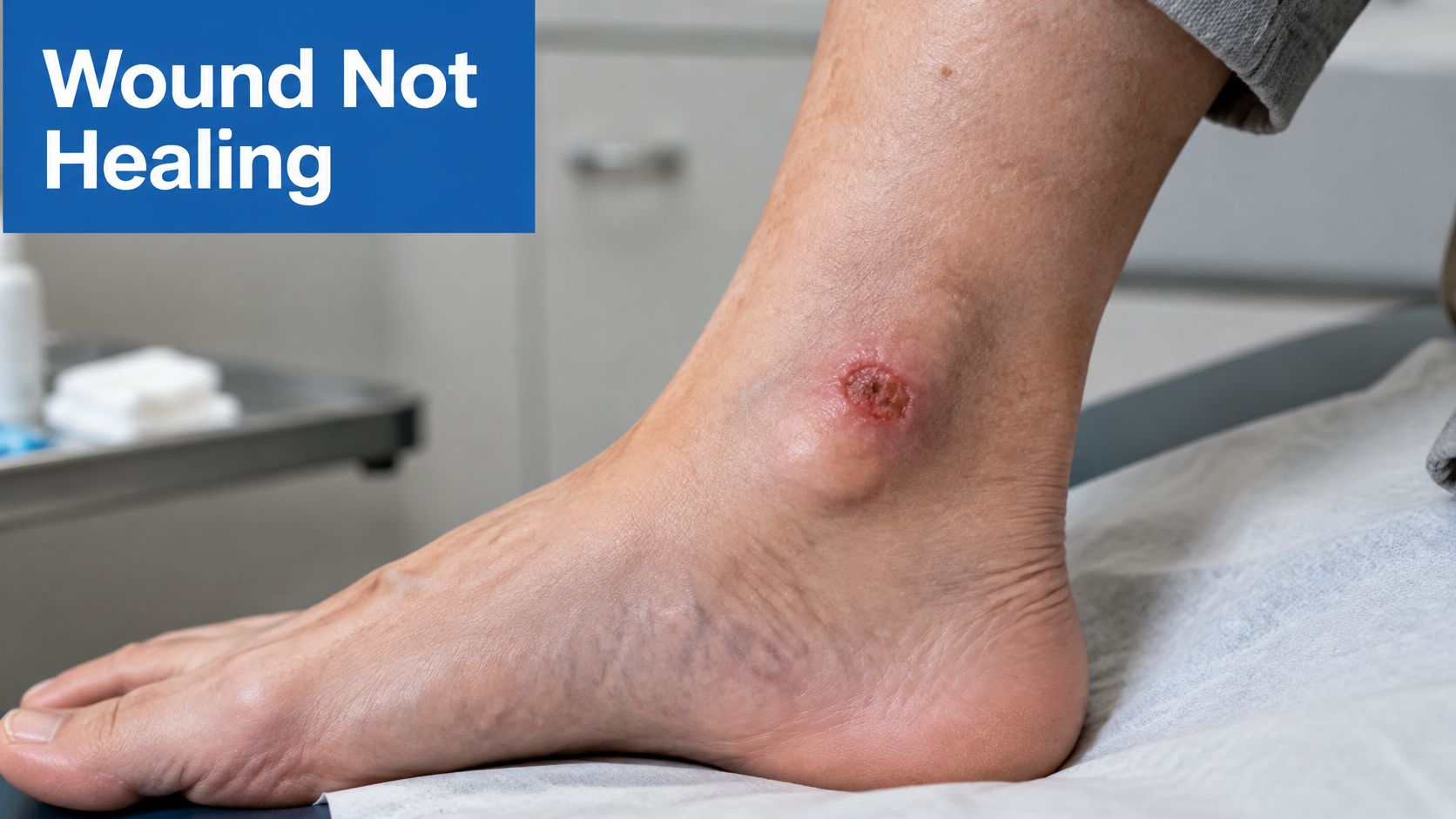
Say a shallow scrape above your inner ankle looks smaller one week, then stalls, then drains onto the dressing again. That plateau is your cue. Read more in this guide to what causes leg ulcers and how they're treated, and ask specifically about venous testing rather than accepting another round of dressings alone.
What to do first
Don't start or tighten compression bandages until arterial circulation has been checked. Compression helps venous wounds, but it can harm a leg that also has poor arterial inflow, so your clinician may check pulses and ankle pressures first.
- Measure and photograph weekly: Use the same lighting and angle so you can show whether the wound is shrinking or stalled.
- Log warning changes: Note increasing drainage, odor, warmth, spreading redness, pain, or fever.
- Ask about duplex ultrasound: A scan can locate reflux that's feeding pressure into the wound area.
Increasing pain, fever, red streaks, or a wound that suddenly smells stronger moves this to same day care.
2. Persistent Leg Swelling That Does Not Fully Resolve
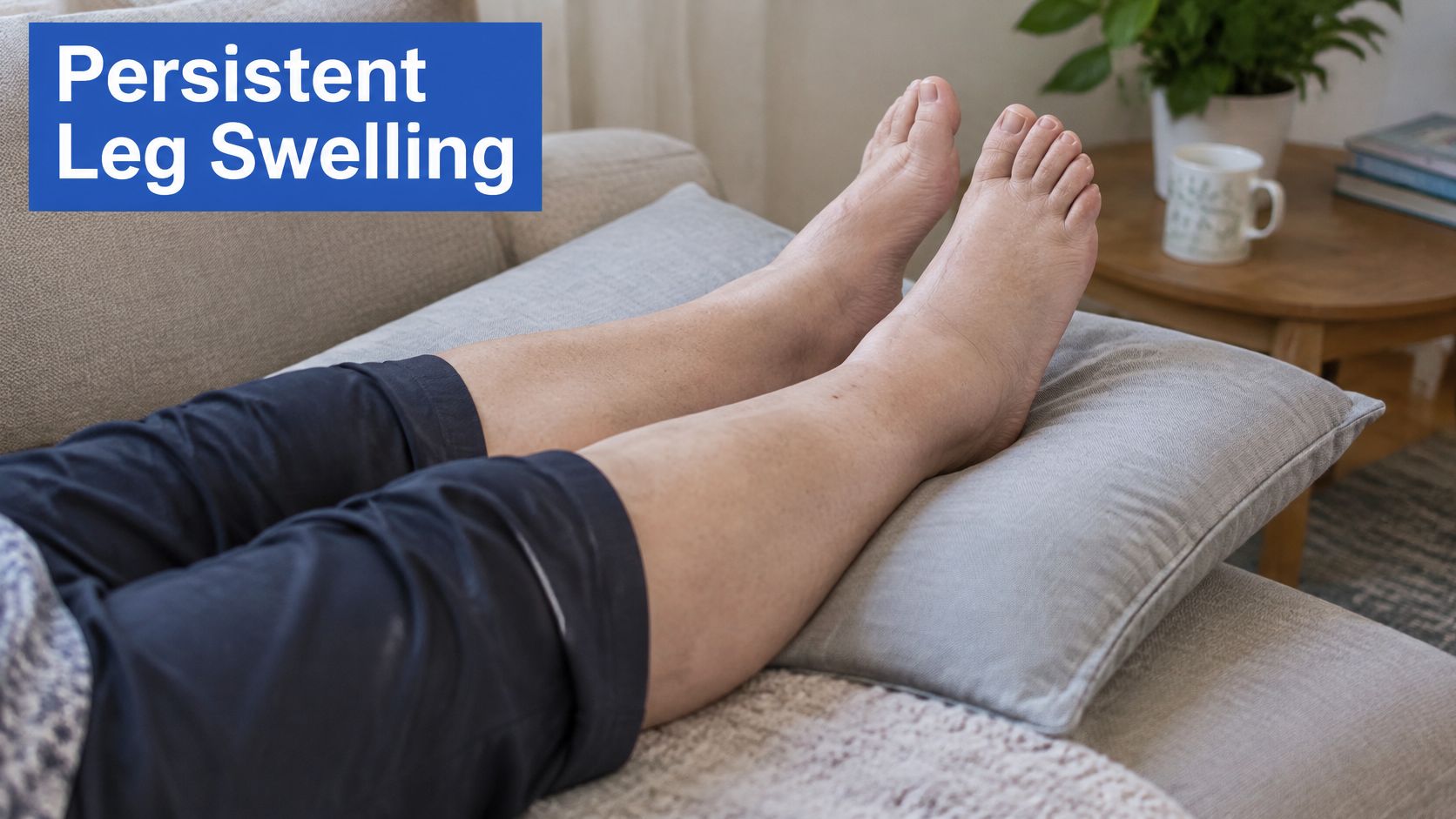
Does your ankle look normal at breakfast and tight by dinner? Urgency: routine to within days for persistent swelling, same day for sudden one-sided swelling. Vein-related swelling usually builds through the day, eases overnight or with elevation, and slowly stops resolving fully as venous pressure stays high.
The pattern helps separate causes. Both legs swelling with breathlessness, chest discomfort, or unusual fatigue needs prompt medical review for heart, kidney, or medication causes. Sudden swelling in one leg only, with pain, warmth, or redness, needs same day care to rule out a deep vein thrombosis, a clot in a deep vein.
Compare morning to evening, and left to right
An ankle that resets overnight behaves differently from one that stays puffy around the clock. Write down whether your ankles look near normal on waking, whether elevation helps, and whether one side is consistently larger than the other. That record is more useful than just saying your legs swell. This overview of whether leg swelling signals a vein disorder can help you describe what you're seeing before the visit.
Practical rule: Swelling that no longer clears overnight is progression, not something to keep watching indefinitely.
Raise your legs above heart level several times a day and walk regularly if you can do so safely, since calf muscle movement helps push venous blood upward. If you're researching support garments, this guide to choosing a compression sleeve for recovery covers fit basics. Compression can ease symptoms while you wait for an appointment, but it works best once a clinician has identified what is driving the swelling.
An ankle that starts each morning normal, turns tight by afternoon every workday, and leaves a shoe fitting differently on that side calls for a routine vein evaluation unless the change is sudden or painful.
3. Aching, Heaviness, Cramping, or Restless Legs with Visible Varicose Veins
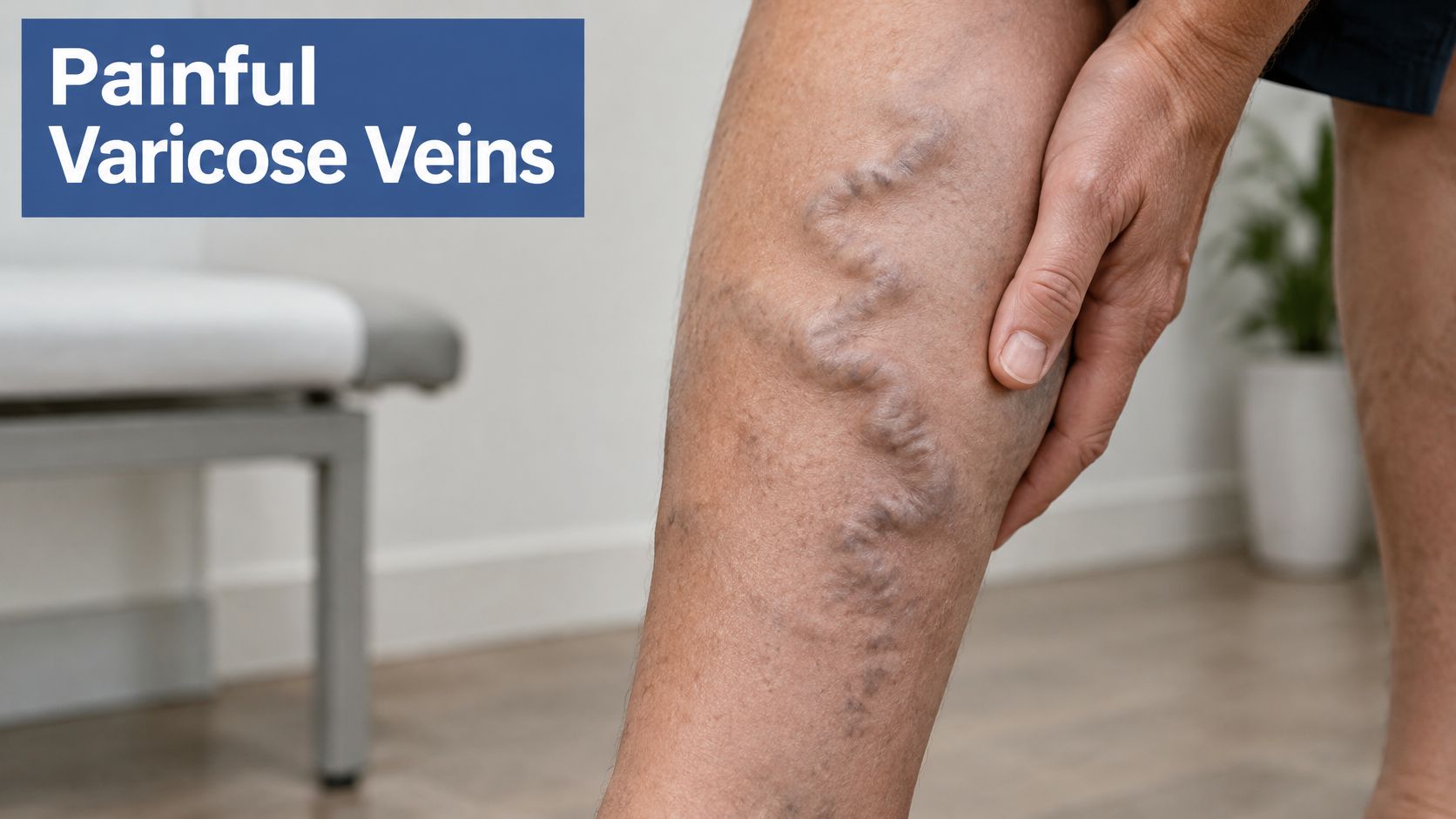
Do modest-looking veins still need a visit? Urgency: routine, sooner if symptoms limit work, walking, or sleep. First action: book a vein consultation with duplex ultrasound within the next few weeks. Bulging, twisted blue or purple veins paired with aching, heaviness, burning, throbbing, or night cramping are the classic presentation of varicose veins. Faulty valves in superficial veins, often the great saphenous vein, let blood reflux downward and raise pressure in the branches you can see.
Pain and heaviness are referral-level symptoms even when the veins look mild. Symptoms often build after prolonged standing or sitting and ease with walking or elevation; if aching, cramps, restlessness, swelling, or itching keep returning despite those measures, an evaluation can show whether reflux is driving them.
Build a record your clinician can use
Keep a simple symptom diary covering pain, heaviness, swelling, cramps, sleep disruption, and what relieves them. Add work demands and the time symptoms peak, because a cashier who stands through a shift and a driver who sits for hours can have the same reflux with different triggers.
- Compression if recommended: wear it during the day and raise your legs in the evening.
- Movement: walking and calf exercises can ease symptoms, though they cannot repair a failed valve.
- Function: note if you cut walks short, wake with cramps, or keep shifting your legs in bed.
Book before the veins look worse. The veins visible at the surface are not always the source of the problem, so ultrasound guides the plan. Persistent symptoms can justify discussing minimally invasive treatment when compression, elevation, and activity changes have not given enough relief.
4. Skin Changes From Venous Disease Including Discoloration, Dermatitis, and Hardening
Skin changes are the longer-term record of venous pressure. Urgency: within days to a few weeks, and promptly if the skin breaks. Chronic venous pressure can leave brown or reddish staining from blood pigment, itchy scaly stasis dermatitis, firm thickened skin that narrows the lower leg, and pale shiny scar-like spots.
Pigmentation and eczema from chronic venous insufficiency justify specialist referral because fragile, inflamed skin sits closer to ulceration. Cream can calm the surface while reflux continues, which is why improvement may be brief and relapse common unless the vein problem is assessed too.
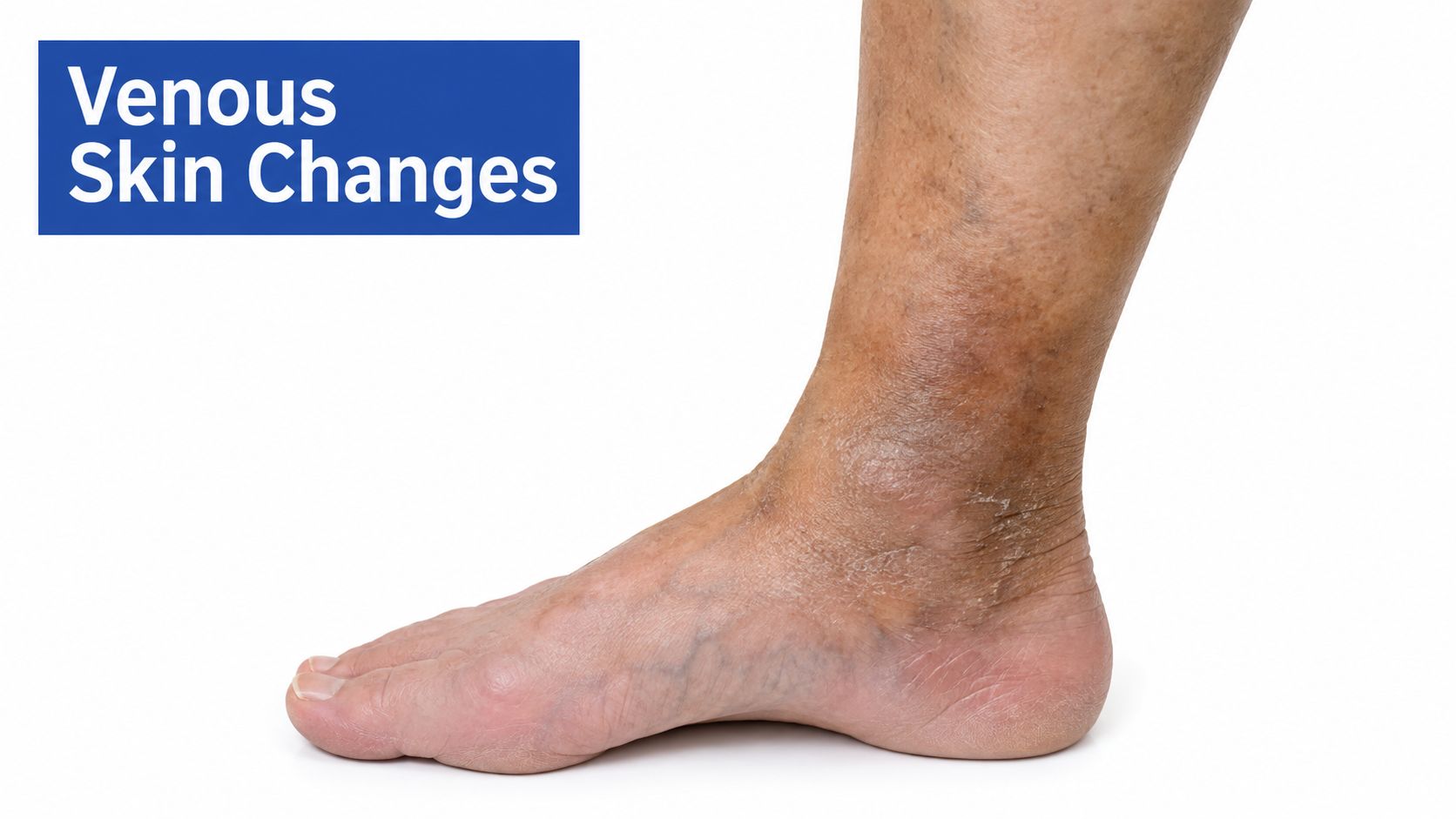
When brown staining spreads above the ankle and the skin feels woody compared with last year, arrange a prompt appointment and ask for a monitoring plan. First action: protect the skin today, photograph the change, and have both the skin and underlying veins examined.
Protect skin while you arrange assessment
Use fragrance free emollients to reduce dryness and cracking, and avoid scratching even when itching is intense. A small scratch over pressurized, thinned skin can become the opening that turns into an ulcer. Photograph the area at each visit so subtle spread or darkening isn't missed.
Itchy, brown, hardened ankle skin is a circulation clue first and a skin cream problem second.
If compression is part of your plan, these compression options for varicose veins explain common formats, with fit and strength set by clinical advice. Call sooner for any crack, blister, weeping area, or sore, because broken skin changes the timeline from routine referral to prompt wound assessment.
5. Painful, Red, or Hard Cord Along a Vein (Superficial Thrombophlebitis)
Urgency: within days at the latest, same day if redness spreads or swelling builds. A tender, warm, red, cord like lump following the line of a vein usually means superficial thrombophlebitis, inflammation with clotting in a surface vein. It frequently develops in a varicose vein on the thigh or calf.
The clinical question is whether the clot stays in the surface system or reaches toward the deep veins. A hard, painful superficial vein can signal superficial vein thrombosis alongside venous incompetence, and some clots extend toward or into deep veins, where the risks rise sharply. Location and length determine management, so the scan is not optional.
Why ultrasound changes the decision
The NICE quality standard for varicose veins in the legs states that referred patients should have duplex ultrasound to confirm venous disease, define the location and extent of truncal reflux, identify abnormal valve function, and plan intervention. For a painful cord, that scan also maps clot extent and separates reflux driven problems from other causes of leg pain or swelling.
Don't massage the painful area. Warm compresses and walking as tolerated may ease discomfort while you wait to be seen, and neither replaces assessment. Tell the clinician about recent travel, immobility, pregnancy, hormone use, prior clots, and cancer treatment, since those details affect risk.
Seek emergency care for new whole leg swelling, chest pain, sudden breathlessness, or coughing up blood. If the cord is visibly longer or more tender than it was a day ago, call today, describe the change, and ask whether you need urgent duplex imaging and medication to prevent extension.
6. Bleeding From a Varicose Vein or Venous Wound
Urgency: same day. Heavy or uncontrolled bleeding is an emergency. Towel drying, a minor bump, scratching in the shower, or catching a thin-skinned ankle vein on bedding can open it and produce brisk bleeding. Venous pressure makes the flow look dramatic, so treat it as significant until it is controlled.
Lie down, raise the leg above heart level, and apply firm direct pressure with a clean cloth. Keep steady pressure on the cloth and keep the leg raised while help is arranged. Lowering the leg raises venous pressure again and can restart bleeding that seemed controlled.
After the bleeding stops
Book a specialist evaluation even after one episode. A vein consultation with duplex ultrasound can show where reflux is coming from and which treatment fits the vein, the skin, and any nearby ulcer. Keep a clean dressing within reach, and tell every clinician involved in your care that a vein has bled before.
- Call emergency services: heavy bleeding, bleeding that continues despite pressure and elevation, faintness, or shortness of breath.
- Skip tight improvisations: firm pressure at the site is the goal; tight clothing or a makeshift tourniquet around the leg can cause harm.
- Document the trigger: trauma, scratching, bathing, or no obvious injury.
Fragile veins that bleed once often bleed again. If episodes repeat, ask about treating the source vein and checking the surrounding skin for ulceration.
7. Slow or Stalled Healing After Surgery, Trauma, or in Diabetic Leg and Foot Wounds
Urgency: within days if healing has stalled, same day for spreading infection or new tissue breakdown. Stalled healing after surgery often has a circulation cause. A surgical incision, injury, or diabetic foot wound that stops progressing may have a blood flow problem underneath, and diabetes can combine nerve damage, arterial disease, venous insufficiency, pressure, and infection, so one label rarely explains the whole wound.
Venous congestion can also impair oxygen delivery after trauma or surgery. Ask whether blood is reaching the tissue, whether venous fluid is draining, and whether pressure or infection is undoing progress between visits.
Bring the full healing context
Read this explanation of why diabetes slows wound healing, including its causes, signs, and treatment before your visit, then bring your medication list, prior surgeries, previous wound treatments, and glucose records if you have diabetes. That history helps your clinician avoid repeating a plan that has already stalled.
- Inspect daily: Check feet and legs for blisters, redness, drainage, or new breaks, using a mirror or help if needed.
- Protect the area: Wear suitable footwear and avoid walking barefoot if you have reduced sensation.
- Control glucose: High blood sugar impairs healing and infection control, so coordinate wound care with diabetes care.
A post-surgical calf wound that closes at the edges, then stalls while the leg stays swollen by evening, points toward a drainage problem rather than a dressing problem. Assessment may include duplex ultrasound, arterial checks, debridement, advanced dressings, or other wound therapy depending on findings. I recommend asking directly what is preventing progress and who owns follow up if the wound has not improved by the next review.
How each red flag compares on urgency, warning sign, and next step
Seven red flags, three levels of urgency. Read this table as a triage tool: find the row that matches your symptom, check the sign that would push it to a faster response, then follow the first step in the last column. The middle tier is where people most often wait too long, because treatable vein problems get mistaken for something that can wait.
| Red flag | Urgency | Sign that raises the level | First step and who to call |
|---|---|---|---|
| Leg or ankle wound that is not healing (venous leg ulcer) | Evaluation within days; same-day for infection signs | No healing progress by two weeks, or fever, spreading redness, pus, or foul odor | Call a wound or vein clinic; ask for a circulation check before compression starts |
| Persistent leg swelling that does not fully resolve | Routine if gradual and in both legs | Sudden one-sided swelling with pain, warmth, or redness, or chest and breathing symptoms | Emergency care for sudden one-sided swelling or breathing symptoms; a vein or primary care visit for gradual swelling |
| Aching, heaviness, cramping, or restless legs with visible varicose veins | Routine booking | Bleeding, skin breakdown, or sudden pain and swelling | Schedule a vein evaluation and describe how symptoms limit your day |
| Skin changes from venous disease: discoloration, dermatitis, and hardening | Within a few weeks; sooner if skin cracks or weeps | Cracked, weeping, or painful skin on the lower leg | Vein specialist; ask whether the skin change points to venous reflux |
| Painful, red, or hard cord along a vein (superficial thrombophlebitis) | Same-day or next-day evaluation | Breathing symptoms or sudden severe swelling | Urgent care or a vein clinic for evaluation and ultrasound; do not massage the cord |
| Bleeding from a varicose vein or venous wound | Emergency while bleeding continues; specialist follow-up after any episode | Bleeding that is heavy, will not stop, or causes faintness or shortness of breath | Raise the leg and press firmly on the bleeding point; call emergency services if it persists |
| Slow or stalled healing after surgery, trauma, or in diabetic leg and foot wounds | Evaluation within days; urgent for infection signs or foot color change | No healing progress by two weeks, spreading redness, fever, drainage, or a change in foot color | Wound clinic; ask for both arterial and venous assessment |
Three tiers cover every row. Emergency care is for breathing symptoms, bleeding that does not stop, and sudden one-sided swelling. Evaluation within days fits infection signs, a wound that is not healing, a tender cord, or skin that has cracked. Routine booking covers gradual swelling, aching legs, and early discoloration. If you are torn between two rows, follow the faster one.
Next Steps Before a Small Problem Becomes a Wound
If one of these signs matches your legs, don't wait for it to become unmistakable. Book a consultation, bring a symptom log and medication list, and include photos of skin or wound changes. Wear clothing that lets the clinician examine your legs standing and lying down, and be ready to describe when symptoms are worst, what relieves them, and whether you've had clots, bleeding, ulcers, surgery, or previous vein treatment.
Access can be part of the problem. A 2025 qualitative study in the International Wound Journal found referral delays linked to short appointments, limited equipment and staffing, insufficient training, organizational restrictions, and rules preventing nurses from referring directly to specialist services, even though venous leg ulcer guidance recommends vascular assessment within two weeks. If you're told to keep dressing a wound but no one has checked circulation, ask who will assess arterial supply and venous reflux, who owns follow up, and what change triggers escalation.
What a useful first evaluation includes
At Vein and Wound Institute, we bring vein care and wound management together under one roof. Our treatment plan is based on the source of the problem, not only on veins visible at the surface. A consultation and duplex ultrasound help identify where abnormal reflux is occurring, and recommendations are personalized to your condition and goals.
- Ask which veins are leaking: Confirm whether deep veins are healthy and where reflux starts.
- Ask what happens if you wait: Get a plain answer about skin damage, ulcer risk, bleeding, or clot risk.
- Ask why a treatment fits: Choice of procedure depends on vein size and location, ultrasound findings, symptoms, and overall vascular health.
Good wound hygiene also matters between visits, including clean hands, clean dressings, and watching for infection. This outdoor first aid hygiene guide is a useful general refresher, but it doesn't replace circulation assessment. A minimally invasive procedure may be considered when venous disease causes persistent symptoms or when compression, elevation, and activity changes don't provide enough relief. The right next step is an evaluated plan, not more months of wondering whether heavy, aching, discolored legs are normal for you.
If you're deciding when to see a vein specialist, Vein and Wound Institute offers integrated evaluation with duplex ultrasound, minimally invasive vein treatment, and advanced wound care for venous ulcers, diabetic wounds, swelling, and non healing leg wounds. Our team builds your plan around the source of reflux and the condition of your skin and wound, then follows healing and circulation over time. Visit Vein and Wound Institute to learn about care options and arrange an evaluation.