Ambulatory Phlebectomy
A minimally invasive outpatient procedure for removing visible varicose veins through tiny skin openings.
Ambulatory phlebectomy, also known as microphlebectomy, is used to remove bulging varicose veins located close to the skin's surface. The procedure is performed in the office using local anesthesia and very small incisions that typically do not require stitches.
Request an Appointment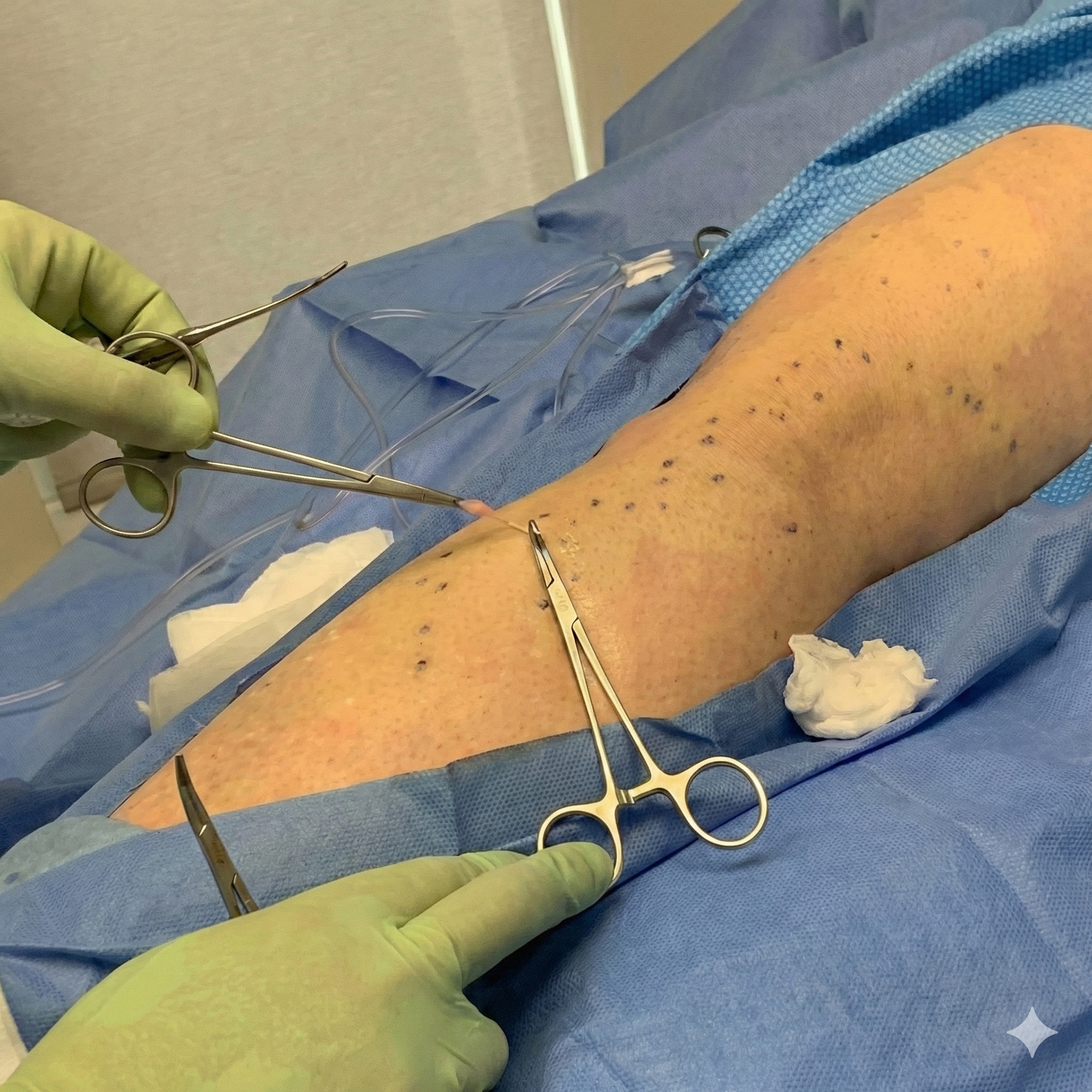
For Bulging, Surface Varicose Veins
Ambulatory phlebectomy is generally used for visible varicose veins that sit near the skin's surface, especially when they are prominent, uncomfortable or remain after treatment of underlying venous reflux.
How Ambulatory Phlebectomy Works
The process is designed to precisely remove targeted varicose veins while minimizing tissue disruption and downtime.
Marking the Veins
Because bulging varicose veins are most visible while standing, the physician marks their exact path before you lie down for the procedure. Visual inspection, palpation and transillumination may be used to guide marking.
Local Anesthesia
The treatment area is cleaned and prepared. Local anesthetic is injected around the marked veins to numb the skin and vein before removal begins.
Vein Removal
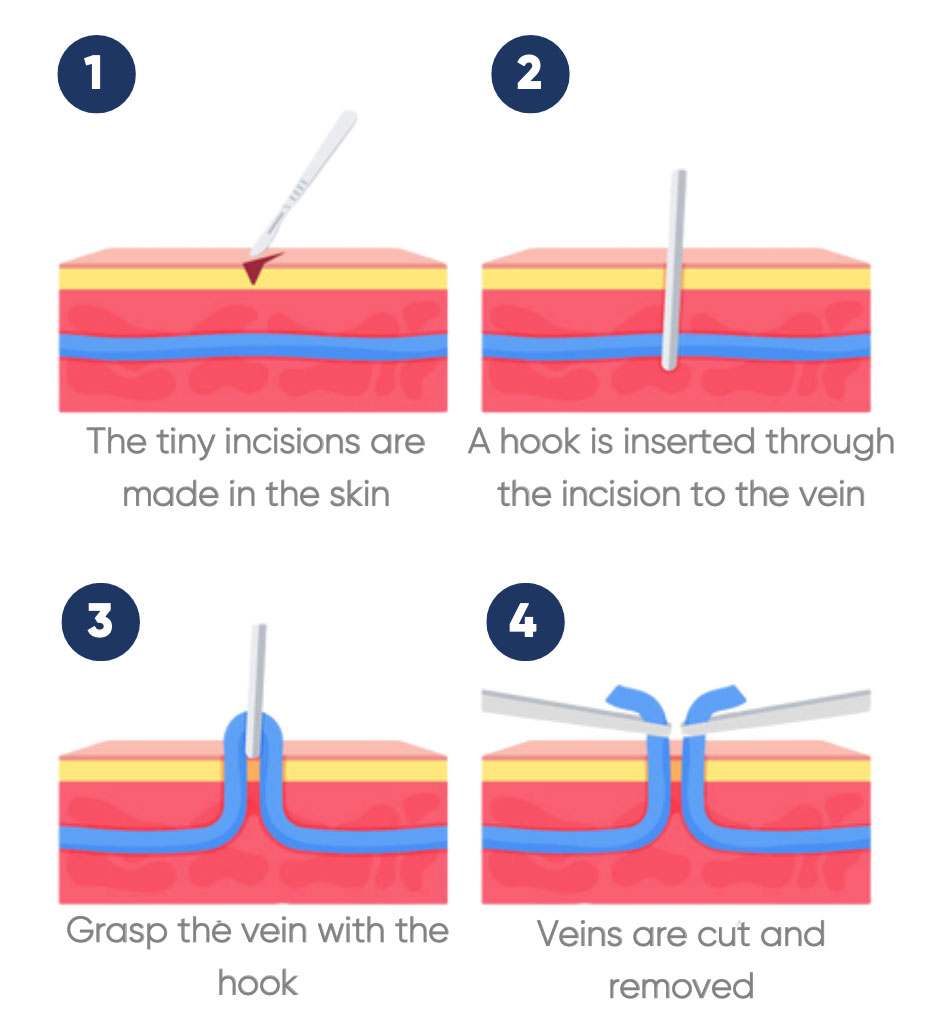
Tiny 2–3 mm openings are made over the marked vein. A delicate hook-like instrument is used to bring the vein to the surface and remove it in small segments.
Closing the Openings
The skin openings are typically so small that stitches are not needed. Adhesive strips are usually sufficient and can often be removed after a few days.
Targeted Removal With Minimal Downtime
Because ambulatory phlebectomy focuses on surface varicose veins through very small openings, it can provide a direct way to remove prominent veins without traditional vein stripping surgery.
A Focused Alternative to Traditional Vein Surgery
Tiny Incisions
The treatment uses micro-incisions rather than a traditional surgical incision.
No Stitches in Most Cases
The openings are typically small enough to close with adhesive strips.
Office-Based Treatment
The procedure is commonly performed in the office under local anesthesia.
Direct Vein Removal
Bulging surface varicose veins are physically removed rather than simply collapsed.
What Patients Often Ask About Ambulatory Phlebectomy
What is ambulatory phlebectomy?
Ambulatory phlebectomy, also called microphlebectomy, is a minimally invasive procedure used to remove visible varicose veins through very small openings in the skin.
Is ambulatory phlebectomy painful?
The treatment area is numbed with local anesthesia. Most patients experience little discomfort during the procedure, although the numbing injections may briefly sting.
Will I need stitches?
Usually not. The openings are typically only 2–3 mm, so adhesive strips are often enough to close them.
Can phlebectomy be combined with other vein treatments?
Yes. Ambulatory phlebectomy is sometimes performed after treatment of underlying venous reflux, depending on your anatomy and treatment plan.
What is recovery like?
Most patients can walk shortly after treatment and return to light daily activities quickly. Your provider will give you specific instructions regarding compression, activity and follow-up care.
Will the removed veins come back?
The veins that are physically removed do not grow back, but new varicose veins can develop over time if underlying venous disease progresses.