
Quick Answer
- Leg ulcers are open wounds that often form on the lower legs and can be slow to heal.
- Poor circulation is one of the most common reasons for leg ulcers.
- Signs and symptoms include discomfort , swelling , skin discolouration , and outflow of fluid .
- Proper leg ulcer treatment and early detection might assist to prevent complications.
- Good wound care helps the wound heal faster and reduces the chances of the ulcer coming back.
Leg ulcers are not like little cuts or scratches that heal fast. They can stay open for weeks or months if left untreated.
Most individuals assume it is a minor skin ailment and disregard the early indications of a leg ulcer. But delay in treatment increases the chance of infection and other problems, especially in people with slow-healing wounds. Leg ulcers: origins and treatment Understanding the origins and treatment of leg ulcers can help people seek medical attention early and improve their chances of effective healing.
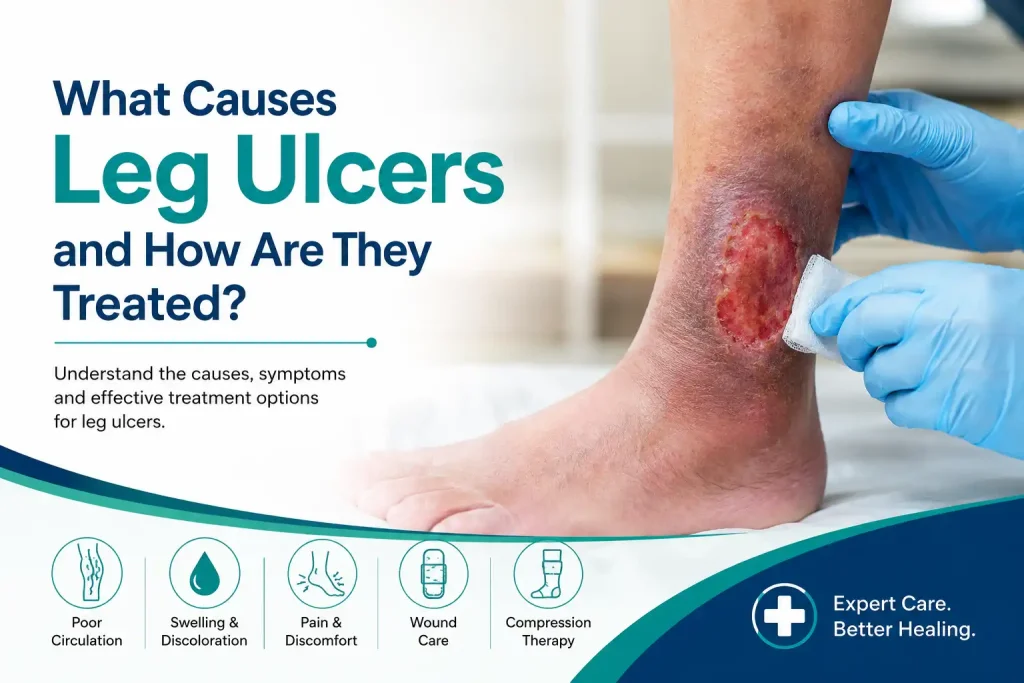
What is Venous Ulcer?
Leg ulcers are chronic wounds that arise when the skin breaks down and does not heal properly. The most common sites are the lower leg, especially around the ankle.
Soon the healthy body will mend the damaged skin. But if there is a disease that can impede blood flow or wound healing, the wound may stay open and become chronic. Leg ulcers are often associated with poor circulation and venous insufficiency and other health conditions that slow recovery.
What produces leg ulcers?
Leg ulcers can be caused by a number of factors, but most usually they are caused by poor blood flow in the legs.
Poor blood circulation
Poor circulation means less oxygen and nutrients reach the skin and the tissues around it. Small injuries can take longer to heal and can develop to leg ulcers if the blood flow isn’t enough.
Incapable Veins
Chronic venous insufficiency is a highly common cause of leg ulceration. This is when the veins in the legs are trying to get the blood back to the heart. Blood collects in the lower legs and puts pressure on the veins, making it more likely that the skin will be damaged and an ulcer will occur.
2. Diabetes.
If you have diabetes, you may be more susceptible to leg ulcers. This is because high sugar levels in the blood can affect blood flow and nerve activity. Small cuts go unseen, eventually getting worse over time.
Injury / Trauma
Sometimes cuts, scratches, burns or other injuries can develop into ulcers, especially if the lesion does not heal properly or is infected.
Infectious
If the wound is not treated it can get infected which slows down the healing process. Infections can lead to additional tissue damage and slower recovery.
Leg ulcer symptoms are frequent.
Prompt recognition of the symptoms may help to avoid complications and improve the treatment outcome.
Open Wounds
The most evident sign is a wound that does not heal, not healing in a normal time frame. The ulcer might be shallow or deep depending on how bad it is.
Swollen Legs
Many people with leg ulcers develop oedema around the time of the ulcer. Swelling may be significant after you stand or sit for long periods of time.
Color Change in Skin
The skin around a leg ulcer may be red, brown, purple or a darker colour than the surrounding skin. “Skin texture changes may also be seen.
Discomfort and pain
Some leg ulcers are merely slightly unpleasant, some might be very serious. You may feel worse when you are standing or walking.
Liquid Drainage
Ulcers may ooze a clear or yellowish fluid. Drainage can be foul smelling at times especially with infection.
Treatment for leg ulcers
Management of leg ulcers involves identifying and treating the underlying cause. The right ulcer treatment on leg depends on the underlying cause, severity of the wound, and the patient’s overall circulation.
Wound management
Proper wound care is one of the most important aspects of treatment. Cleaning the wound, debriding dead tissue when necessary and using the correct dressings can all assist in creating an optimal healing environment.
Compression Therapy
Compression therapy is a common treatment for venous insufficiency leg ulcers. Compression bandages or stockings decrease blood flow and edema of the legs.
Several new treatment for leg ulcers options are now available, including advanced wound dressings, compression therapy, and minimally invasive vein procedures.
Infection Control
If there is an infection, medical care may be needed to control it. Treatment of the infection may help to reduce inflammation and allow healing to take place.
Increase Circulation
Poor blood flow is a common cause of leg ulcers, so therapy often involves ways to improve circulation. Treatment of the underlying venous issues may help prevent recurrence of ulcers.
Improving blood flow is an important part of leg ulceration treatment and may help reduce the risk of recurrence.
Life Evolves
Easy lifestyle changes can help recovery and overall health of the leg. You may boost your circulation and your recovery by moving often, keeping a healthy weight, raising your legs when possible and following your doctor’s instructions.
Can Leg Ulcers Be Prevented?
Some leg ulcers can’t be prevented, but there are things you can do that may help reduce your risk.
maintain blood circulation good, treat wounds quickly, exercise and control chronic conditions to maintain your skin healthy. People with circulation problems should be aware of changes in their legs and see a doctor if they have a wound that is not healing well.
Summary
Leg ulcers are a common type of chronic wound that is caused by poor circulation, venous insufficiency, diabetes, trauma or infection. Early detection and suitable treatment is vital since they may take a long time to recover.
Learning about what causes leg ulcers and the symptoms can help people obtain treatment before issues occur. “Many leg ulcers can be successfully healed with proper wound care, compression therapy, infection control and improved circulation, and the risk of recurrence can be reduced.
FAQs
[sp_easyaccordion id=”18131″]