
Ultrasound Guided Foam Sclerotherapy
A minimally invasive, catheter-based treatment for unhealthy veins without thermal energy.
Ultrasound Guided Foam Sclerotherapy® is a specialized vein treatment that combines mechanical disruption of the vein wall with controlled delivery of a sclerosant solution. A thin catheter with a rotating wire tip is positioned inside the targeted vein to help close the vessel and redirect blood through healthier veins.
Request an Appointment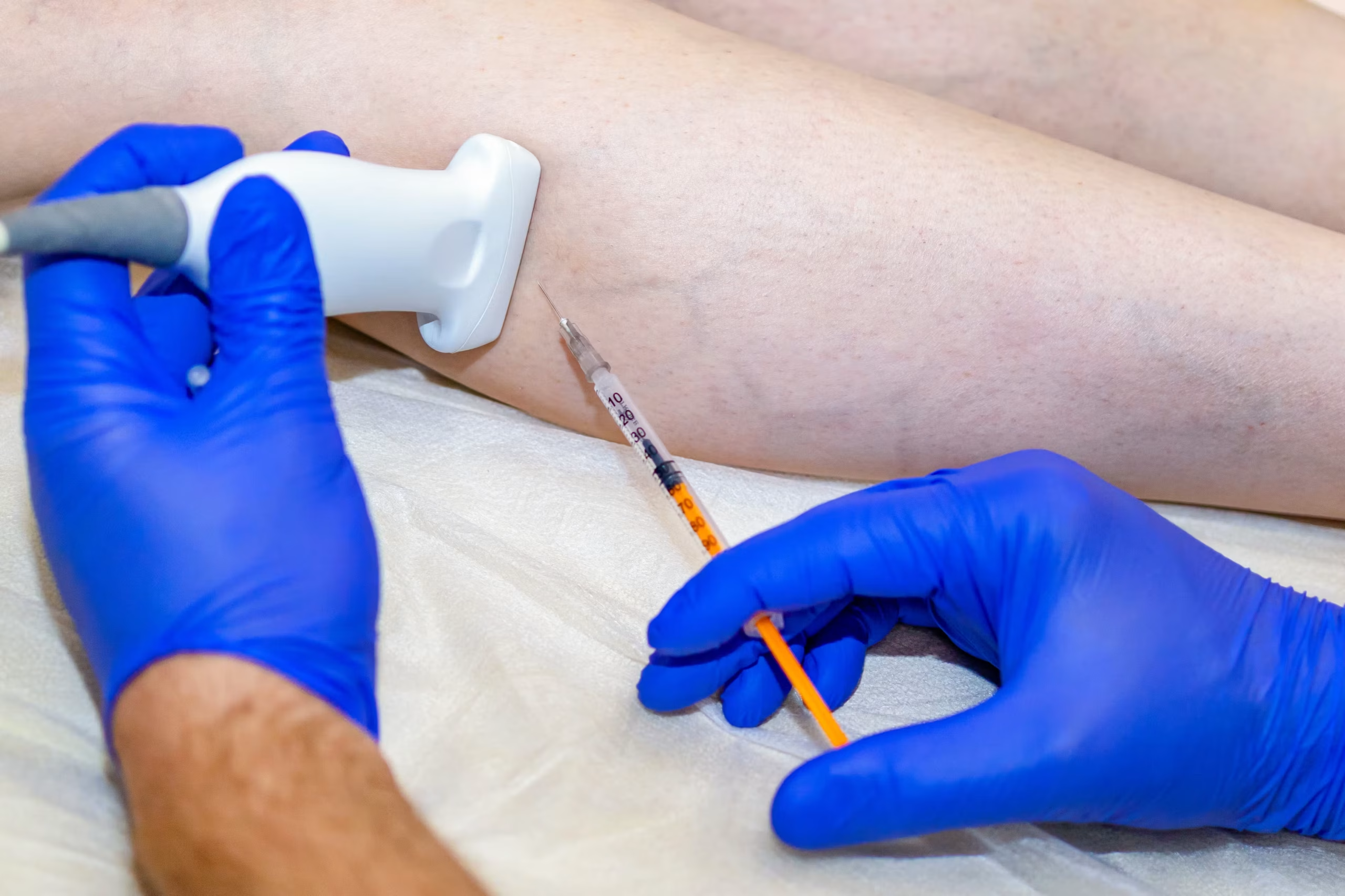
How Ultrasound Guided Foam Sclerotherapy Works
Ultrasound Guided Foam Sclerotherapy uses a rotating wire inside the vein while sclerosant is dispersed around the treatment area. This dual-action approach irritates the inner vein wall and helps the vein close, allowing blood to reroute through healthier vessels.
Duplex ultrasound is used to identify the unhealthy vein and guide treatment precisely.
A sclerosant medication is mixed into a foam so it can make better contact with the vein wall.
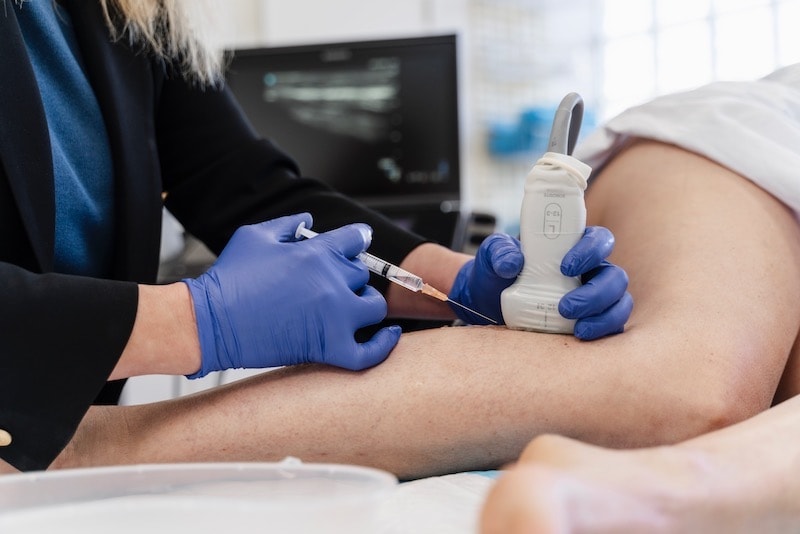
The foam is carefully injected into the affected vein while its movement is monitored with ultrasound.
The sclerosant irritates the vein lining, causing the treated vein to collapse and gradually fade as blood reroutes through healthier veins.
A Non-Invasive Approach To Treating Varicose Veins
Because Ultrasound Guided Foam Sclerotherapy does not rely on laser or radiofrequency heat, it typically does not require multiple injections of tumescent anesthesia along the length of the vein. This can make the treatment experience more comfortable for many patients.
When Foam Sclerotherapy May Help
Ultrasound Guided Foam Sclerotherapy may be considered for patients with certain types of symptomatic venous insufficiency or varicose veins. The right treatment depends on your vein anatomy, symptoms, ultrasound findings and overall health.
Benefits Of Ultrasound Guided Foam Sclerotherapy
Ultrasound Guided Foam Sclerotherapy offers another minimally invasive option for treating problem veins without using heat inside the vessel.
No Surgical Incision
Treatment is performed with targeted injections rather than traditional vein surgery.
Ultrasound Guided
Duplex ultrasound helps your provider visualize the vein and precisely guide treatment.
Treats Difficult Veins
Foam can travel through branching or winding veins that may be difficult to treat with some catheter-based techniques.
Office-Based Treatment
Ultrasound Guided Foam Sclerotherapy can be performed in an outpatient office setting with a relatively quick return to normal activity.
Frequently Asked Questions
What is ultrasound guided foam sclerotherapy?
Ultrasound guided foam sclerotherapy is a minimally invasive vein treatment in which a sclerosant medication is mixed into a foam and injected into an unhealthy vein under duplex ultrasound guidance. The medication irritates the vein lining so the vein collapses and is gradually absorbed by the body.
What conditions can foam sclerotherapy treat?
It is commonly used for varicose veins and smaller abnormal veins. Your provider will use an examination and ultrasound findings to determine whether it is appropriate for your specific vein condition.
Does foam sclerotherapy hurt?
Patients may feel small needle pricks or mild discomfort as the vein is injected. The procedure does not require a surgical incision.
How long does the treated vein take to disappear?
After treatment, the vein gradually closes and is absorbed by the body. The Vein & Wound Institute notes that this process can occur over the course of approximately six months.
Will I need compression stockings afterward?
Yes. Compression stockings are typically worn for at least one week after treatment, or longer depending on your provider's instructions.
How is ultrasound used during the procedure?
Duplex ultrasound allows the provider to visualize the targeted vein and monitor the treatment as the foam sclerosant is delivered.