
Roughly nine out of ten patients notice significant redundant skin after major weight loss, and the most reliable fix for true hanging skin remains surgical removal. Energy-based devices can help mild cases, but they can't reproduce the result of removing stretched tissue.
That reality can feel surprising after a successful weight-loss journey. You may expect your skin to follow your new shape automatically, then find that the abdomen, upper arms, thighs, breasts, or face still look soft, folded, or deflated. This isn't a failure of discipline, and it doesn't mean the weight loss was a mistake.
Loose skin after weight loss treatment is usually a structural response. The skin may have been stretched for a long time, and its supporting collagen and elastic fibers may no longer have enough strength to retract fully. Once you understand that distinction, treatment decisions become clearer. The question isn't only, "Which treatment tightens skin?" It's, "How much tissue is redundant, where is it located, what symptoms does it cause, and has my weight stabilized?"
Table of Contents
- Why Loose Skin After Weight Loss Treatment Happens
- The Tissue Changes That Make Skin Lose Elasticity
- Non-Surgical and Surgical Options Explained
- When to Start Treatment and How to Prepare
- Real Outcomes and Functional Impact
- GLP-1 Weight-Loss Drugs and Loose Skin Timing
- How to Decide What Is Right for You
Why Loose Skin After Weight Loss Treatment Happens
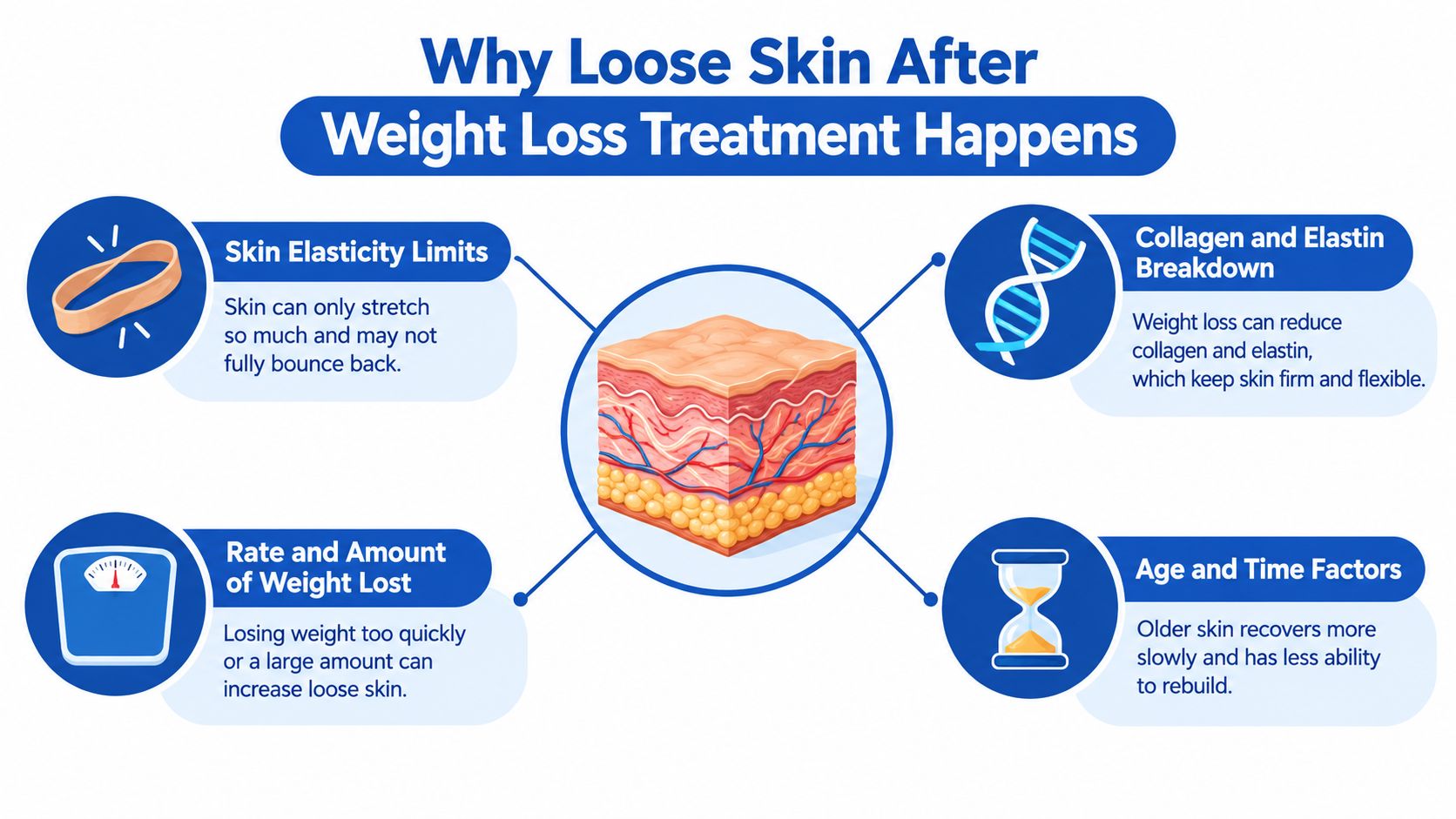
A prospective study of 200 patients after bariatric surgery found that, by 18 months, most still had measurable abdominal drooping of at least 3 cm, and 70% requested reconstructive abdominal surgery. The findings challenge the idea that skin will always “snap back” once fat has gone. (Prospective study of post-bariatric skin laxity)
Consider a patient who has lost substantial weight and now exercises comfortably. Their clothing fits better, blood sugar may be easier to manage, and daily movement feels less demanding. Yet when they stand, a fold of skin remains across the lower abdomen, rubs during walking, or traps moisture beneath it. The weight loss has changed the underlying volume, but the skin has not fully remodeled to match it.
That pattern is common after major weight reduction. An NIH-hosted review describes loose skin as a frequent result after massive weight loss, with one study of 64 post-bariatric patients finding that 89.2% developed sagging skin. In that group, the upper arms were affected in 50% of patients and the abdomen in 45%. (Review of redundant skin after massive weight loss)
Why some areas loosen more than others
The abdomen often shows the most obvious redundancy because it can hold a large amount of stretched tissue. The inner thighs may create friction, while the upper arms can develop a hanging fold that becomes noticeable with movement. Breasts, the lower back, and the neck respond differently because each area has its own combination of skin thickness, fat distribution, muscle support, and movement.
Age, genetics, smoking, sun exposure, pregnancy, repeated weight changes, and the length of time the skin stayed stretched can all influence recovery. They don't determine the outcome alone, but they help explain why two people with similar weight loss can have very different skin changes. The factors that affect tissue repair also matter, which is why clinicians consider broader health issues when evaluating healing readiness, including age and lifestyle factors in chronic wound healing.
The practical point is reassuring, even when the appearance isn't: loose skin is common, understandable, and treatable. Treatment should be selected according to the tissue response, not as a punishment for losing weight.
The Tissue Changes That Make Skin Lose Elasticity
Skin behaves less like a freshly stretched rubber band and more like fabric that has carried weight for a long time. It contains a supportive dermal framework made largely from collagen and elastic fibers. Collagen provides strength and structure, while elastic fibers help tissue return toward its previous shape after stretching.
After massive weight loss, histologic research has found that collagen is significantly thinner in both major layers of the dermis. The deeper reticular dermis also has lower collagen density, and elastic fibers show damage. (Histologic findings in post-bariatric skin)
Why exercise can't remove a hanging fold
Exercise can improve muscle tone, posture, strength, and the way the body carries itself. It may also improve the visual transition beneath mildly lax skin. What it can't do is dissolve or contract a large sheet of skin that has lost its structural recoil.
That distinction prevents a common source of frustration. A person may build stronger abdominal or arm muscles and still have a fold that drapes over the muscle. The improvement is real, but it occurs underneath the skin rather than by removing the redundant tissue itself.
The role of time and stretching
Skin that has been stretched for a long period may undergo a lasting change in its load-bearing matrix. The longer it remains under tension, and the more its collagen and elastic network are altered, the less likely it is to return completely to its former dimensions. This is why body weight alone doesn't predict the final result.
Someone with modest laxity may see gradual improvement in tone after weight stabilization, nutrition support, and resistance exercise. Someone with a pronounced overhang, deep folds, or thin, crepey tissue needs a different conversation. The biology may allow modest tightening, but it can't provide the same correction as removing the excess.
Practical rule: If the tissue hangs when you stand upright and remains when you contract the muscles underneath, assume that strengthening alone won't solve the problem.
This isn't about willpower. It is about the condition of the tissue. Marketing often treats collagen stimulation as if it can rebuild every stretched layer completely. In practice, collagen remodeling may improve firmness, but damaged elasticity and true redundancy can persist.
Non-Surgical and Surgical Options Explained
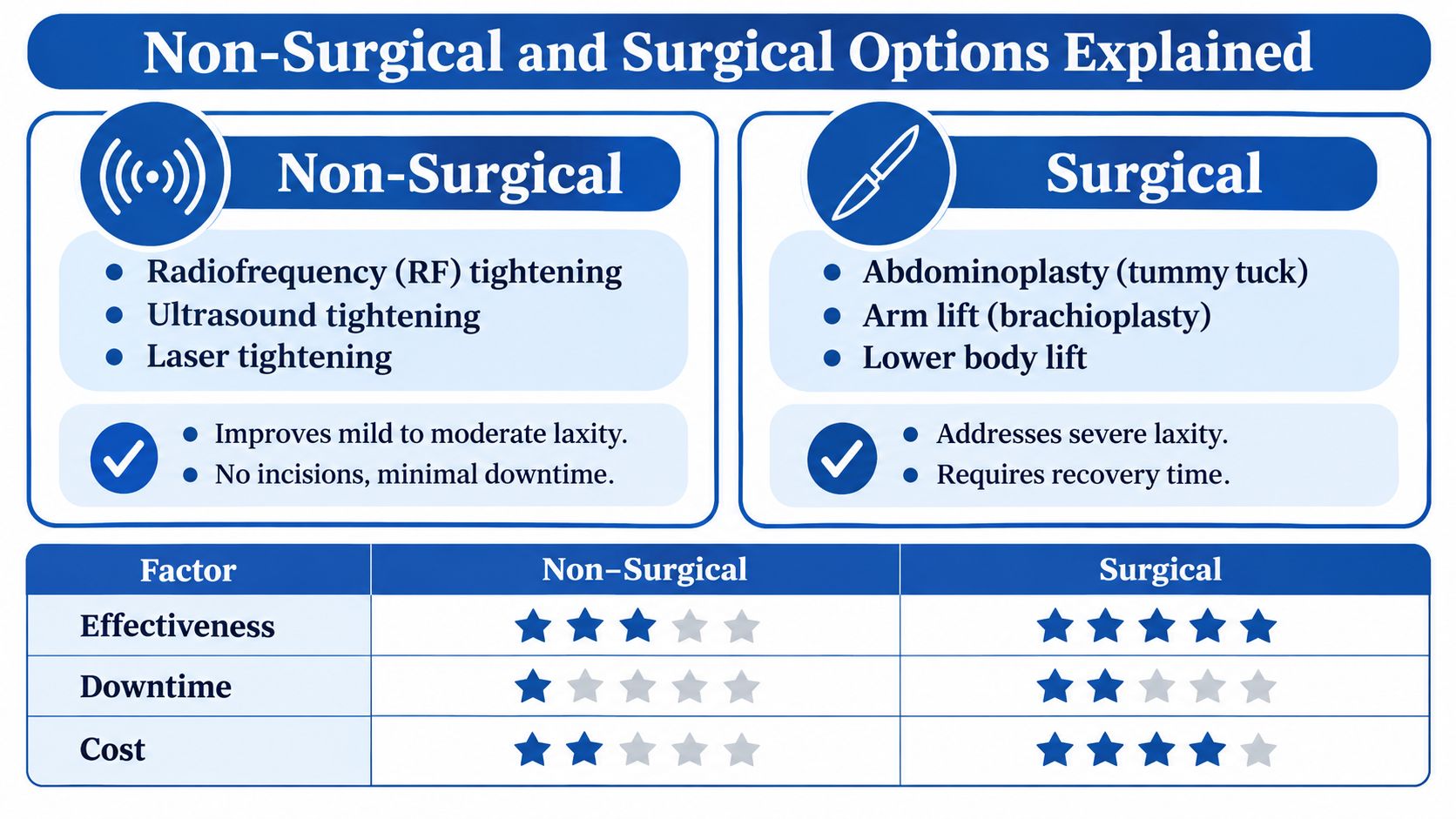
A folded flap of loose skin after weight loss does not respond to every treatment in the same way. The choice depends on whether the tissue is mildly lax, visibly redundant, or so stretched that only removal can change the contour in a meaningful way. Non-surgical tightening works by stimulating or contracting existing tissue. Surgery works by removing tissue the body can no longer retract.
Energy-based treatments such as radiofrequency, ultrasound, and laser devices may help mild to moderate laxity, especially when the skin is loose but not hanging in a large fold. These approaches aim to encourage contraction or collagen remodeling. Results are usually gradual and modest, and the response varies by body area and skin quality.
Matching the treatment to the problem
| Situation | More suitable direction | What to expect |
|---|---|---|
| Mild laxity with no substantial fold | Radiofrequency, ultrasound, or laser-based tightening | Gradual, modest improvement |
| Mild to moderate laxity with suitable tissue quality | A minimally invasive or energy-based approach | Some contraction, but no removal of excess skin |
| Pronounced abdominal overhang | Surgical excision, such as abdominoplasty | Physical removal of redundant tissue |
| Loose upper-arm tissue | Arm lift when excess skin is substantial | More visible correction with a planned scar |
| Multiple large folds after major weight loss | Staged body-contouring surgery | A broader plan, often with recovery between procedures |
A device can make skin look firmer, but it cannot shorten a large fold to the same degree as excision. It also cannot correct separated abdominal muscles when that problem is present. For readers comparing options, this overview of clinical treatments for loose skin gives helpful context, but an in-person assessment is more useful than choosing from a list.
Why body area changes the decision
The face and neck may respond better to energy-based tightening when laxity is mild, because the tissue pattern and goals differ from a lower-abdominal overhang. The arms and thighs often sit between categories. A patient may have enough laxity for a modest device response but not enough redundancy to justify a larger operation, or the reverse may be true.
Surgery brings scars, anesthesia considerations, and recovery. It also offers the clearest way to address substantial excess tissue. When substantial tissue is removed, healing of the resulting wound depends on tissue quality, and options such as bioengineered skin grafts may be discussed when advanced wound support is needed.
The safest choice is the one that fits the anatomy, not the one with the most attractive advertisement.
When to Start Treatment and How to Prepare
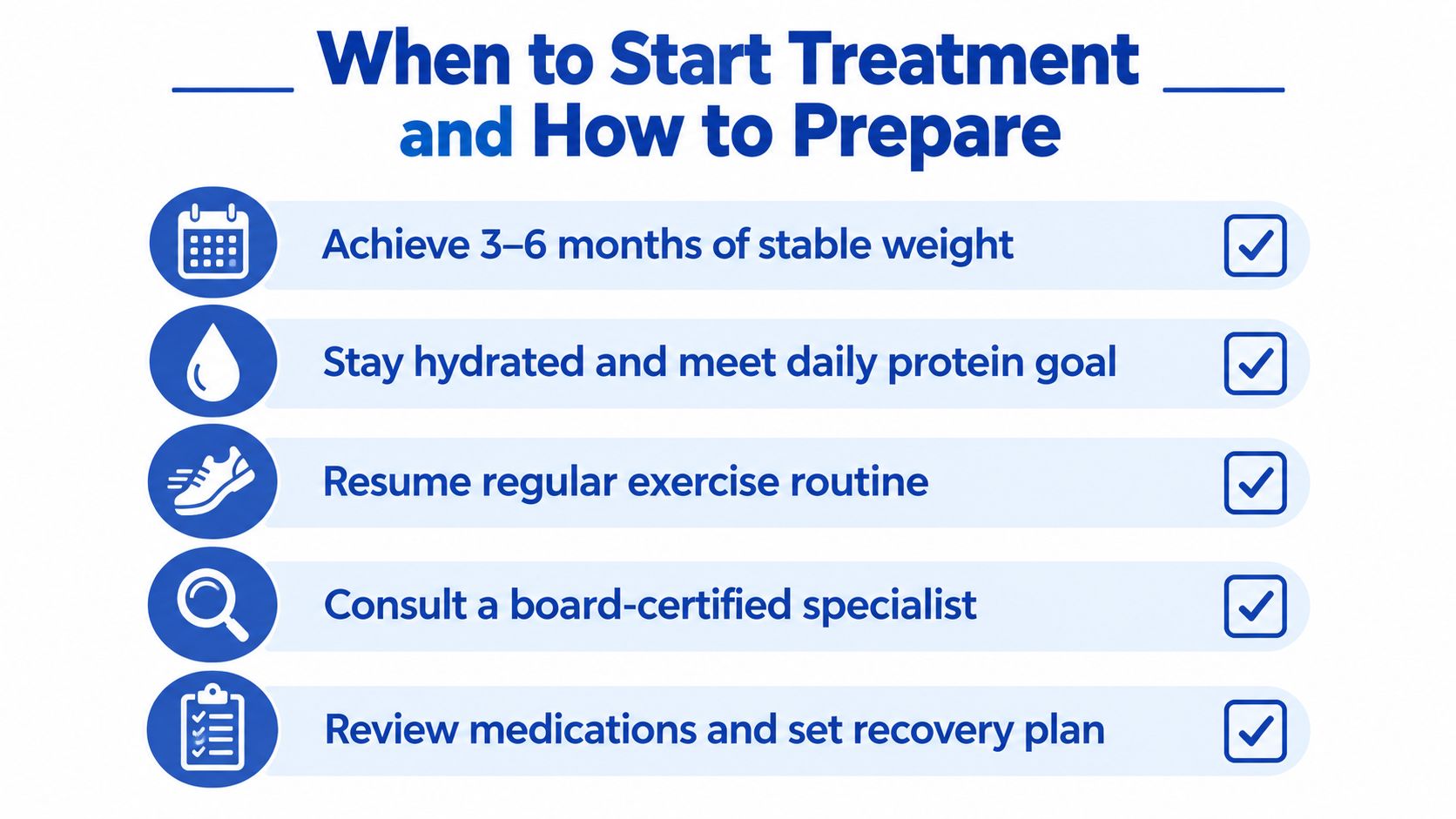
The best sequence is usually stabilize, assess, prepare, then treat. Starting with a procedure while weight is still changing can make the final contour difficult to predict. Further loss may create new laxity, while inadequate nutrition can complicate recovery.
Start with weight stability
Your clinician should understand whether your current weight is a durable plateau or just a pause during active loss. This matters for both device-based care and surgery, although the consequences are greater when a large operation is performed before the body has reached a reasonably stable shape.
A stable weight doesn't mean you need a perfect body composition. It means the treatment plan is based on the body you expect to maintain, rather than a temporary stage of the weight-loss process.
Check nutrition before elective treatment
Reduced appetite, restrictive eating, or medication-associated changes in intake can make it harder to meet protein and micronutrient needs. A clinician may review dietary intake and order targeted laboratory testing when your history suggests higher nutritional risk. Protein adequacy deserves particular attention because healing requires tissue-building resources.
Hydration, regular movement, and resistance exercise can support general conditioning and help preserve muscle beneath the skin. They won't remove established redundancy, but they can improve your baseline health and make the treatment decision more honest.
Prepare for the actual recovery
Before treatment, review medications, existing medical conditions, wound history, smoking or nicotine use, and your ability to follow aftercare instructions. If you have leg swelling, circulation concerns, recurrent skin breakdown, or a history of slow healing, raise those issues early. Guidance on skin care for chronic wound healing illustrates why the condition of the skin and surrounding tissues matters before an elective procedure.
A good consultation may end with “not yet.” That isn't a failed appointment. It may be the step that prevents an underwhelming result or avoidable healing problem.
Real Outcomes and Functional Impact
Loose skin deserves attention even when appearance isn't your primary concern. Folds can make washing and drying difficult, rub against clothing, restrict movement, and create an environment where irritation recurs. Some people also avoid exercise because the tissue moves painfully or becomes inflamed.
A large cross-sectional study found that excess-skin questionnaire scores were much higher in adults after obesity surgery than in a reference population, 12.3 ± 8.1 compared with 1.5 ± 3.5. The study also found that inner-thigh excess skin increased after weight loss in both adults and adolescents, while laxity on the arms, breasts, and abdomen decreased without disappearing. (Study of excess-skin burden after obesity treatment)
Describe the symptom, not only the appearance
During a consultation, “I don't like how it looks” is valid, but it doesn't give the clinician enough information to match care to the problem. Be specific about what happens during an ordinary day.
- Hygiene: Explain whether folds are difficult to clean or dry.
- Friction: Note rubbing, chafing, tenderness, or clothing pressure.
- Skin irritation: Mention recurrent redness, moisture, odor, rash, or suspected intertrigo.
- Movement: Describe interference with walking, exercise, bending, or sitting.
- Clothing: Identify whether the fold changes fit or prevents you from wearing practical garments.
Location matters as much as severity. An abdominal fold may cause moisture and hygiene problems, while inner-thigh laxity may affect walking. Upper-arm skin may be primarily cosmetic for one person but physically restrictive for another.
Functional concerns can guide referral
The study's findings support a targeted approach rather than a blanket judgment about whether excess skin is “bad enough.” A clinician can document the body area, the degree of overhang, the condition of the skin beneath the fold, and the impact on daily activities.
Treatment isn't automatically medically necessary because a person has loose skin. But persistent symptoms deserve a proper assessment, especially when skin integrity or mobility is affected. The goal is to separate a manageable cosmetic concern from a tissue problem that is interfering with health and daily life.
GLP-1 Weight-Loss Drugs and Loose Skin Timing
GLP-1 medicines have changed how many people approach weight management, but they haven't changed the basic mechanics of stretched skin. When a person loses a substantial amount of underlying fat, the skin may be left with more surface area than the new body contour requires. Medication-assisted loss can therefore produce the same loose-skin question as other major weight-loss routes.
Recent coverage notes that one in eight U.S. adults report having taken these medications and also highlights that nonsurgical tightening options have largely not been studied after major weight loss. (Coverage of loose skin after medication-assisted weight loss)
The medication isn't a shortcut around tissue biology
It would be a mistake to assume that medically induced weight loss guarantees better skin retraction. The relevant questions are how much weight has been lost, whether loss is continuing, whether muscle and nutrition are being maintained, and how much structural elasticity the skin retained.
The newer GLP-1 population may differ from traditional post-bariatric patients in important ways. Weight loss may still be ongoing, appetite may be suppressed, and nutritional intake may need closer review. Those differences affect timing and preparation, not the fundamental distinction between mild laxity and true redundant skin.
Decide whether to wait or evaluate now
If weight is still changing, a clinician may recommend monitoring the contour and reviewing nutrition before elective intervention. If weight has stabilized and a fold causes persistent symptoms, an assessment can still be useful even if treatment is scheduled later.
Build muscle where appropriate, maintain adequate protein intake, and discuss targeted laboratory testing if your medical history suggests risk. These steps support readiness, but they don't guarantee that loose skin will disappear. The most reliable answer for established hanging tissue remains physical removal, while device-based care is more realistic for selected mild cases.
How to Decide What Is Right for You
Start with the tissue, not the treatment name. Stand upright and assess whether the skin is mildly crepey, visibly loose, or hanging in a defined fold. Then consider what happens when you move, exercise, wash, dress, or sit.
A useful decision conversation covers four questions:
- How much excess skin is present? Mild laxity may be compatible with gradual tightening. A heavy fold usually requires a discussion about excision.
- Where is it located? The abdomen, arms, thighs, breasts, face, and neck have different anatomy and different treatment goals.
- What symptoms does it cause? Hygiene problems, friction, recurrent irritation, restricted movement, and difficulty with clothing should be documented clearly.
- Is your body ready for treatment? Ongoing weight loss, poor nutritional intake, uncontrolled medical conditions, or unresolved wound issues may shift the plan toward preparation first.
Set expectations before choosing a procedure
Non-surgical treatment is most reasonable when you're comfortable with incremental improvement and your clinician believes the skin still has enough quality to respond. It becomes a poor fit when marketing promises the removal of a large overhang without surgery.
Surgical contouring makes more sense when the problem is physical redundancy. It can provide a larger change, but you'll need to discuss scars, recovery, anesthesia, possible staging, and the condition of your skin. A qualified clinician should also explain what the procedure can't correct, rather than treating every concern as a reason to operate.
The right treatment isn't the least invasive option in every case. It's the option that can realistically address the tissue causing the problem.
Bring photographs of how the skin behaves during standing and movement, a list of medications and supplements, your weight-loss history, and examples of any rashes or wounds. Ask whether the recommendation is intended to stimulate tightening, restore volume, or remove excess skin. Those goals are different, and clarity at the beginning prevents disappointment later.
Loose skin after weight loss treatment is a structural consequence, not evidence that you did anything wrong. Once you match the treatment to the body area, symptom pattern, tissue severity, and weight stability, the decision becomes more practical and less vulnerable to exaggerated promises.
Vein and Wound Institute evaluates circulation, skin integrity, and wound-healing concerns that may affect recovery, with coordinated vein and advanced wound care for appropriate patients. Visit Vein and Wound Institute to request an assessment and discuss a care plan suited to your symptoms and healing needs.