
You're probably reading this because your legs ache by evening, your ankles puff up after a long day, or a mirror has made you notice rope-like veins that weren't there before. That doesn't automatically mean you need surgery. In modern vein care, varicose veins treatment non surgical usually means looking for the faulty vein with duplex ultrasound, then choosing a targeted outpatient option that closes, seals, or redirects flow instead of removing the whole vein.
Table of Contents
- Why Leg Veins Bulge and Ache
- How Modern Non Surgical Vein Care Works
- Comparing Endovenous Ablation Sclerotherapy and Phlebectomy
- What to Expect From Sclerotherapy Results
- Compression Stockings and Lifestyle Support Explained
- Diagnosis Recovery and Aftercare Timeline
- When to See a Vein Specialist Now
Why Leg Veins Bulge and Ache
The simplest way to think about leg veins is as one-way streets. Tiny valves open to let blood move upward, then close so it doesn't fall back down with gravity. When those valves weaken, blood leaks backward, pressure builds, and the vein can stretch, twist, and become visible under the skin.
That backward flow is called reflux, and reflux is what turns a cosmetic concern into a circulation problem. A patient may first notice heaviness near the end of the day, then swelling around the ankles, then skin irritation or color change if pressure keeps rising. Visible varicose veins are often just the surface clue that the pressure problem is deeper.
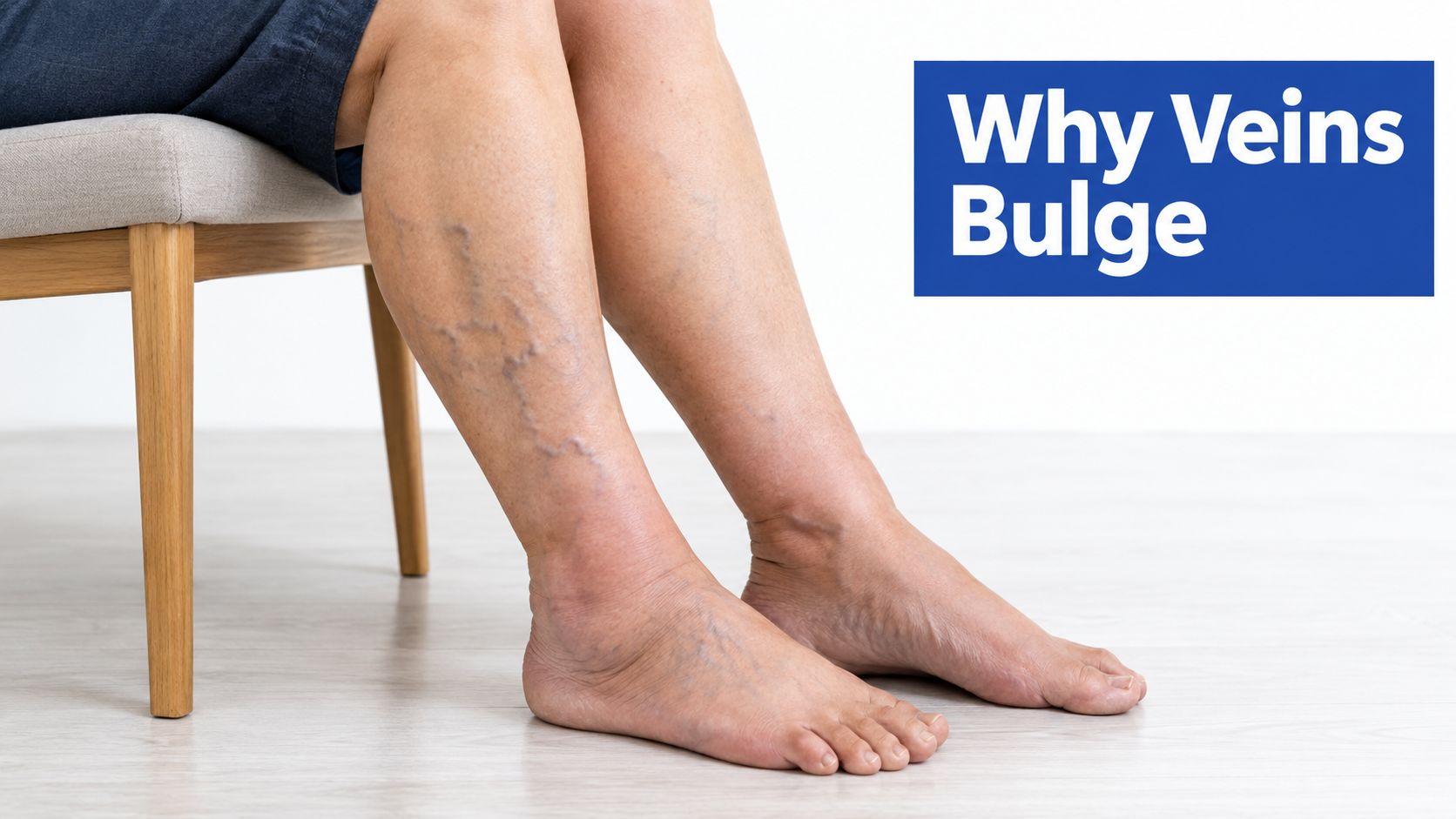
A leaky valve in plumbing lets water move the wrong way and raises pressure in the pipe. Vein reflux works the same way, except the “pipe” is part of your circulation, so the extra pressure shows up as aching, swelling, bulging, and sometimes skin changes.
Practical rule: the way a vein looks is not enough to decide treatment. The anatomy and flow pattern matter more than the surface appearance.
For patients who need a clear explanation they can share with family or staff, a practical resource like Expressify AI for service businesses can help organize educational content, but the medical decision still starts with the vein exam and ultrasound.
How Modern Non Surgical Vein Care Works
A patient can walk into clinic with aching, bulging leg veins and expect a treatment choice based on appearance alone. Good care starts earlier than that. Duplex ultrasound maps the superficial veins, perforator veins, and deep-vein flow, then shows where truncal reflux is happening. That matters because the right treatment depends on which vein is failing and where the backward flow begins.
Key point: closing the wrong vein does not fix the pressure problem. The target has to match the reflux pattern.
The usual sequence is clear. If ultrasound confirms truncal reflux, endothermal ablation such as radiofrequency or laser treatment is offered first when suitable. If heat-based treatment is not suitable, ultrasound-guided foam sclerotherapy is next. Conventional surgery is reserved for cases where those options are not suitable, and compression hosiery is used after those interventions rather than as the preferred definitive treatment for truncal reflux (NICE recommendations).
That pathway matters because it set minimally invasive treatment as the first-line route in a major national health system. It also clarifies a common misunderstanding. “Non-surgical” does not mean “just wear stockings” or “treat only the visible surface vein.” When reflux is confirmed, outpatient treatment can close the faulty pathway and redirect blood into healthier veins.
The logic is simple:
- Map the reflux with duplex ultrasound.
- Choose the target vein based on anatomy and symptoms.
- Seal, heat, or chemically close the incompetent conduit.
- Let blood reroute through functioning pathways.
- Check recovery and recurrence risk with follow-up if needed.
For a plain explanation of injection treatment, the internal explainer on how sclerotherapy works covers what the procedure involves, and injection sclerotherapy is one of the core outpatient tools in this pathway.
Comparing Endovenous Ablation Sclerotherapy and Phlebectomy
A patient can have aching, bulging veins, but the right procedure depends on what duplex ultrasound shows. A refluxing truncal vein, a cluster of surface branches, and a vein that sits too close to the skin each call for a different approach. The aim is simple, close the faulty pathway and let blood move through healthier veins.
Endovenous laser ablation and radiofrequency ablation close the main refluxing vein from the inside. They are used when the problem is a confirmed truncal vein and heat treatment is suitable. The laser fiber acts like a controlled heat source placed into the vein, so the closure is targeted rather than broad. For a plain overview of that method, the article on laser ablation for vein treatment explains the core steps.
Ultrasound-guided foam sclerotherapy fits a different situation. The foam is injected under ultrasound, where it reaches the vein wall and helps it close. Clinically, it is useful when heat-based treatment is not suitable, or when anatomy makes an injection approach the better match. It treats the vein itself, but careful selection and follow-up still matter.
Ambulatory phlebectomy removes bulging surface branches through tiny openings in the skin. It is often used for visible veins that remain after the deeper reflux source has been addressed, or for superficial branches that are better removed than sealed. The choice is not about treating every vein the same way, it is about matching the tool to the vessel.
Here is the practical split:
| Treatment | Best For | Recovery |
|---|---|---|
| Endothermal ablation | Confirmed truncal reflux when heat treatment is suitable | Outpatient recovery with short-term walking and compression afterward |
| Ultrasound-guided foam sclerotherapy | Reflux when heat treatment is unsuitable, or selected smaller branches | Usually limited downtime, with follow-up for clearance and recurrence monitoring |
| Ambulatory phlebectomy | Bulging surface branches that need physical removal | Small puncture sites, usually quick return to activity |
Before any procedure, the assessment should record symptoms, skin changes, swelling, ulcer history, prior treatment, and arterial status. That checklist helps the clinician choose the safest option and spot legs that need a different plan. NICE advises against routine compression beyond seven days after intervention, so compression is support after treatment rather than the main answer when reflux has been confirmed.
For patients comparing heat-based closure with injection treatment, the overview on laser ablation for vein treatment is a useful companion.
What to Expect From Sclerotherapy Results
A patient may come in hoping the bulging veins will vanish after one visit. Injection treatment can help, but the result depends on which veins are being treated, how reflux has been mapped on duplex ultrasound, and whether the goal is symptom relief, cosmetic improvement, or both.
Injection treatment has a solid evidence base, but it is better viewed as a legitimate minimally invasive option than as a guaranteed permanent cure. A 2021 Cochrane review identified 28 randomized controlled trials involving more than 4,278 participants evaluating injection sclerotherapy for varicose veins (Cochrane review). That gives a stronger picture than advertising language usually does.
What the evidence actually shows
Compared with placebo, polidocanol 1% foam was linked with fewer residual varicose veins, with a pooled risk ratio of 0.19 and a 95% confidence interval of 0.13 to 0.29, based on 2 studies and 225 participants. The same review reported that foam sclerotherapy may improve cosmetic appearance and quality of life, but the certainty of that evidence ranged from very low to low. Evidence about persistent symptoms was limited.
That balance matters in clinic. Patients often want to know whether the vein will disappear and stay gone. Foam can work well, but recurrence and retreatment can still happen, so follow-up matters, especially when duplex ultrasound shows more than one reflux source.
Safety counseling should be equally direct. The review also noted that deep-vein-thrombosis rates may be slightly higher after sclerotherapy, but the available evidence was uncertain. It found insufficient data to establish differences between foam concentrations or between foam and liquid techniques.
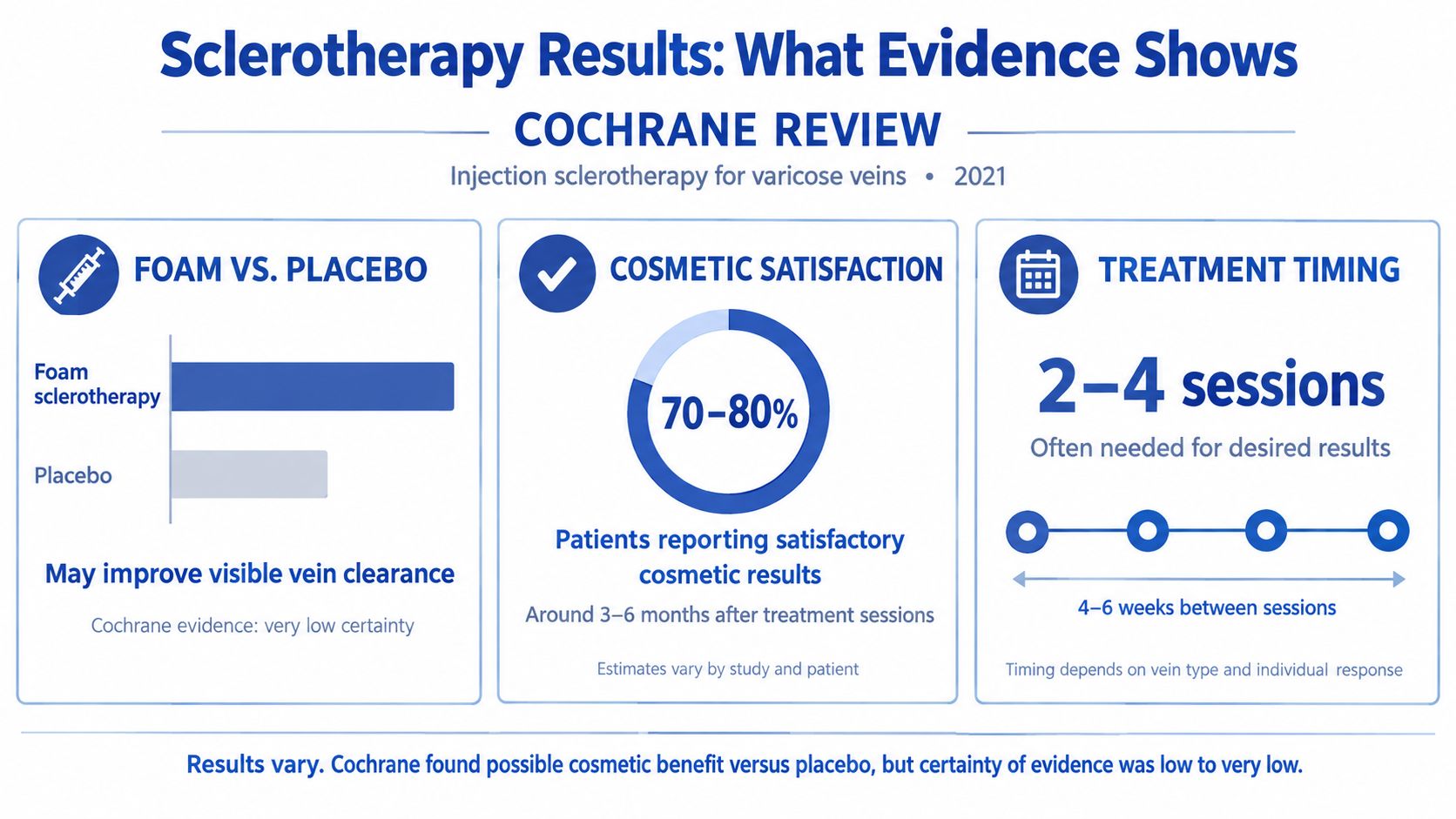
Broader comparative evidence from 24 studies involving 5,135 people found that technical success was generally comparable among major procedures through five years, while some analyses suggested better technical success for laser ablation than ultrasound-guided foam sclerotherapy and possible advantages of surgery over foam for selected long-term outcomes. A good result is a duplex-based plan that accounts for anatomy, recurrence, and follow-up, with visible improvement as one part of it.
Foam can be the right answer, but it is still part of a process, not a promise.
Compression Stockings and Lifestyle Support Explained
A patient can wear compression every day and still wonder why the vein remains visible. That question comes up often, because graduated pressure can reduce venous pooling, ease swelling, and make heavy or aching legs feel better, but it usually does not remove refluxing veins or erase varicosities.
The 2025 Society for Cardiovascular Angiography & Interventions guideline suggests compression rather than no compression for symptomatic varicose veins, drawing on nine randomized trials of ulcer healing and three trials assessing leg discomfort (SCAI guideline summary). As noted above, NICE reserves compression for cases where intervention is unsuitable, so the focus here is what compression can and cannot do day to day.
The difference is between symptom control and reflux correction. Compression can help a patient feel better today, but it usually does not close the faulty valve pathway. For venous leg ulcers, the 2025 technical review says compression probably produces faster and more complete ulcer healing than no compression and may improve pain, edema, and quality of life.
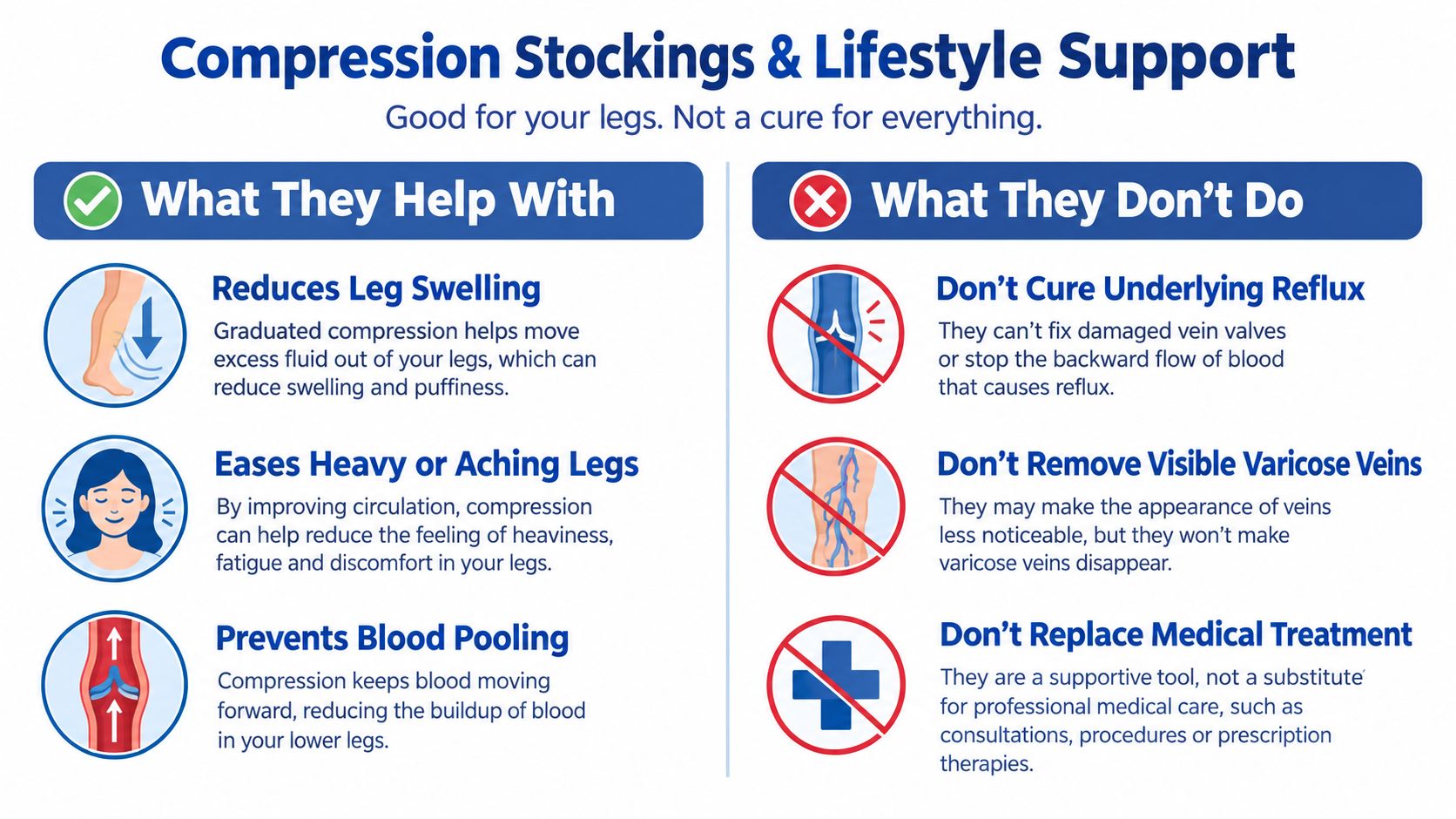
A sensible compression plan should answer four basic questions:
- Is arterial flow adequate? Strong compression should be used only after circulation has been checked.
- What form fits the person? Garments, wraps, or pneumatic devices may suit different leg shapes and levels of tolerance.
- Can the patient wear it consistently? Heat, itching, skin irritation, and difficulty getting stockings on often limit adherence.
- What signs call for reassessment? Persistent heaviness, skin changes, bleeding, or ulcers should prompt duplex evaluation.
Lifestyle support matters because it works with compression, not against it. Regular walking, calf-muscle movement, leg elevation, and weight control can all reduce day-to-day symptoms by helping blood move upward instead of pooling below. Simple habits matter most when reflux has already been confirmed, because they can ease discomfort while a treatment plan addresses the underlying vein problem.
The internal guide on sclerotherapy aftercare dos and don'ts pairs well with this section because compression questions often come up right after treatment.
Diagnosis Recovery and Aftercare Timeline
A first visit usually begins with an exam and duplex ultrasound. That scan shows where reflux is happening, so the treatment choice can match the vein pattern instead of guessing. Once the map is clear, the clinician can decide whether heat-based ablation, foam sclerotherapy, or another outpatient option fits the anatomy and symptoms.
Treatment day is often simpler than patients expect. Local anesthesia and image guidance are common, and the aim is targeted vein closure, not major surgery. Afterward, walking is usually encouraged because gentle movement keeps blood moving and helps reduce stagnation in the treated leg.
Recovery is usually practical rather than restrictive. Mild bruising, soreness, and temporary skin discoloration can happen, and they are usually handled with straightforward post-procedure advice. Compression may be used for a short period, but it supports treatment. It does not replace fixing the reflux source.
A simple patient timeline
- Before treatment: duplex mapping, symptom review, skin check, ulcer history, and arterial assessment.
- During treatment: image-guided closure or injection, usually in an outpatient setting.
- First day after treatment: walking, light movement, and watching for bruising or tightness.
- First week: follow the clinician's instructions on compression and activity limits.
- Follow-up: review symptoms, check the treated vein, and decide whether more treatment is needed.
The first week matters because the treated vein and the surrounding skin need time to settle. Strenuous activity and prolonged heat are usually avoided during that period. Exact instructions depend on the procedure used and the patient's anatomy, which is why generic advice can miss important details.
For a plain-language checklist on what to do and what to avoid after sclerotherapy, the aftercare guide below is a useful reference.
When to See a Vein Specialist Now
Some symptoms are more than a nuisance. If you have bleeding varicose veins, skin darkening, eczema around the ankle, persistent swelling, a non-healing sore, a history of clot, or worsening heaviness and pain, you shouldn't wait for home care to fix it. Those features suggest venous disease that needs a duplex-based evaluation, not guesswork.
Skin changes matter because they often mean pressure has been high for a while. A sore that doesn't close, especially near the ankle, can signal a venous ulcer pattern that needs coordinated vein and wound care. In those cases, compression alone may help, but it's not enough if the reflux source remains untreated.
A specialist visit is also useful when you've already tried stockings but still feel limited. The point isn't to push everyone into a procedure. The point is to find out whether the vein problem is mild and manageable, or whether it needs a targeted outpatient correction before it progresses.
Bottom line: the earlier the vein is mapped, the more options usually stay on the table.
For patients across Southern California, integrated care can be especially helpful when leg swelling, venous reflux, and wounds overlap. One clinic can combine duplex ultrasound, vein treatment, and wound management instead of sending you back and forth between separate offices. That coordination matters when symptoms are mixed and the next step isn't obvious.
If your legs ache, swell, or show skin changes that aren't settling down, schedule a duplex evaluation and get a clear plan. Vein and Wound Institute offers diagnosis, minimally invasive vein treatment, and wound-focused follow-up for patients who need care that matches the actual problem. Visit Vein and Wound Institute to learn how coordinated evaluation can help you move from uncertainty to a specific treatment path.