You notice it while getting dressed, after a walk, or when your hand lands on one thigh and that side feels warmer than the other. It can be mild enough to ignore for an hour, or odd enough to make you wonder whether you should be watching for a rash, a muscle problem, or something more serious. A calm way to think about a warm feeling in thigh is to treat it as a clue, not a diagnosis, and to pay close attention to what comes with it.
A warm patch can come from a irritated nerve, a vein problem, or a clot that needs prompt attention. It can also come from skin inflammation or increased blood flow after activity, which is why the whole pattern matters more than the word “warm” by itself. If you're looking for a simple starting point while you decide what to do next, even basic comfort measures such as a joint and muscle warming gel may feel relevant for everyday soreness, but they should never replace medical evaluation when the warning signs line up.
Table of Contents
- Noticing a Warm Feeling in Your Thigh
- The Three Systems Behind a Warm Thigh
- Common Causes and How They Feel
- Matching Your Pattern to the Most Likely Cause
- Red Flags That Need Same-Day or Emergency Care
- What to Expect During Evaluation
- A Clear Plan for What to Do Next
Noticing a Warm Feeling in Your Thigh
The first reaction is usually confusion. One person notices heat along the outer thigh while sitting at a desk, another feels a warm strip after a long drive, and someone else spots that one leg feels warmer during a shower and immediately worries about a clot. That reaction is understandable, because thigh warmth can sit at the intersection of several very different problems.
What matters most is the company it keeps. A warm thigh with tingling or numbness points you in a different direction than a warm thigh with swelling, tenderness, or redness. A warm thigh that shows up after tight clothing, a belt, or a long walk is also a different pattern from warmth that arrives with sudden pain or a leg that looks visibly different from the other side.
Practical rule: warmth by itself is a clue, but warmth plus swelling, color change, or worsening pain deserves more caution.
A simple way to frame the question is this: is the sensation coming from the nerve, the vein, or a clot? That distinction keeps you from jumping straight to the scariest explanation and helps you notice the details that matter. A clue like “it's outer-thigh burning after I wear snug clothes” tells a different story than “my whole thigh feels hot, swollen, and tender.”
If your main feeling is uncertainty, that's normal. The rest of the picture usually becomes clearer once you sort out location, triggers, and accompanying signs.
The Three Systems Behind a Warm Thigh
Nerves, veins, and flow
A warm thigh usually points to one of three systems: the sensory nerves, the veins, or a clot. The same basic feeling can come from any of them, but each leaves a different pattern, a bit like three different alarms sounding in the same room.
Meralgia paresthetica is the nerve example. The lateral femoral cutaneous nerve gets compressed and can cause burning, tingling, numbness, or oversensitive skin on the outer or front-lateral thigh. Because that nerve carries sensation, the leg may feel odd without feeling weak, and the discomfort often stays near the surface rather than deep in the muscle (StatPearls on meralgia paresthetica).
Vein-related warmth follows poor drainage. Blood pools, pressure builds, and the leg can feel heavy, swollen, or irritated, especially after long periods of standing or sitting. The easiest comparison is a backed-up street, traffic still moves, but it moves slowly and leaves the area feeling congested.
A clot is different again. Deep-vein thrombosis can form in the thigh or pelvis and may cause warmth, pain, swelling, or redness. Because a clot can travel to the lungs, this pattern gets the highest level of caution (CDC on blood clots).
Other causes that can imitate the pattern
Not every warm thigh comes from a nerve, vein, or clot. Skin infection, muscle inflammation, and increased blood flow after exercise can also create warmth, especially when the area is tender or visibly red.
The image below shows how the patterns can overlap:
For readers who want a broader circulation-focused overview, improving circulation naturally can help explain why posture, movement, and venous return change how a leg feels, even though it cannot sort out every medical cause on its own.
Common Causes and How They Feel
The fingerprints that separate them
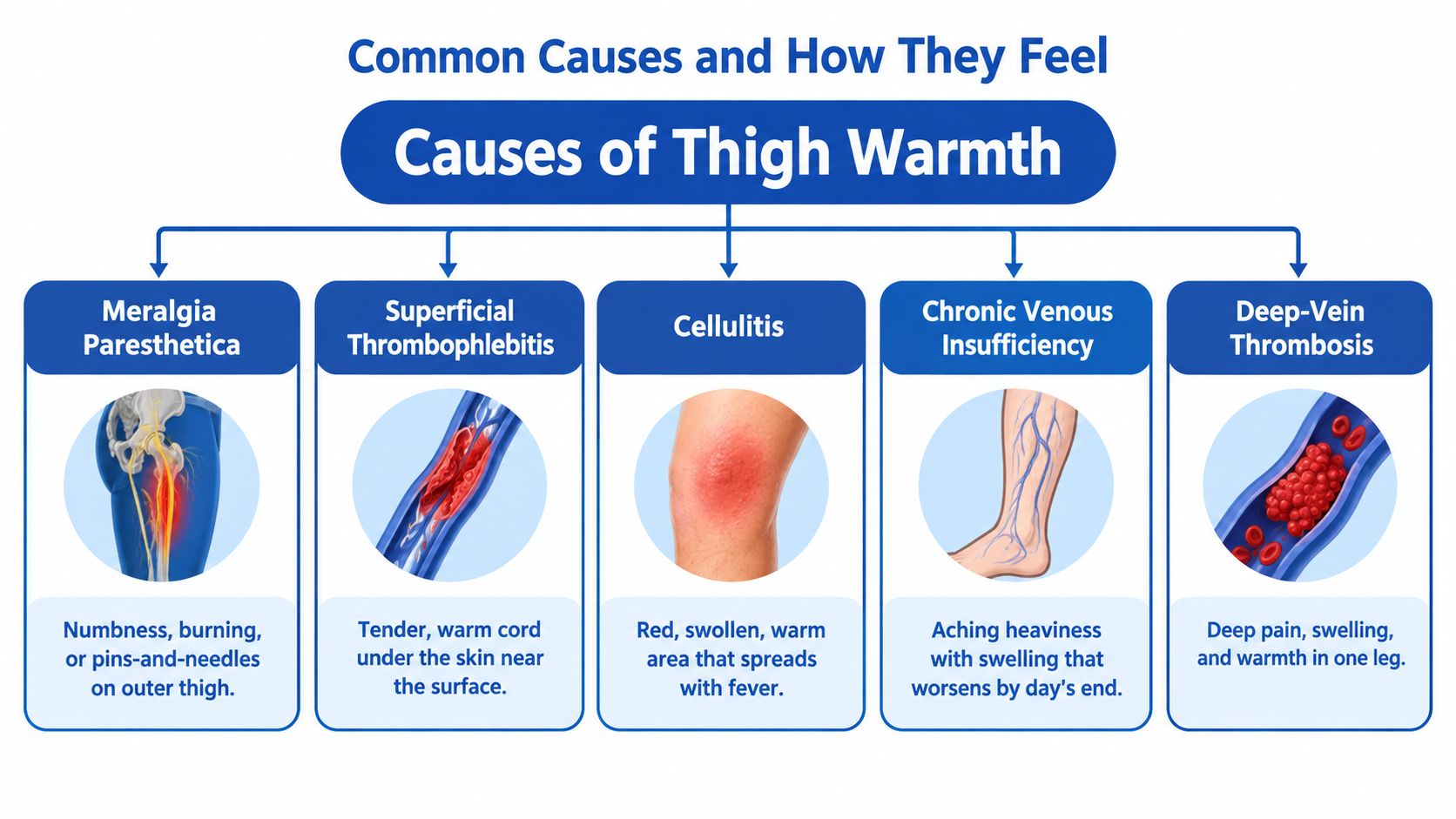
Meralgia paresthetica usually stays on the outer thigh. People often describe burning, tingling, numbness, or a patch that feels too sensitive to clothing or touch. Tight belts, snug waistbands, weight gain, pregnancy, and pressure near the groin can make it show up more clearly, and the sensation is usually more skin-level and sensory than deep, aching pain, as described in a peer-reviewed review of meralgia paresthetica.
Superficial thrombophlebitis feels closer to the surface. A tender, warm cord may sit just under the skin, often in a line instead of a broad patch. The clue is the track of discomfort following a visible or palpable superficial vein.
Cellulitis looks more like an inflamed skin problem. The area is usually red, warm, swollen, and may spread rather than stay neatly in one spot. Fever or feeling unwell raises concern because the pattern fits infection more than a simple sensory change.
Chronic venous insufficiency often brings heaviness, swelling, aching, and skin discoloration that worsen after long standing or toward the end of the day. A warm or burning feeling can be part of it, but it usually appears with other signs of venous congestion. For a broader explanation of how pooling blood changes leg symptoms, see the internal guide on chronic venous insufficiency. The symptom is rarely just heat, it more often feels like a leg that is tired, full, and irritated.
Deep-vein thrombosis is the pattern clinicians do not want to miss. It can cause one-sided warmth, swelling, tenderness, redness, or discoloration, usually in a deeper and less surface-specific way than a superficial vein problem. A clot matters because part of it can move to the lungs, so this pattern gets urgent attention when the signs fit (Mayo Clinic on DVT).
Useful distinction: outer-thigh burning points toward nerve compression, while heaviness and swelling point more toward venous disease.
Matching Your Pattern to the Most Likely Cause
Start with location and trigger
If the warm area is outer thigh, the first question is whether it also feels tingly, numb, or unusually sensitive. That combination fits nerve compression better than vein disease, especially when belts, tight waistbands, or prolonged hip flexion seem to set it off. If the warmth is more diffuse and comes with heaviness, swelling, or ankle fullness, venous trouble climbs higher on the list.
If the warmth started after standing all day, sitting through travel, or wearing restrictive clothing, the trigger matters almost as much as the sensation itself. Nerves often react to compression, veins often react to gravity and blood pooling, and clots often show up as a new one-sided change without a neat mechanical explanation.
Then look at the whole leg
A vein pattern usually brings more than heat. You may notice aching, visible veins, swelling, or skin color changes that become more obvious as the day goes on. A clot pattern is more alarming when the thigh feels warm and the leg also looks swollen, red, or tender, especially if the change is new.
Nerve-related warmth can be frustrating because it may look dramatic to the person feeling it but leave the skin looking normal. That mismatch is often a useful clue. If the skin looks unchanged and the symptom is mainly burning or pins-and-needles, the problem may be sensory rather than vascular.
“Read the pattern, not just the word warm.”
Overlap is real, though. A recent wound-journal report described abnormal warm and cold detection in people with chronic venous insufficiency and noted that worse venous disease tracked with worse neuropathy scores. That means some people don't fit neatly into one box, and a sensory complaint can sit on top of a circulation problem rather than replace it.
Use timing as a filter
Symptoms that come and go with posture, shoes, belts, or long walks suggest a mechanical influence. Symptoms that stay new, one-sided, and unexplained deserve a closer look, especially if swelling or color change enters the picture. The goal isn't to diagnose yourself at home, it's to decide whether the pattern is consistent with simple irritation or whether it needs medical evaluation.
For readers who like a practical framework, the guide to recognizing what's under the skin is a reminder that location, texture, and context are often more helpful than the first label that comes to mind.
Red Flags That Need Same-Day or Emergency Care
The combinations that matter
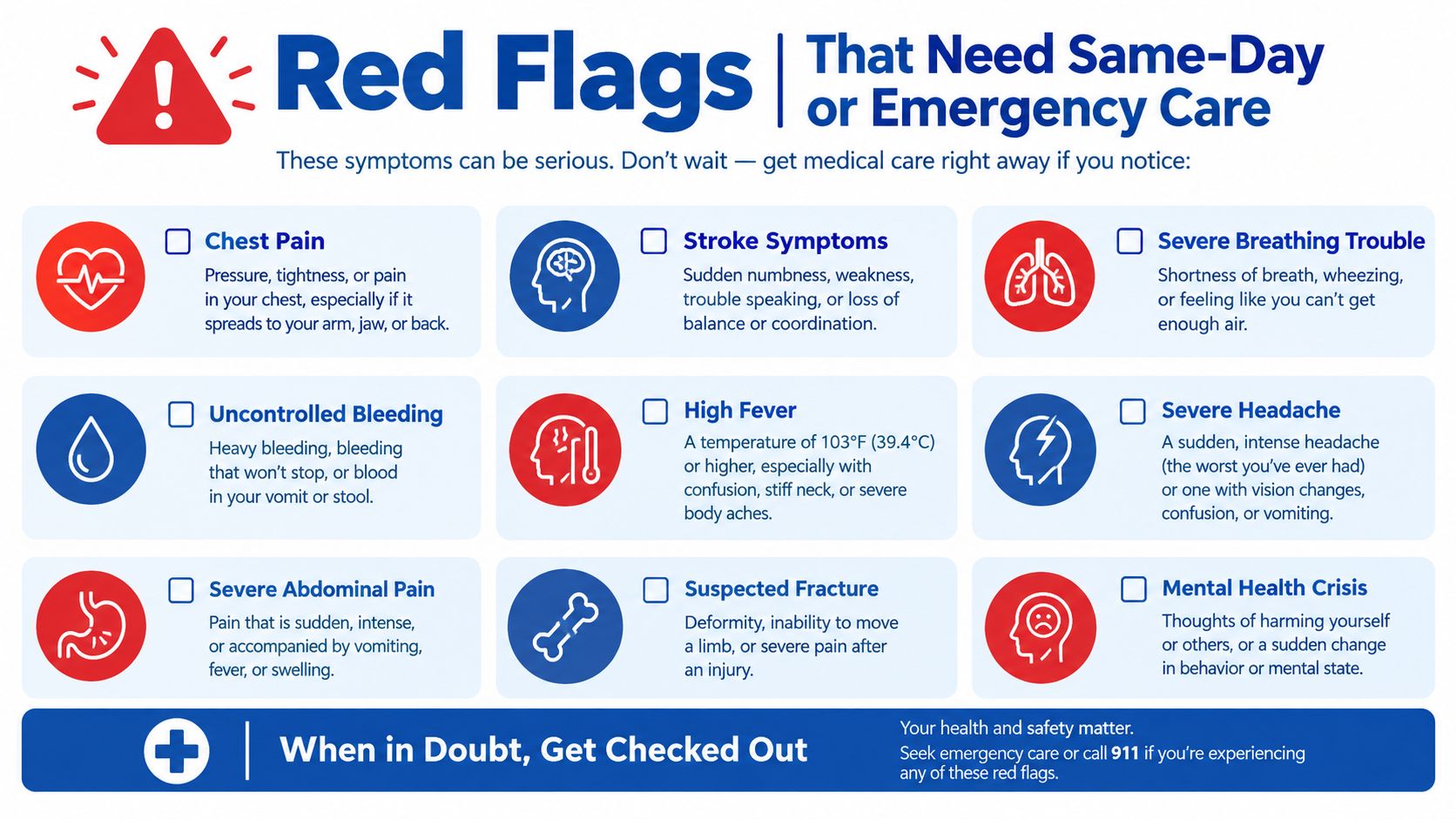
A thigh that feels warm becomes more concerning when the warmth shows up with new one-sided swelling or pain. That combination can fit deep-vein thrombosis, and a clot higher in the leg may cause few visible changes at first. Same-day assessment is the safer move, not massage or waiting to see whether it fades. A clear overview of deep-vein thrombosis warning signs is available in the deep-vein thrombosis guide.
Warmth plus redness or discoloration also deserves attention, especially if the area is tender or the change was not there earlier in the day. Clot-related inflammation, skin infection, and other vascular problems can look similar at first glance, and touch alone cannot sort them out.
If the leg symptom comes with shortness of breath, chest pain, coughing blood, fainting, or a racing heartbeat, that is an emergency. Those symptoms can mean a clot has traveled to the lungs and needs immediate care, as the CDC on blood clots explains.
A leg can still be a problem even when the usual warning signs are quiet. Some clots do not announce themselves with obvious swelling or dramatic redness, so the whole pattern matters more than one sign by itself.
If you are helping someone at home and the symptoms are escalating, compassionate home care for families can help with general support, but it is not a substitute for urgent medical assessment when clot symptoms are possible. For a plain-language review of what to watch for, the Mayo Clinic on DVT is a useful reference.
What to Expect During Evaluation

The first pass is history and exam
A clinician usually starts by asking when the warmth began, whether it is one-sided, and what changed with it. Swelling, pain, redness, recent travel, surgery, pregnancy, hospitalization, estrogen use, cancer history, or a prior clot help show whether a vein problem is more likely. Risk factors like these are reviewed in MedlinePlus on DVT risk factors.
The physical exam looks for tenderness, visible vein changes, skin infection, sensory changes, and leg asymmetry. Warmth alone cannot separate DVT from infection or a nerve-related burning sensation, so the pattern on exam matters as much as the story the patient gives.
Why ultrasound and other tests matter
If a clot is being considered, venous duplex ultrasound is the main test because it shows blood flow and can reveal blockage in the veins. If a nerve source seems more likely, the exam shifts toward sensory testing and, when appropriate, glucose testing or medication review to look for neuropathy contributors. Basic blood work may also help when infection or inflammation is part of the picture.
Clinical takeaway: one test rarely answers everything. Ultrasound can assess venous flow, but it cannot explain every burning or warm sensation in the thigh.
New one-sided thigh warmth with swelling or pain deserves same-day medical assessment rather than massage or watchful waiting, because a proximal deep-vein thrombosis may have few external findings and can travel to the lungs.
A Clear Plan for What to Do Next
If the warmth is mild, not spreading, and clearly linked to a temporary trigger, a short period of observation may be reasonable while you avoid tight clothing and notice whether the symptom settles. If it keeps returning, gets more intense, or stays unexplained, make a routine medical appointment so someone can sort out nerve, vein, and skin causes in context.
If the answer to any of these is yes, act faster, is it one-sided, is there swelling or color change, and is it new or worsening. Those features move the concern toward a vein problem or a clot, and they're the kind of pattern a clinician needs to hear about right away.
Persistent, spreading, severe, or function-limiting thigh warmth, especially when it comes with swelling, redness, weakness, or systemic symptoms, deserves medical evaluation. A vascular-focused visit can combine exam, duplex ultrasound, and follow-up planning so the cause isn't guessed at from the outside.
The Vein and Wound Institute evaluates venous disease, clot concerns, and wound-related circulation problems with onsite diagnostics and image-guided treatment options, including minimally invasive vein procedures and wound care when those problems overlap. If your thigh warmth is new, one-sided, or paired with swelling or discoloration, visit Vein and Wound Institute to get a focused evaluation and a clear next step.