
Laser vein removal cost usually lands between $1,000 and $3,000 per leg, but your actual out-of-pocket bill depends on whether the treatment is medically necessary and whether you've already met your annual deductible. If you're staring at a quote and wondering why it feels so vague, that's because vein care is billed like medical care, not like a flat-rate cosmetic service.
You're probably trying to budget for a procedure that sounds straightforward, only to find one clinic talking about a few hundred dollars and another warning about several thousand. That confusion is normal, and it's exactly where patients get blindsided. The core issue isn't just price, it's what gets approved, what gets applied to your deductible, and what your plan still leaves on your shoulders.
Table of Contents
- Understanding Your Baseline Laser Vein Removal Cost
- Breaking Down the National Averages and Facility Fees
- Key Variables That Influence Your Final Price
- Navigating Insurance Coverage and Medical Necessity
- Comparing Laser Ablation to Alternative Vein Treatments
- Managing Out-of-Pocket Expenses and Financing Options
- Choosing a Specialized Vein Institute for Long-Term Value
Understanding Your Baseline Laser Vein Removal Cost
You receive an approval letter, then a bill that still exceeds your budget. That outcome is common because laser vein removal cost describes the procedure's starting price, not your final responsibility. In major U.S. markets, a practical baseline is $1,000 to $3,000 per leg, according to this pricing summary for endovenous ablation costs. Treating additional veins or both legs can raise the total.
What that baseline really means
“Insurance approved” does not mean “fully covered.” Your plan can approve the treatment while leaving you responsible for a deductible, coinsurance, copayments, facility charges, or services excluded from the authorization. The clinic's estimate should separate each of those amounts instead of presenting one reassuring total.
Coverage also depends on medical necessity. Plans commonly require documented symptoms, ultrasound findings, and a trial of conservative therapy before approving ablation. That may include compression garments, activity changes, or other prescribed care. Ask the clinic which requirements apply to your plan and whether the records have been submitted before scheduling.
Practical rule: ask, “What will I owe after insurance approval, my deductible, coinsurance, copayments, and any noncovered charges?”
The treatment plan affects the bill as well. A single vein with limited reflux is a different case from several veins with extensive reflux. The anatomy, number of treated veins, treatment setting, anesthesia, ultrasound work, and follow-up care can all change the patient balance.
Request a written estimate that identifies the billing codes, allowed amount, insurer payment, deductible status, coinsurance, and expected balance. Then confirm those details with both the insurer and the clinic's billing office.
For a plain-English explanation of the procedure, review this laser ablation guide. Use it to understand the treatment, then judge the quote by the coverage details, not by the approval notice alone.
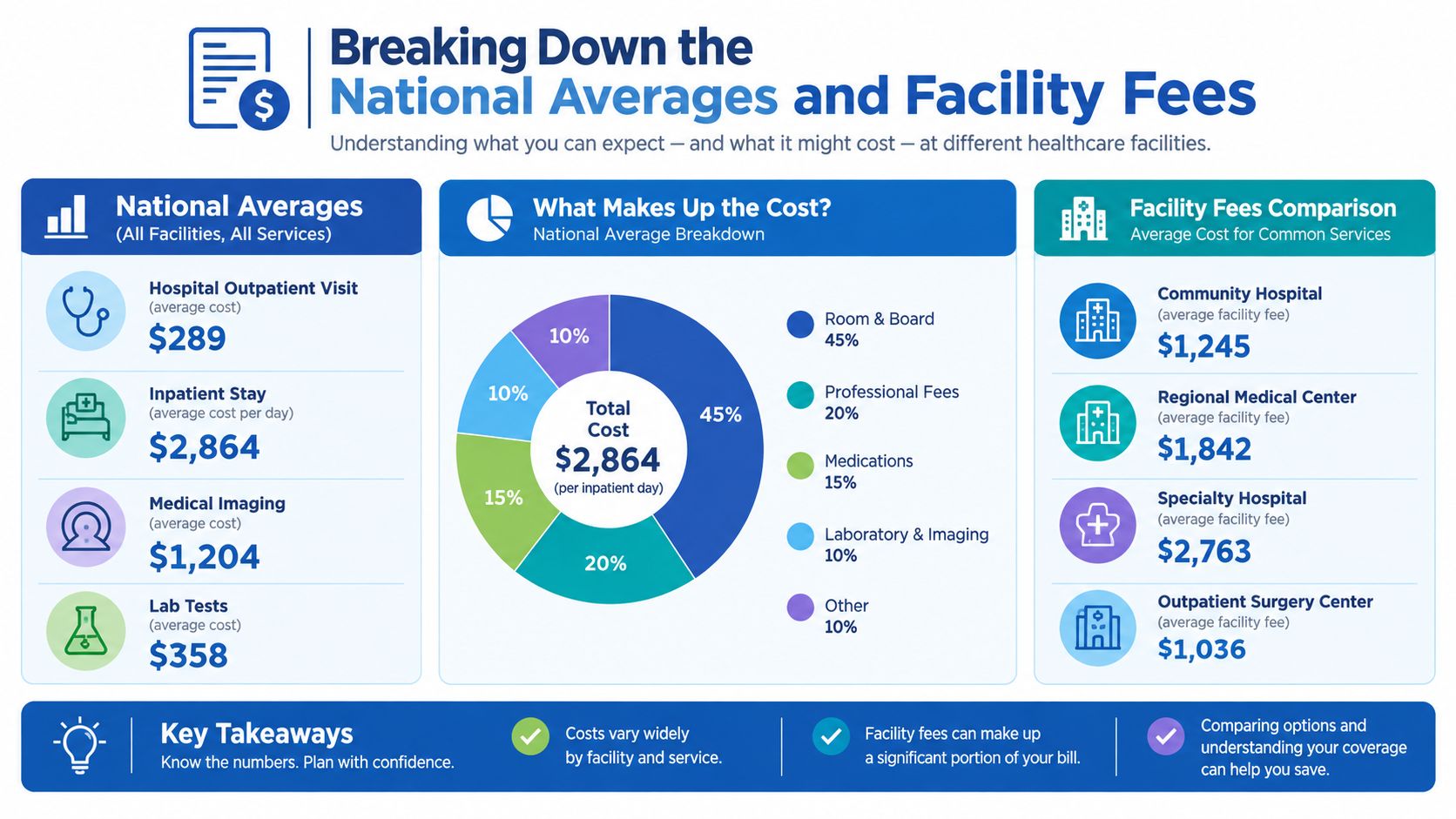
Breaking Down the National Averages and Facility Fees
You receive an “approved” notice, then see separate charges from the physician, facility, ultrasound team, and supply department. That outcome is common because insurance approved does not mean fully covered. Start by separating the bill into three parts: the device and disposable supplies, the facility charge, and the physician's work.
Historical reimbursement data shows how sharply the site of care can change payment levels. Older CMS figures placed office reimbursement well above hospital reimbursement for comparable vein procedures, with additional treated veins billed separately. Use that history as context, not as a current price quote. Ask for a written estimate that separates the device, facility, physician, ultrasound, anesthesia, and follow-up charges.
Why the location changes the bill
An office procedure usually has a different cost structure from hospital care. Hospitals may add institutional facility charges, while an office-based setting may have lower overhead and a simpler billing arrangement. The setting does not determine treatment quality by itself, but it can change your patient balance substantially. Review vein center versus hospital treatment settings before choosing a location.
A clinic may tell you the procedure is covered after medical necessity review and required conservative therapy. That approval still may leave deductibles, coinsurance, copayments, facility charges, supplies, or follow-up services for you to pay. Request the insurer's allowed amount and the clinic's patient estimate in writing. Confirm whether the estimate assumes completion of the plan's compression or other conservative-care requirements.
Short-term savings can also create a poor financial decision if the setting, billing codes, or follow-up plan remain unclear.
For another perspective on how laser procedures can be priced, see Mesoderm RX on laser costs. Session-based pricing and device use may affect the quote, but vein treatment costs still depend on the anatomy, setting, and billing arrangement.
Compare written, itemized estimates, not approval notices. Ask where the procedure occurs and which charges remain your responsibility.
Key Variables That Influence Your Final Price
No two vein maps are the same, so no two final bills should be treated as if they are. The most important cost drivers are simple, even if the billing looks complicated: how many veins are treated, whether one or both legs are involved, how severe the reflux is, and whether the plan needs repeat sessions. If your provider treats one vein and sees another problem later, the second treatment can add incremental billing.
The anatomy of your bill
Start with the number of veins. A single truncal vein is a different financial event than a multi-vein treatment plan, because each additional vein can create another layer of procedure time, supplies, and billing. That's why one patient may leave with a modest bill while another, with more extensive disease, sees the total climb quickly.
Next, think about laterality. Treating both legs is usually more work than treating one, even when the procedure name stays the same. More time in the procedure room means more resources used and more chance that the total lands at the upper end of the expected range.
Ultrasound mapping matters too, and it should. A duplex scan is how a specialist confirms where the reflux is happening before making a treatment plan. Skipping that step is how patients wind up with vague estimates and expensive surprises later.
- More veins, more billing: Each additional treated vein can push the total upward.
- Both legs cost more: Bilateral treatment usually means a larger overall bill.
- Repeat sessions add up: A second visit isn't just a rerun, it can be another charge.
- Ultrasound is foundational: Good mapping prevents wrong-target treatment and wasted money.
The smartest estimate is the one based on your duplex scan, not on what a friend paid.
A patient who looks at the legs in the mirror can only guess. A patient who has the scan can plan. That difference is the line between “I think this will be manageable” and “I know what I'm signing up for.”
Navigating Insurance Coverage and Medical Necessity
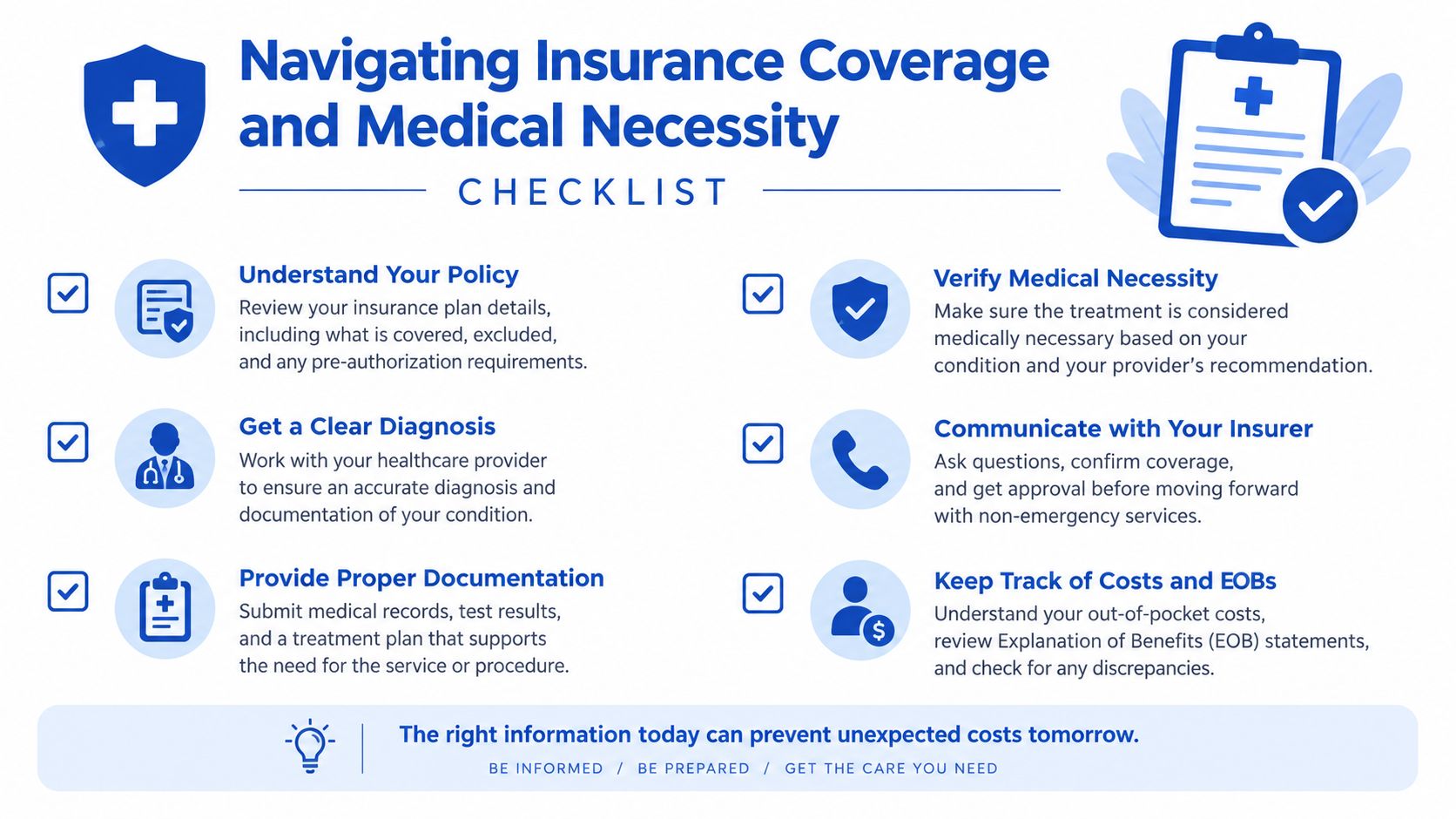
A patient can receive insurance approval and still face a large bill. Approval confirms that the treatment meets the plan's coverage rules. It does not erase the deductible, coinsurance, facility charges, or other patient responsibility. A procedure may be medically necessary and still be unaffordable if the deductible remains open or the plan assigns a large share of the allowed amount to you.
Your plan may also require a documented trial of conservative therapy before it authorizes ablation. That commonly includes compression, exercise, elevation, or other prescribed measures. The required duration and documentation vary by plan, so do not rely on a general office explanation. Ask the insurer what records it needs and request the answer in writing. A plain-language overview of these coverage questions is available in this coverage and medical necessity FAQ.
What insurers usually want to see
Payers look for symptoms that are persistent, documented, and connected to the vein problem rather than purely cosmetic concerns. Clinical notes may need to describe pain, swelling, heaviness, skin changes, or other effects on daily activities. The record should also show what conservative treatment you tried, how consistently you used it, and whether it helped.
Weak documentation can delay approval even when your symptoms are obvious. Ask the vein office whether it has submitted the required notes, ultrasound findings, treatment history, and authorization request before scheduling.
Approval does not equal affordability
Your deductible, coinsurance, and facility responsibility determine what you pay. The insurer may approve the procedure while leaving you responsible for a substantial amount until the deductible is met. Separate billing from the physician, imaging department, facility, or anesthesia provider can create additional balances.
Bottom line: coverage and affordability are different questions.
Before booking, get three answers in writing: whether authorization is approved, which conservative therapy records are required, and your estimated responsibility if the deductible is still open. Ask whether the estimate uses the insurer's allowed amount and whether every expected facility charge is included. If the office cannot provide clear answers, pause the scheduling process and call the member-services number on your insurance card.
Comparing Laser Ablation to Alternative Vein Treatments
The per-leg baseline is only the starting point. Compare the total treatment episode, including facility charges, ultrasound, follow-up, and any repeat treatment. Pricing summaries place endovenous laser ablation around $1,900 to $2,200, while consumer cost compilations place varicose vein treatment around $1,000 to $3,000 and report that broader plans can exceed $3,000 to $5,000 when multiple veins, both legs, ultrasound, or repeat sessions are involved. Pricing summary for endovenous ablation GoodRx cost compilation for varicose vein treatment
A budget-impact model compared the full short-term episode rather than the procedure fee alone. It found an 8-week total expected cost of $1,827 for endovenous laser ablation, compared with $2,374 for surgery and $2,106 for radiofrequency ablation. Those figures show why the lowest quoted procedure price may not produce the lowest overall bill.
Vein treatment cost and recovery comparison
| Treatment Modality | Average Total Cost | Insurance Coverage | Recovery Time |
|---|---|---|---|
| Endovenous laser ablation | About $1,900 to $2,200 | Often covered when medically necessary | Typically short outpatient recovery |
| Radiofrequency ablation | About $2,106 in one budget-impact model | Often covered when medically necessary | Typically short outpatient recovery |
| Surgical stripping | About $2,374 in one budget-impact model | Coverage depends on necessity | Usually longer recovery than endovenous options |
Laser ablation usually offers a practical balance of cost, recovery, and treatment effectiveness when the vein anatomy is suitable. It is performed in an outpatient setting, but outpatient does not mean fully covered. Insurance approval may still leave deductible and coinsurance balances, separate facility billing, or charges for imaging and follow-up.
Radiofrequency ablation can provide a similar outpatient recovery profile, while surgery generally involves a longer recovery and a larger treatment burden. The right choice depends on anatomy, symptoms, conservative therapy requirements, and the insurer's medical-necessity rules.
Ask for a line-item estimate before choosing. Confirm which charges are included, what your plan has approved, and what remains your responsibility. A slightly higher procedure estimate may be the better financial decision if it reduces repeat treatment and produces a clearer episode total.
Managing Out-of-Pocket Expenses and Financing Options
Once the insurance decision is in, the remaining balance needs a plan. Don't wait until procedure day to deal with the money part. Ask for a written estimate, then use your tax-advantaged accounts, payment options, or billing schedule to close the gap before the bill lands on your doorstep.
How to handle the balance without panic
If you have an HSA or FSA, use it. Those accounts are built for medical spending, and they can take the edge off deductible and coinsurance payments. If you don't have those accounts, ask the billing team whether the practice offers a payment schedule that fits your cash flow.
You should also ask whether the quote includes the ultrasound, follow-up, and any facility charge. A clean estimate matters more than a low starting number. Surprise fees are what turn an otherwise manageable case into a headache.
For a practical overview of billing support and payment planning, see vein insurance and financing guidance. Use that kind of resource to prepare your budget before the date is set.
Practical rule: if the estimate is vague, treat it as incomplete, not as affordable.
A fair payment plan can make a medically necessary procedure workable. A confusing quote can't. If the office won't put the numbers in writing, keep asking until it does.
Choosing a Specialized Vein Institute for Long-Term Value
The cheapest quote is often the most expensive mistake. Vein care pays off when the clinic treats the actual reflux, confirms the anatomy with imaging, and follows you long enough to catch problems before they become repeat costs. That's why a practice that combines venous diagnosis, minimally invasive treatment, and wound care can make more financial sense than a fragmented setup.

A specialized institute usually brings the pieces together under one roof, including duplex ultrasound, outpatient vein procedures, and coordinated follow-up. That matters because the treatment plan should match the disease pattern, not the other way around. For patients with venous disease plus wounds, the value is even clearer, because the underlying circulation problem and the skin breakdown need to be addressed together.
Vein and Wound Institute fits that model by offering endovenous laser ablation, radiofrequency ablation, VenaSeal, Varithena, and wound care in a coordinated outpatient setting. That kind of structure is useful when you want the treatment, the diagnostics, and the follow-up to line up without bouncing between separate offices.
If you're comparing vein treatment quotes right now, get a real estimate from a clinic that can explain both coverage and patient responsibility in plain English. The Vein and Wound Institute can review your veins, discuss medically appropriate options, and help you understand what the bill could look like before you commit. Visit Vein and Wound Institute to take the next step with a clearer plan and fewer surprises.