Spider vein removal usually starts at about $500 per sclerotherapy session in the United States, but the final bill is often higher once consultation, supplies, compression garments, imaging, and follow-up sessions are added. If you're staring at a quote right now and wondering whether it's fair, the short answer is this, $500 is a benchmark, not a full patient bill.
You need a budgeting model that separates cosmetic treatment from medically necessary venous care. That distinction decides whether you're paying cash, seeking insurance coverage, or dealing with a much more involved workup.
Table of Contents
- Spider Vein Removal Cost at a Glance
- Treatment Options and What Each One Costs
- What Drives the Final Bill Beyond the Procedure Fee
- Session Count, Geography, and Provider Setting
- Insurance Coverage and When Veins Become Medically Necessary
- Financing Options and Smart Cost Comparison
- Putting It All Together A Spider Vein Cost Plan
Spider Vein Removal Cost at a Glance
A quoted price can hide most of the true bill. For spider-vein treatment, the cleanest national reference point is the approximately $500 average for sclerotherapy reported by the American Society of Plastic Surgeons, and that number is a procedure-cost benchmark, not a guaranteed out-of-pocket total. It does not automatically include anesthesia, facility charges, or other related expenses ASPS cost reference.
What that benchmark tells you
Start with one question, what exactly is included? If the quote covers only the injection session, the total can rise once the clinic adds consultation, imaging, compression garments, supplies, and follow-up care.
Practical rule: never compare headline prices unless both clinics are quoting the same scope of service.
The four factors that move the price
Four variables drive the final cost, procedure type, number of sessions, geography, and insurance status. Purely cosmetic veins are usually paid for out of pocket. Veins tied to symptoms or suspected venous disease belong in a medical-workup model, not a cosmetic quote.
That difference changes the bill fast. Two people can have similar-looking spider veins and still face very different costs, because one may need a single cosmetic session while the other needs duplex ultrasound, diagnosis, and treatment aimed at reflux instead of only the surface vessels.
| Comparing Spider Vein Treatment Options | Typical Use | Average Per-Session Cost |
|---|---|---|
| Sclerotherapy | Small spider veins, especially when injection treatment is appropriate | About $500 benchmark nationally |
| Surface laser treatment | Fine surface veins or areas where injections are less appealing | Varies by practice and treatment area |
| VeinGogh thermocoagulation | Very small visible veins, often for superficial cosmetic work | Varies by practice and vein pattern |
| Endovenous procedures | Larger varicose-vein disease or reflux patterns that need source treatment | Usually priced as medically necessary vein care rather than cosmetic spider-vein treatment |
If you want a plain-English overview of how sclerotherapy works, this explanation is a useful starting point: what is sclerotherapy and how does it work.
Treatment Options and What Each One Costs
Price follows the anatomy, not the marketing language. Spider veins on the surface are often treated differently from larger veins fed by reflux deeper in the leg, and that difference changes both the technique and the bill. A good clinician doesn't just chase visible vessels, they figure out whether the visible veins are a cosmetic problem or a sign of a larger venous pattern.
Sclerotherapy, laser, and VeinGogh
Sclerotherapy is the workhorse for many spider-vein cases because it targets the small vessels directly. Clinics may use liquid or foam depending on the vein pattern, but the key point for budgeting is that this is still generally a session-based cosmetic procedure when it's done for appearance alone.
Surface laser treatment is often considered when veins are very small or when skin characteristics make injections less appealing. VeinGogh thermocoagulation is another surface option for very fine veins. The cost picture is different by practice, but the patient should think in terms of per-session pricing, not one magic total.
When the cost shifts to broader vein care
If visible spider veins sit on top of symptomatic venous disease, the conversation changes. Endovenous laser ablation, radiofrequency ablation, VenaSeal, ClariVein, Varithena, and similar treatments are not spider-vein cosmetics. They're used when the underlying issue is venous reflux or other larger-vein disease that needs source control.
That matters because treating only the surface veins can leave the underlying problem untouched. For some patients, the right move is a diagnostic evaluation first, then a different treatment plan entirely.
Treat the right problem first. If the source is deeper reflux, surface-only treatment is the expensive shortcut.
What Drives the Final Bill Beyond the Procedure Fee
The quoted procedure fee is only one line on the bill. In real life, the price grows when a clinic adds services that patients often assume were already included. The smartest way to budget is to force every cost into daylight before you book.
Common add-ons that change the total
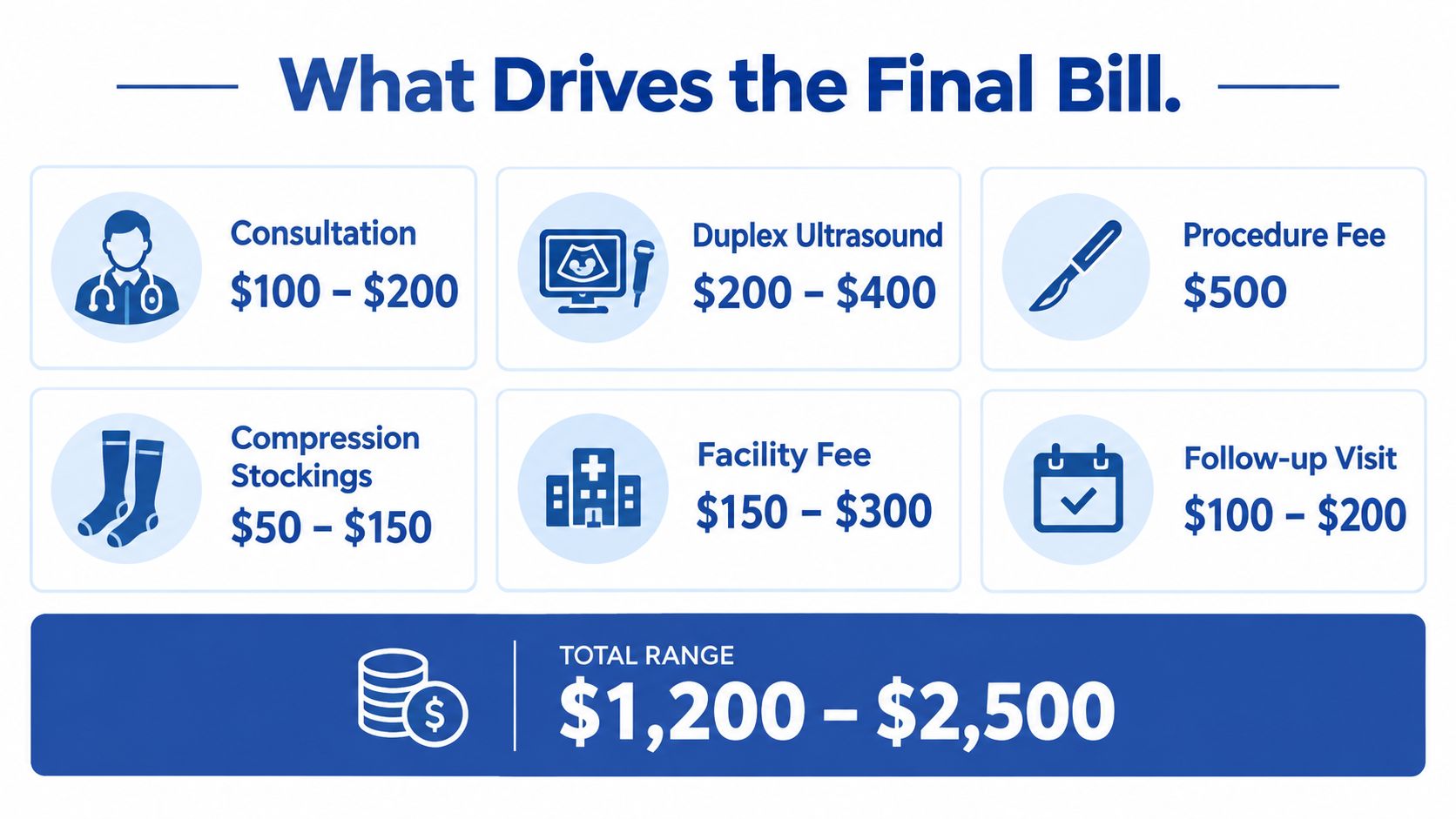
A consultation may be billed separately. Duplex ultrasound can add another layer when symptoms or anatomy call for imaging. Compression stockings, numbing supplies, facility fees, and follow-up visits can all be separate charges.
The practical effect is simple. A session price that looks modest can turn into a much larger out-of-pocket cost once the clinic items everything separately. That's why itemized estimates matter more than headline pricing.
How clinics phrase pricing
Some practices price per session, others per treatment area, and some quote per visible cluster of veins. Those models are not interchangeable. A per-session quote can sound cheaper than a per-area quote, until you realize the treatment plan will take multiple visits.
Ask for the estimate in writing and make sure it states:
- What the quote includes, especially consultation, imaging, garments, and follow-up.
- Whether pricing is per session or per vein cluster, so you can compare apples to apples.
- What triggers extra charges, including additional visits or a second treatment zone.
- Whether the quote changes if symptoms point to deeper venous disease.
A clean estimate is one page. A messy estimate is a warning sign.
Session Count, Geography, and Provider Setting
The same spider-vein problem can cost very differently depending on how many visits you need, where you live, and who is doing the work. A patient with a few small veins on one leg will not pay the same total as someone treating both legs with multiple visible clusters.
Why more sessions matter
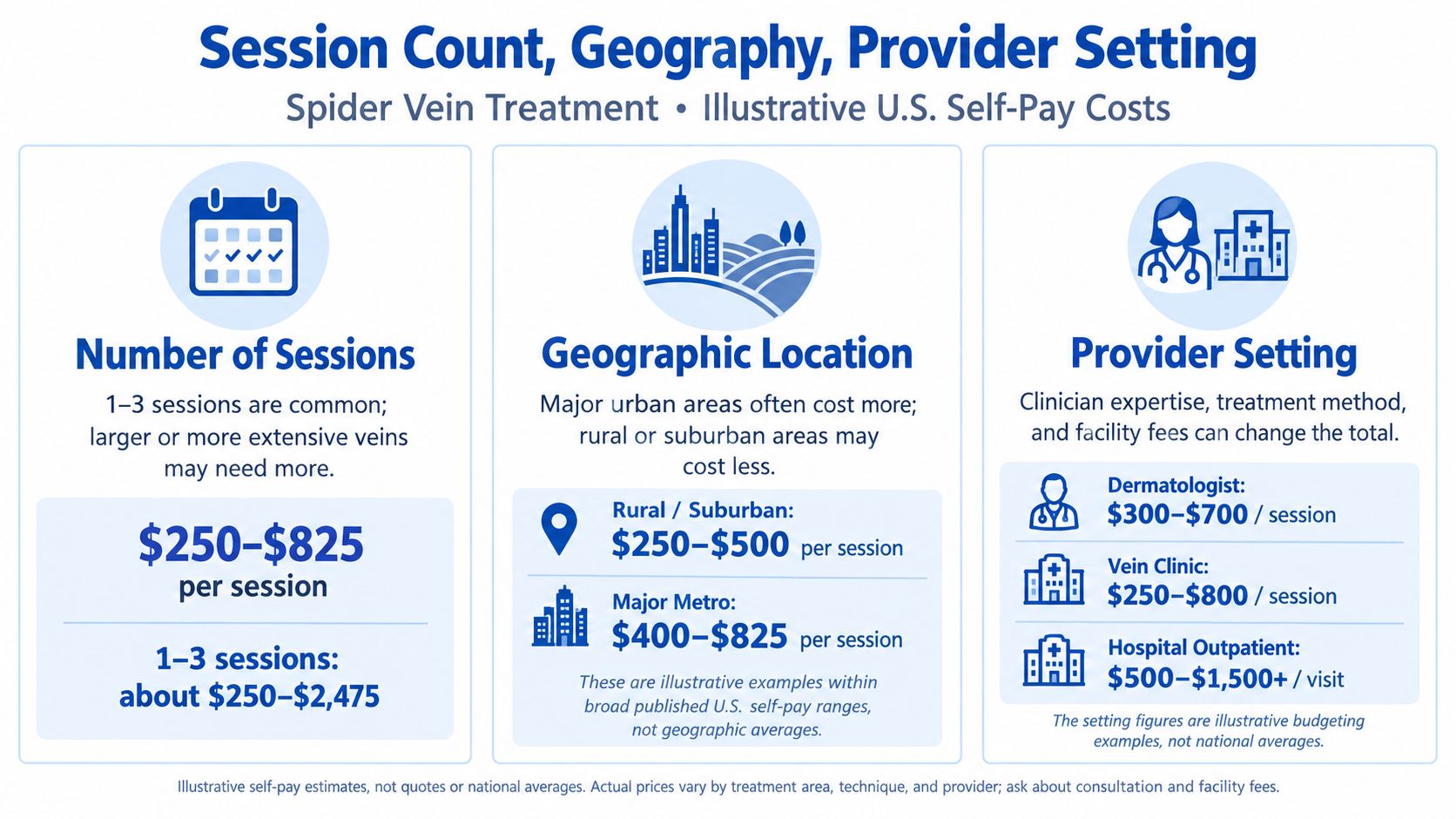
Sclerotherapy is commonly priced per treatment session, and many patients need more than one visit depending on the number, size, location, and visibility of the veins. That is the part people underestimate. A low per-visit price does not help if the treatment plan stretches across several appointments.
Why location changes the quote
Costs in major metropolitan areas may run higher than the national average because physician fees, overhead, and local demand vary. That does not mean the higher quote is inflated. It usually means the market is more expensive to operate in.
Why the setting matters
A dermatologist's office, a vein clinic, a plastic-surgery office, and a med-spa setting do not always price the same way for the same visible veins. The difference is not just cosmetic. It also reflects supervision, imaging capability, and how likely the practice is to catch deeper venous disease.
If a quote is unusually cheap, ask what happens when the veins do not respond after the first visit. Cheap gets expensive when you have to start over.
For patients with active venous disease, the visible veins can be only one piece of the problem.
Insurance Coverage and When Veins Become Medically Necessary
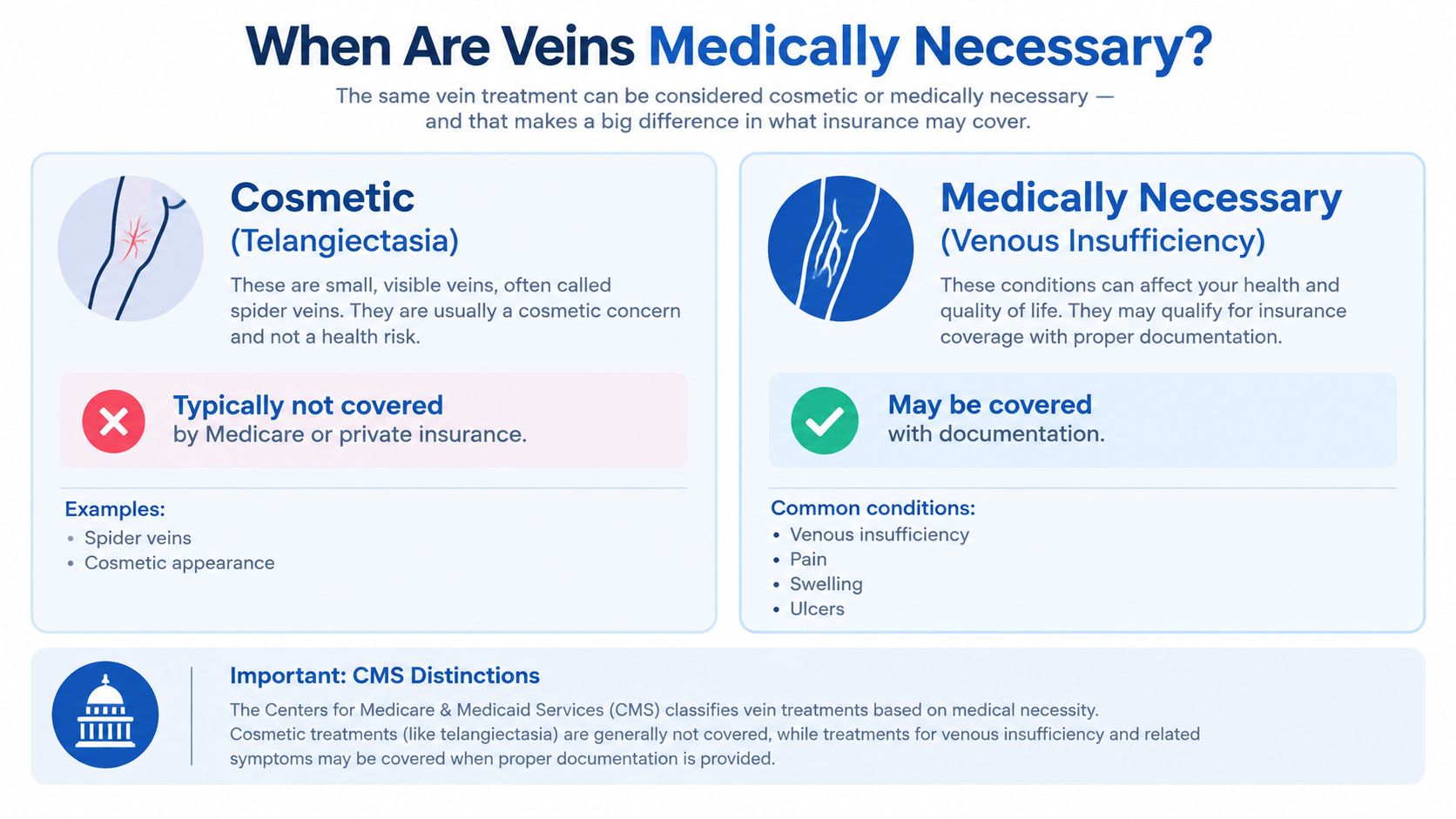
Insurance splits the bill in two. Purely cosmetic spider-vein treatment is generally excluded, while treatment for documented venous disease may be covered when medical criteria are met. CMS is clear that treatment of telangiectases, the medical term for spider veins, is not covered unless an exceptional medical circumstance such as associated bleeding is present, and cosmetic surgery is excluded from Medicare coverage CMS coverage policy.
Cosmetic versus medically necessary
If the visit is about appearance alone, expect to pay yourself. If the patient has pain, heaviness, swelling, skin changes, recurrent ulcers, or documented chronic venous insufficiency, the claim may move into a medical category. That is when duplex ultrasound, charted symptoms, and prior conservative care matter.
What insurers usually want to see
Payers want clinical documentation, not just a photo of visible veins. They may require a history of symptoms, evidence of reflux on duplex ultrasound, conservative-treatment history, and prior authorization. That separates a self-pay cosmetic session from a claim that has a real chance of approval.
What the out-of-pocket cost becomes
If treatment is approved as medically necessary, the patient's responsibility usually comes from deductible, coinsurance, network status, and authorization rules. There is no single cash price. The amount depends on the plan and the documented diagnosis.
For a practical summary of how coverage decisions work across symptom-driven venous care, insurance financing for vein treatment is worth reviewing. If you want a broader clinical explanation of the underlying disease process, the linked guide on chronic venous insufficiency lays out why visible spider veins sometimes sit beside a deeper venous problem.
Financing Options and Smart Cost Comparison
If you're self-paying, the goal isn't the lowest monthly payment. It's the lowest total cost with the fewest surprises. Cosmetic vein treatment is a cash-flow decision as much as a medical one, and bad financing can make a reasonable procedure much more expensive than it needs to be.
How to compare financing without getting burned
Some patients use third-party healthcare lenders, others use in-house payment plans, and some spread the cost with healthcare credit lines if they qualify. HSA and FSA eligibility can also matter, depending on whether the treatment is cosmetic or medically necessary. Ask the clinic which of these options apply before you commit.
If you're deciding whether to pay by cash or credit, this practical guide to cash versus card budgeting impact gives a useful frame for thinking through the trade-off between convenience and total spending.
What to ask during the consultation
Bring a short script and use it. Ask for an itemized estimate, ask whether the price includes follow-up, ask whether compression garments are included, and ask what happens if a treated vein doesn't respond. If the clinic expects multiple sessions, ask whether package pricing is available and whether that package changes if the treatment scope changes.
A good consultation should leave you with a clear answer to these points:
- Total expected cost, not just the session fee.
- How many sessions are likely, based on your vein pattern.
- Whether insurance might apply, if symptoms are documented.
- What the financing total will be, including fees or interest.
The right quote is the one that survives scrutiny. The wrong one is the one that looks cheap until the second bill arrives.
Putting It All Together A Spider Vein Cost Plan
Budget for spider vein removal in layers. First, estimate how many sessions you're likely to need. Then get an itemized quote that separates the procedure fee from consultation, imaging, garments, and follow-up. After that, decide whether your case is cosmetic or medically necessary, compare at least two offers using the same scope of service, and choose between self-pay, financing, or insurance authorization if symptoms point to deeper venous disease.
The biggest mistake is chasing the lowest session price without checking what's included. The second mistake is ignoring swelling, pain, skin changes, or wound history and treating everything as cosmetic. If you want a clinic that evaluates vein disease and wound issues together, Vein and Wound Institute provides diagnostic evaluation, minimally invasive vein procedures, and coordinated care for venous problems that aren't just skin deep.