
Varicose veins don't typically cause numbness on their own. Aching, heaviness, throbbing, itching, and swelling are more usual, while numbness may relate to advanced venous swelling, nerve irritation after vein treatment, or a separate nerve or circulation problem.
The common advice to blame every unusual leg sensation on visible veins can miss other causes. NHS England reports that around 45 to 65 out of every 100 people with varicose veins have symptoms, while 35 to 55 have none. Numbness deserves attention, especially if it's persistent, worsening, sudden, or accompanied by weakness or changes in skin color or temperature. NHS England's decision-support guide describes the symptoms commonly associated with varicose veins, but numbness isn't among the typical symptoms of uncomplicated disease.
There are three broad possibilities to keep in mind: pressure and inflammation related to long-term venous swelling, nerve effects after a vein procedure, or a different problem such as neuropathy or reduced arterial blood flow. The location of the numbness, when it happens, and what comes with it can help a clinician decide what to investigate.
Table of Contents
- Why Numbness Is Not a Typical Vein Symptom
- How Varicose Veins Can Affect Nerve Sensation
- Numbness After Vein Procedures and Treatment
- Conditions That Mimic Vein-Related Numbness
- Telling Venous and Neurologic Numbness Apart
- Red Flag Symptoms That Need Urgent Care
- Choosing the Right Evaluation Path
- Practical Next Steps for Persistent Numbness
Why Numbness Is Not a Typical Vein Symptom
Visible veins can be part of the picture without being the cause of every sensation in your leg. Uncomplicated varicose veins more commonly bring aching, heaviness, throbbing, itching, or swelling, often alongside skin changes. Numbness or pins-and-needles can occur with altered sensation, but it isn't a reliable sign that the veins are responsible.
That distinction matters because numbness can have several explanations. Persistent swelling and inflamed tissue may affect nearby sensory nerves. But nerve compression from another condition, diabetes, peripheral neuropathy, or an arterial circulation problem can also change sensation. A person can have varicose veins and a separate nerve or circulation condition at the same time.
The pattern is part of the evidence
A small altered patch of skin near a vein that was recently treated is different from numbness that gradually spreads into the foot or affects both legs. Likewise, sensations that come and go with swelling aren't the same pattern as constant numbness, numbness along a particular path down one leg, or numbness with weakness. These details won't diagnose the cause by themselves, but they help guide an appropriate assessment.
The NHS symptom figures also help set expectations: visible veins don't automatically mean symptoms, and symptoms don't automatically mean the veins explain them. Treat numbness as a reason to look at the whole clinical picture rather than as proof of venous disease. Sudden or worsening numbness, especially with weakness, severe pain, cool or discolored skin, or a wound that won't heal, shouldn't be put down to visible veins without medical review.
How Varicose Veins Can Affect Nerve Sensation
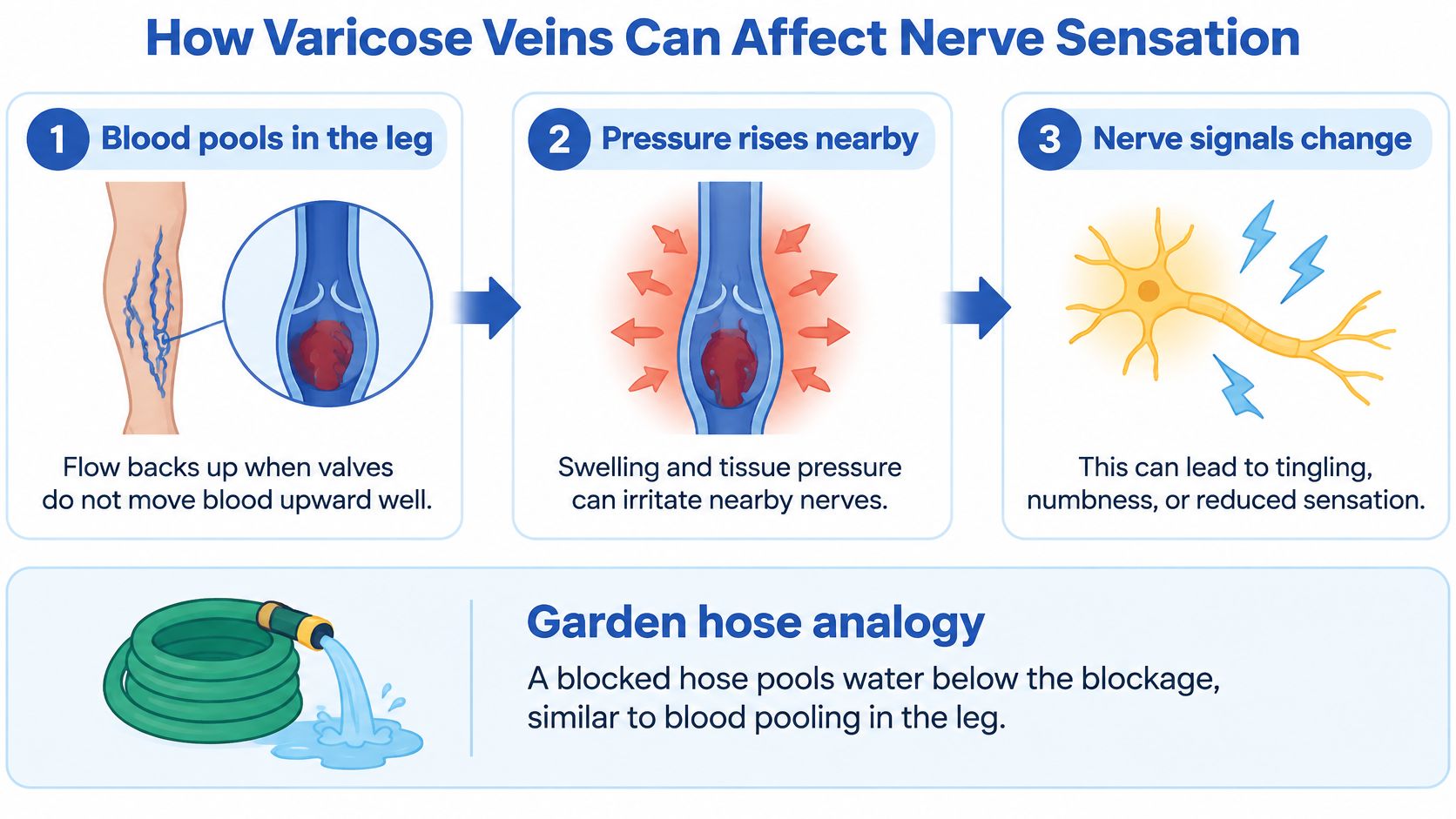
Think of a leg vein like a hose carrying water uphill. If the valves in the vein don't move blood upward well, blood can pool lower in the leg. Pressure rises, fluid may build up in nearby tissue, and prolonged swelling can leave the skin and surrounding tissue irritated.
Sensory nerves pass through that tissue. When swelling and inflammation persist, they may put pressure on nearby nerves and affect how the nerves register touch, temperature, or vibration. This is one possible explanation for tingling or reduced sensation in more advanced venous disease. It isn't a proven explanation for every person with numbness, and it shouldn't be assumed from the appearance of a vein alone.
What else can point to advanced venous disease
In chronic venous insufficiency, increased pressure in the leg veins can occur alongside aching, heaviness, swelling, itching, and skin inflammation or discoloration. Researchers have proposed that changes in tiny blood vessels around nerves, as well as pressure and inflammation in surrounding tissue, may contribute to sensory changes in severe disease. These mechanisms are more plausible when numbness appears alongside other signs of long-standing venous problems, rather than as an isolated symptom.
Venous symptoms may become more noticeable after standing for a long time and ease with leg elevation. That pattern can be useful to report, but it doesn't confirm the cause of numbness. For a plain-language overview of how long-term vein problems can affect the legs, see this guide to chronic venous insufficiency, its symptoms, and treatment.
Numbness After Vein Procedures and Treatment
Numbness has a clearer connection to vein treatment than to uncomplicated varicose veins themselves. Some nerves lie close to leg veins, so heat used during endovenous ablation or the removal of a vein can bruise or affect a nearby nerve. The result may be a small area of reduced sensation, rather than numbness across the whole foot or leg.
The location depends on which vein and nearby nerve are involved. Many treatment-related sensory changes improve over time, but some can last or, occasionally, be permanent. University College London Hospitals notes that approximately 1 in 100 patients may develop skin numbness after endovenous treatment when the skin's nerve supply is injured. That figure describes a potential treatment complication, not how often varicose veins cause numbness without treatment. The hospital's varicose-vein surgery information explains why nearby nerves can be affected.
Tell the treating team where sensation changed
New numbness after a procedure is worth reporting to the treating clinic. Tell them when it began and exactly where you feel it. They can document the area, check strength and circulation, and monitor whether sensation improves. Weakness or difficulty lifting the foot needs prompt assessment, not just observation at home.
If you're trying to understand what clinicians may assess after a suspected procedure-related nerve problem, this overview of when to assess postoperative numbness offers relevant context. For a description of a procedure that removes small surface veins through tiny openings, see how ambulatory phlebectomy is performed. Neither resource replaces advice from the clinician who knows your treatment and symptoms.
Conditions That Mimic Vein-Related Numbness
Two people can describe “numb legs” but mean very different things. One may notice swelling and heaviness after standing, with symptoms easing after resting with the legs raised. Another may have persistent tingling in both feet, even when the legs aren't swollen. The veins could be relevant for one person and incidental for the other.
Consider a person with diabetes who gradually develops a numb, tingling feeling in both feet. That pattern can fit peripheral neuropathy and calls for an assessment beyond visible veins. By contrast, numbness that travels from the lower back down one leg in a narrow path may suggest irritation of a nerve coming from the spine. A clinician can use the pattern and examination to decide whether further nerve or spine evaluation is appropriate.
Other possibilities include:
- A compressed nerve: Pressure on a nerve near the knee or ankle can cause altered sensation in the area it supplies.
- Arterial circulation problems: Reduced blood flow may come with coolness, pallor, or pain, which makes circulation assessment important.
- Medication or metabolic effects: Some medicines and metabolic problems can affect nerve sensation. A clinician can review medications and consider blood tests when appropriate.
- A vein complication: A hard, red, tender area along a vein can suggest inflammation that needs medical review.
Having varicose veins doesn't rule out any of these conditions. That's why a clinician may ask about medical history, medications, where the numbness travels, and whether one or both legs are affected, rather than focusing only on the visible veins.
Telling Venous and Neurologic Numbness Apart
Patterns can help you describe the problem, but they can't settle the diagnosis on their own. Venous discomfort often worsens after prolonged standing and improves with elevation. Numbness that follows a defined nerve path, stays on one side, or comes with weakness may point toward a neurologic cause. A cold or pale foot raises concern about circulation and also needs assessment.
| Feature | Pattern Suggesting Venous Involvement | Pattern Suggesting Neurologic or Arterial Cause |
|---|---|---|
| Distribution | More widespread or not confined to one nerve path, sometimes near areas of swelling or skin change | Follows a specific nerve path, affects a defined patch, or involves both feet in a stocking-like pattern |
| Laterality | May affect a swollen area or both legs | May be one-sided with nerve irritation, or affect both feet with some neuropathies |
| Timing and triggers | Often more noticeable after prolonged standing; may ease with elevation | May persist regardless of elevation or follow a particular position or activity |
| Strength | Numbness without weakness may occur, but still needs assessment | Weakness or trouble lifting the foot points away from a simple vein explanation |
| Skin and circulation | Swelling, itching, discoloration, or other chronic skin changes may be present | Cool, pale skin or marked color change can signal a circulation problem |
Keep a clear record
Before an appointment, note where sensation changes, whether it affects one leg or both, when it starts, and what seems to improve or worsen it. Include any swelling, skin changes, weakness, or trouble walking. Reduced sensation can also make small injuries harder to notice, so check areas of altered feeling for breaks in the skin, particularly if you already have a wound.
If you also have visible veins, pain, swelling, or a sore that isn't healing, a vein assessment may be relevant. These warning signs of potentially serious varicose-vein problems can help you decide when not to delay seeking care.
Red Flag Symptoms That Need Urgent Care
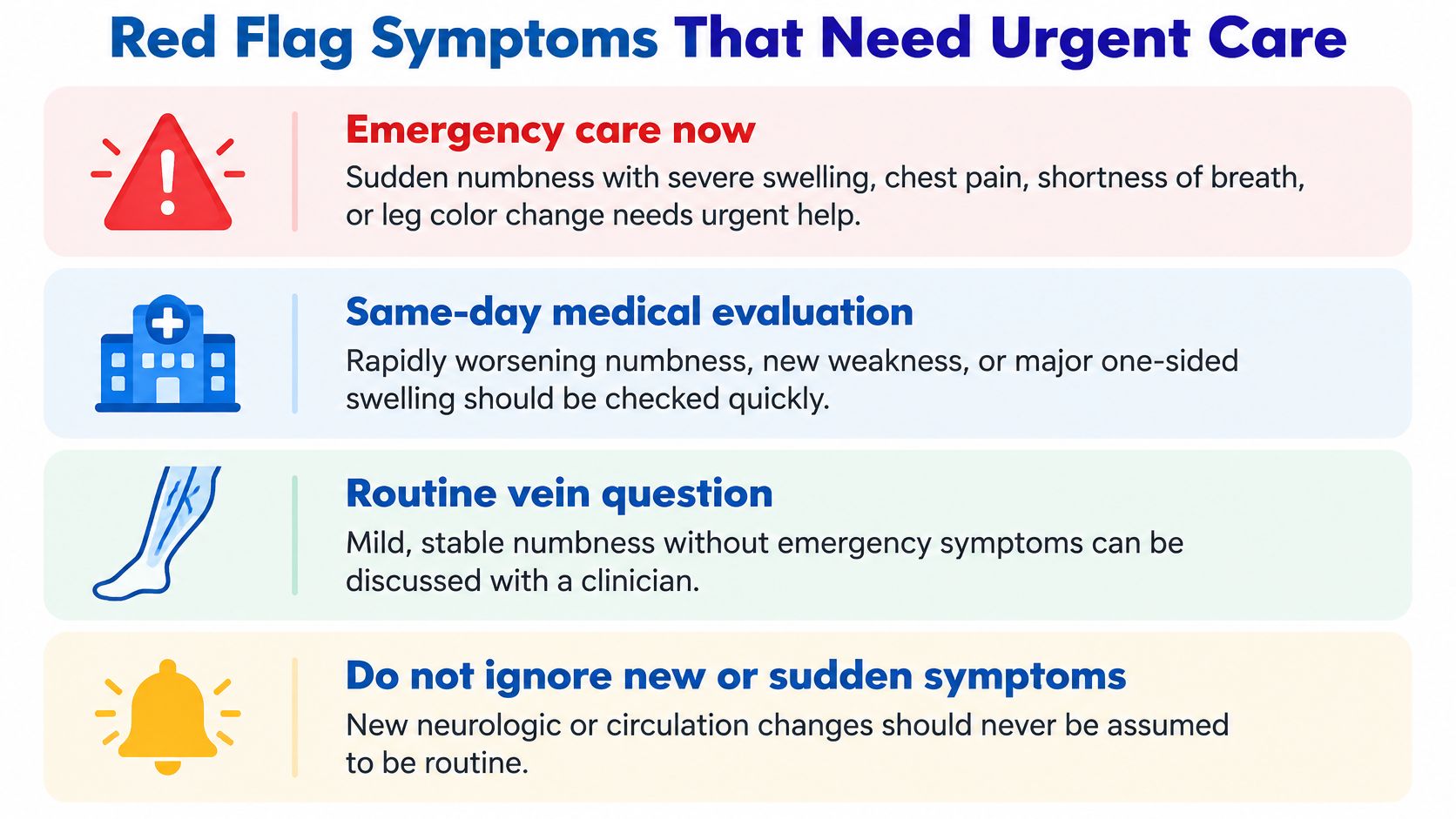
Sudden numbness or a major change in how your leg feels shouldn't be dismissed as “just veins.” New numbness together with one-sided swelling, pain, warmth, redness, weakness, or a change in skin color needs prompt clinical attention. A clinician may need to check circulation, nerve function, and whether a clot or another urgent problem is present.
Decide how quickly to act
- Emergency care now: Seek emergency help for chest pain or shortness of breath, or sudden numbness with major weakness, foot drop, or a cold, pale, or discolored leg. Chest pain and shortness of breath can be signs of a dangerous complication.
- Prompt assessment: Contact a medical professional promptly for new one-sided leg swelling with pain, warmth, redness, or sudden sensory change. A hard, red, painful vein or bleeding from a vein also needs timely attention.
- Timely routine review: Arrange an appointment for numbness that persists or gradually worsens, doesn't ease with elevation, or occurs with a non-healing sore.
The NHS guidance on varicose veins advises prompt assessment for new one-sided swelling accompanied by pain, warmth, redness, or sudden sensory change, since clinicians may need to exclude thrombosis or acute circulation problems. Don't wait for a routine vein appointment if symptoms are sudden or severe.
Choosing the Right Evaluation Path
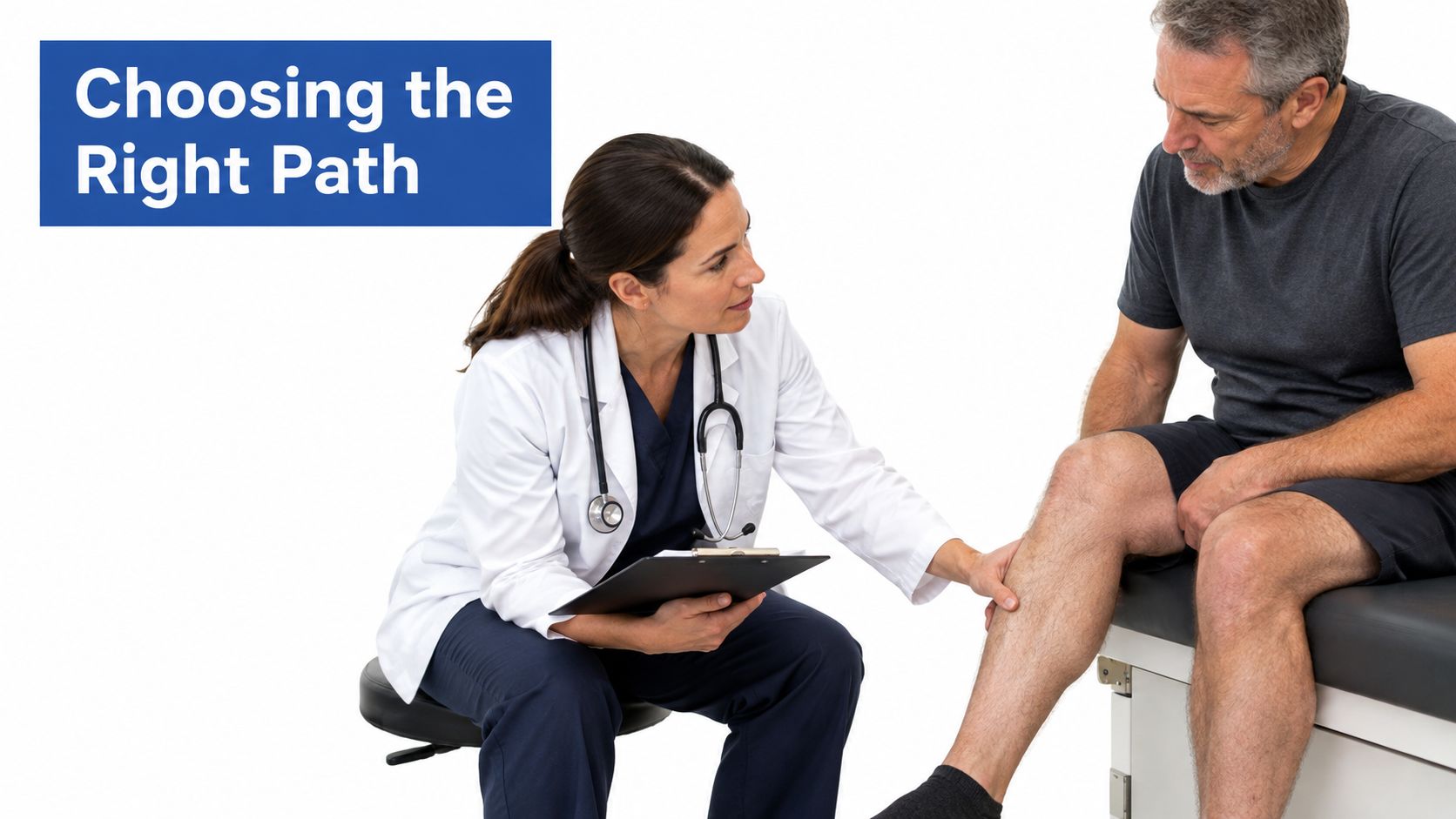
A good evaluation works like a house inspection: you check the plumbing and the wiring separately, because a leak and a faulty circuit can leave similar-looking damage. Veins are the plumbing. Nerves are the wiring. So the first step is an examination, not an assumption about the varicose veins you can see.
During the exam, the clinician may check pulses, skin temperature and color, swelling, muscle strength, reflexes, and which patches of skin have reduced sensation. Those findings sort the problem into a circulation pattern or a nerve pattern, and that sorting decides which test comes next.
Each test answers a different question, and each has a blind spot:
| Test | What it can show | What it cannot show |
|---|---|---|
| Neurovascular examination | Whether circulation, strength, and sensation are affected, and where | The underlying cause |
| Duplex ultrasound | Venous reflux, obstruction, or a suspected clot | Most nerve disorders |
| Laboratory tests | Whether diabetes or another metabolic problem may be contributing | Where nerve damage sits |
| Neurologic testing or spine evaluation | Evidence of a focal nerve problem or a spine-related cause | Venous reflux severity |
When both vein disease and neuropathy are present
Sometimes the answer involves both systems at once. An observational report of ablation in patients with both conditions followed 50 patients with confirmed chronic distal symmetric polyneuropathy and venous insufficiency; six months after endovenous ablation, 44 patients, or 88%, reported more than a 50% reduction in pain, numbness, and tingling. The study was small and observational, so it does not prove that ablation cures neuropathy or that it will help everyone.
Treat that finding as a reason to check the veins even when neuropathy is already diagnosed, and as a signal that falls short of a guarantee. Documented venous reflux may still be worth evaluating, and a clinician can weigh vein findings alongside the nerve assessment, circulation, symptoms, and wound status before discussing what treatment can and cannot address.
Practical Next Steps for Persistent Numbness
Start by writing down the pattern. Note where the numbness is, when it began, whether one or both legs are affected, and whether standing, walking, or elevation changes it. Record any swelling, color change, coolness, weakness, or skin that isn't healing.
Bring a medication list and mention diabetes, previous vein procedures, and recent injuries. A primary care clinician can assess possible metabolic or neurologic causes; a vein clinician can examine varicose veins, swelling, or venous wounds and decide whether duplex ultrasound is appropriate. If new numbness started after vein treatment, contact the treating clinic promptly.
Vein and Wound Institute evaluates venous disease and wounds, uses duplex ultrasound to assess vein problems, and coordinates vein and wound care. The practice has locations in Beverly Hills, Ventura, Santa Barbara, and Glendale, with Saturday appointments available.
If numbness persists or comes with swelling, skin changes, or a wound, arrange an assessment rather than assuming visible veins are the cause. Vein and Wound Institute offers clinical evaluation, duplex ultrasound, and coordinated care for venous conditions and wounds.