You kick off your shoes after work, peel off your socks, and there's a deep ring pressed into each ankle. Your calves feel tight, your feet look puffy, and climbing the stairs feels harder than it should. By morning things look better, so you tell yourself it's just a long day. When your legs feel heavy and swollen on most evenings, though, that pattern deserves more than dismissal.
Table of Contents
- When Heavy Legs Become Part of Your Evening Routine
- How Circulation, Valves, and Lymphatics Set the Stage
- Common Causes Beyond Varicose Veins
- Red Flags That Mean Stop and Get Checked Now
- What a Vein and Wound Evaluation Actually Looks Like
- Home Measures That Actually Help
- Treatment Pathways Through a Vein and Wound Practice
- Your Next Step Tonight
When Heavy Legs Become Part of Your Evening Routine
The sequence is familiar in clinic. A teacher, nurse, driver, or office worker says the legs feel normal at breakfast, leaden by dinner, and better after a night in bed. Shoes pinch by late afternoon. Ankles that were visible in the morning seem to disappear, and pressing a thumb into the shin leaves a brief dent.
That daily rise and fall isn't random. It tells you fluid and blood are pooling while you're upright and draining when you're flat. Heaviness is often the sensation that comes with that pressure, along with aching, tightness, throbbing, itching, or restless discomfort when you finally sit down.
A Common Signal, Not a Vanity Complaint
Heavy, tired, or swollen legs are common manifestations of chronic venous disease, and a systematic review in health care workers found a mean prevalence of 58.5% for the condition, with varicose veins affecting an average of 22.1%. In that same evidence base, 22% of the general population across eight European and South American countries reported signs or symptoms, and 15.9% reported daily leg swelling.
Those numbers matter because they place your experience in context. You're not describing a rare or cosmetic nuisance. You're describing a symptom that appears early in venous disease, sometimes before there's any visible skin damage, and it also appears in conditions that have nothing to do with veins.
Swelling that reliably returns, worsens over weeks, or favors one leg is information. Treat it as a question to answer, not a flaw to cover.
Four broad categories explain most cases you'll encounter in this article. Venous causes involve blood struggling to return uphill. Lymphatic causes involve fluid that can't drain properly. Systemic causes include heart, kidney, or liver problems that shift fluid balance for the whole body. Medication related swelling follows certain prescriptions and often overlaps with the other three.
That overlap is why buying a tighter pair of compression socks isn't a diagnostic plan. Compression helps some mechanisms and can harm others. Persistent, worsening, or asymmetric swelling deserves a deliberate workup that starts with pattern recognition. When did it begin, is it one leg or both, does elevation help, and what's happening to the skin? Those answers point toward very different next steps.
How Circulation, Valves, and Lymphatics Set the Stage
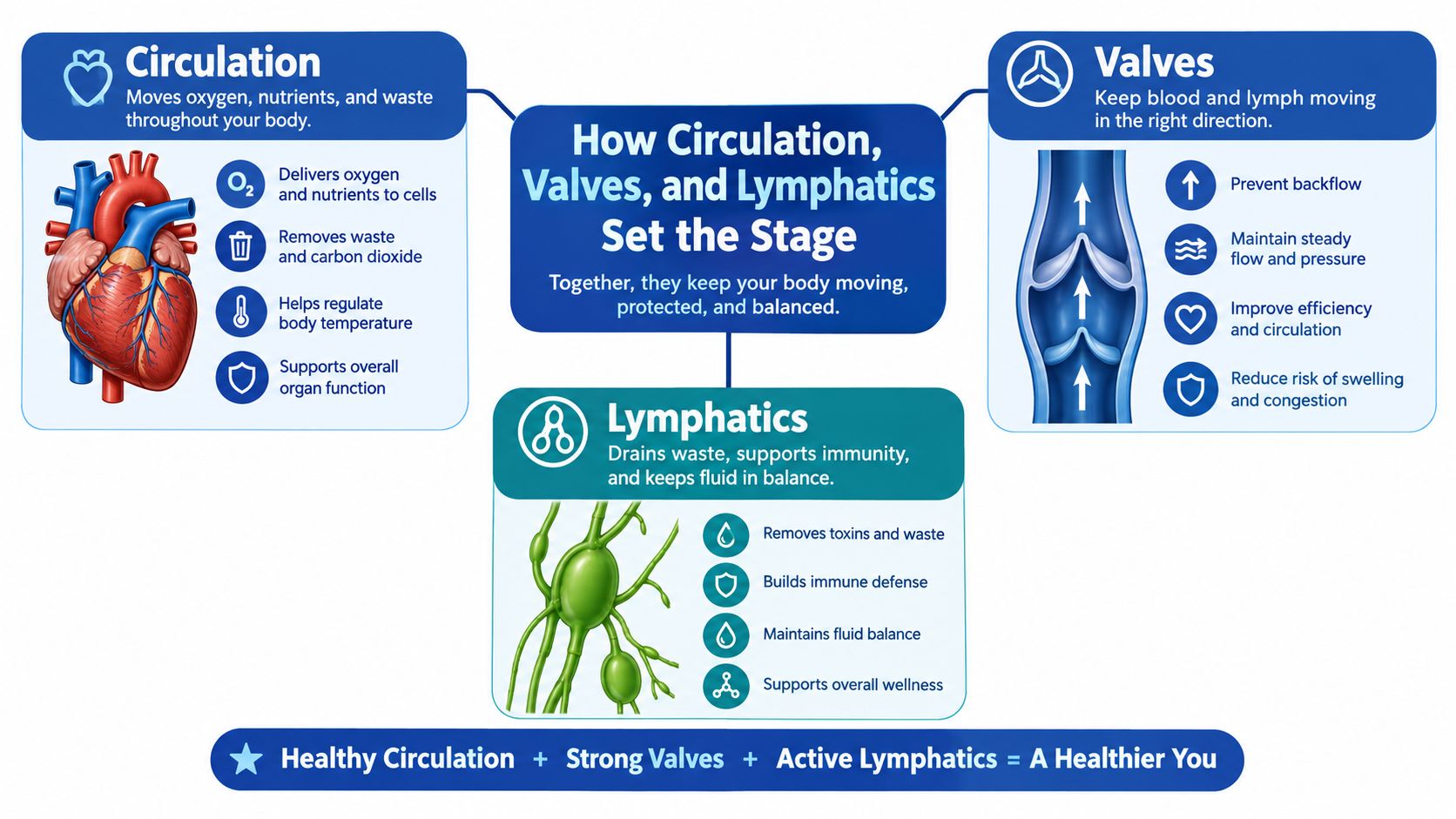
Think of leg circulation as a plumbing loop working against gravity. Arteries deliver blood down under pressure from the heart. Veins have the harder job of bringing blood back up, and they don't do it alone.
The Calf Pump and One Way Valves
Every step squeezes the deep veins in your calf. That calf muscle pump pushes blood upward, and small one way valves inside the veins snap shut between steps so blood doesn't fall back down. It's the same principle as a check valve in a pipe.
When those valves weaken, blood slips backward. Clinicians call that reflux. Pressure builds in the lower leg, a state known as venous hypertension, and fluid gets pushed out of tiny capillaries into surrounding tissue. Your legs feel heavy and swollen because, in a literal sense, they are carrying extra fluid by evening.
When reflux and pooling become a persistent pattern, the diagnosis is often chronic venous insufficiency, and it's worth understanding what chronic venous insufficiency involves, from symptoms to treatment options, because early heaviness can progress to pigmentation, eczema, hardened skin, and eventually ulceration if pressure stays high.
The Drain You Rarely Hear About
The lymphatic system is the second drainage network. It collects protein rich fluid that veins don't reabsorb and returns it to circulation. If lymph channels are damaged, underdeveloped, or overwhelmed, fluid lingers and tissue gradually thickens. That's lymphedema.
From the outside, venous swelling and lymphedema can look alike. Both cause heaviness, tightness, and larger ankles. The details differ, and those details change treatment.
- Venous edema: Often pits when pressed, concentrates around ankle and calf, and improves noticeably with elevation or overnight rest.
- Lymphedema: Tends to feel firmer over time, may involve the top of the foot and toes, and improves less completely with elevation alone.
- Mixed disease: Long standing venous pressure can overload lymph drainage, so both systems fail together and swelling becomes harder to reverse.
The key distinction is simple. Swelling isn't the disease itself. It's the downstream result of pressure, drainage, or fluid balance going wrong somewhere upstream.
Common Causes Beyond Varicose Veins
Varicose veins get most of the attention online, partly because you can see them. But visible veins are only one fingerprint. A useful history sorts causes by onset, symmetry, timing, and what else you notice in the skin or the rest of the body.
Symptom Fingerprints by Cause
| Cause | Typical Onset | One or Both Legs | Time of Day | Skin or Clues |
|---|---|---|---|---|
| Venous insufficiency | Gradual, months to years | Both, one may be worse | Worse by evening, better overnight | Varicose veins, ankle darkening, itching, eczema |
| Lymphedema | Gradual, sometimes after surgery or infection | Often one, can become both | Persistent through the day | Firm swelling, foot and toe involvement, thickened skin |
| Heart failure | Gradual or worsening over days | Both | Worse by evening | Breathlessness, trouble lying flat, rapid weight gain |
| Kidney or liver disease | Gradual | Both | Often present on waking too | Puffiness elsewhere, fatigue, abdominal fluid in liver disease |
| Medication effect | Weeks after starting or changing dose | Both | Worse by evening | No vein changes early, timeline matches a new drug |
Venous insufficiency remains the classic pattern when legs feel heavy and swollen after standing and lighter after elevation. U.S. medical literature estimates more than 25 million adults have chronic venous insufficiency, while venous ulcers affect roughly 1% to 3% of the U.S. population. That scale explains why venous disease sits at the top of the list, but it shouldn't end the list.
Lymphedema deserves separate attention because management focuses on drainage and skin protection rather than closing a refluxing vein. If swelling involves the foot, doesn't pit easily, or followed lymph node surgery, radiation, or repeated infection, reviewing how lymphedema is evaluated and managed helps you see why the workup diverges.
Heart failure shifts the picture from legs to lungs. Swelling in both ankles plus breathlessness on exertion, waking short of breath, or needing extra pillows points toward fluid retention from cardiac strain. Kidney disease can lose protein or retain salt and water, producing more generalized puffiness. Liver disease lowers protein production and raises pressure in abdominal circulation, so leg swelling may arrive with abdominal swelling.
Medications complicate everything. Calcium channel blockers used for blood pressure are a frequent culprit, and steroids, certain diabetes drugs, and anti inflammatory medicines can also contribute. A patient on such a drug who also has venous reflux has two reasons to swell. Treating only the vein leaves residual edema, and blaming only the drug misses progressive vein disease.
Practical rule: Don't ask which single cause explains everything. Ask which causes are present, and in what proportion.
A focused history and exam usually narrow the field to one or two leading candidates before any imaging. That narrowing is the point. It prevents both under testing dangerous causes and over testing straightforward ones.
Red Flags That Mean Stop and Get Checked Now
Most chronic swelling develops slowly and can be evaluated routinely. Some patterns can't wait for a convenient appointment, and confusing them with ordinary tired legs is where harm happens.
Sudden swelling developing within 72 hours, especially in one leg, requires evaluation for deep vein thrombosis rather than routine self care. A clot in a deep vein can cause pain, warmth, redness, and a calf that feels tight or tender. It isn't reliably distinguishable from a pulled muscle by feel alone, which is why learning how deep vein thrombosis presents and why prompt assessment matters is worth your time before you ever need it.
Symptoms That Change the Urgency
- Chest pain or sudden shortness of breath: Could signal a clot traveling to the lungs or cardiac decompensation. Seek emergency care.
- Fainting or coughing blood: Treat as an emergency alongside leg swelling, not as separate events.
- Rapidly worsening swelling in both legs: May reflect heart, kidney, or liver function deteriorating over days.
- Fever with spreading redness: Suggests cellulitis, which can advance quickly in an already swollen leg.
- Skin breakdown, weeping, or a new wound: Signals tissue that can no longer tolerate the pressure and fluid load.
Two assumptions cause most delays. The first is that chronic, symmetric swelling must be benign because it's familiar. It isn't automatically safe, since cardiac and renal disease often look exactly like that. The second is that acute one sided pain must be muscular because you were active yesterday. Activity doesn't rule out a clot.
Use a clean mental rule instead. New, sudden, painful, asymmetric, or systemic symptoms are not a wait and see category. When in doubt, same day assessment beats a week of elevation and hope.
What a Vein and Wound Evaluation Actually Looks Like
Patients often delay booking because they imagine a vague visit ending in generic advice. A proper evaluation is more structured than that, and each step answers a specific question raised by your pattern of swelling.
History and Examination First
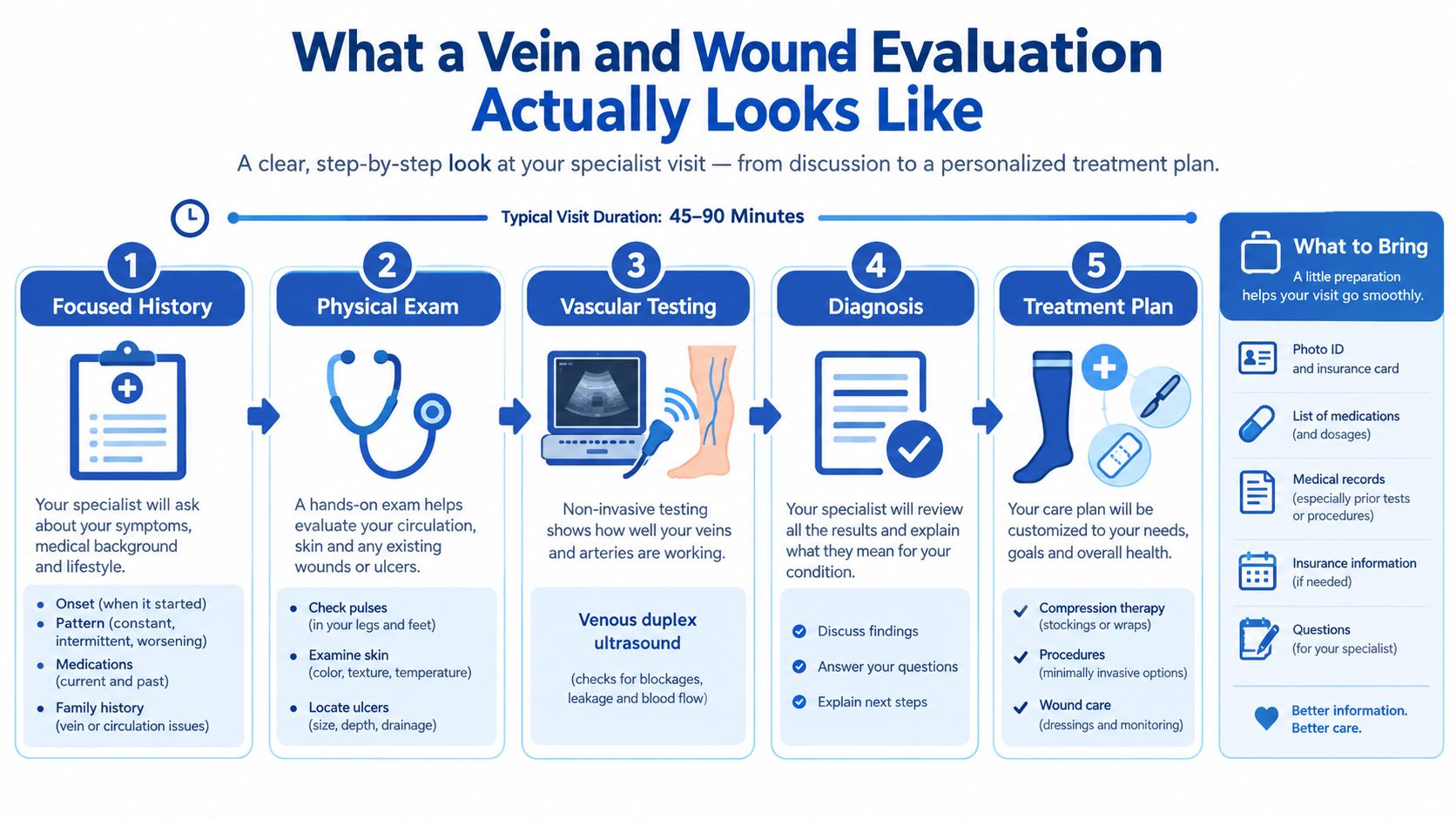
The visit starts with onset, timing, symmetry, triggers, and relievers. Medications get reviewed in detail, along with prior clots, pregnancies, injuries, surgeries, family history of vein disease, and how much of your day is spent sitting or standing. Breathlessness, chest symptoms, urinary changes, and weight shifts matter because they separate local from systemic causes.
Examination follows the same logic. Pulses are checked, edema is tested for pitting and distribution, and skin is inspected for pigmentation, eczema, thickening, or ulcer location. A nonhealing wound below the knee lasting more than 2 weeks should be treated as a potential venous ulcer and warrants specialist assessment. Duplex ultrasound with reflux testing is the recommended objective evaluation in that guidance because it confirms venous disease, maps which superficial or deep segments are involved, and helps plan treatment.
Testing That Matches the Question
Duplex ultrasound is painless and done while you stand or recline with maneuvers that provoke reflux. It shows direction of flow, valve function, and whether a clot is present. Symptoms alone can't tell you which vein segment is failing, and treatment selection depends on that map.
When arterial disease is possible, clinicians measure the ankle brachial index, which divides ankle systolic pressure by arm systolic pressure. Guidance on peripheral edema stresses that the ankle brachial index should be assessed before compression when peripheral artery disease is suspected, because compressing an ischemic limb can further reduce perfusion. That same guidance notes duplex can support a venous diagnosis and help distinguish it from lymphedema in chronic bilateral edema.
Laboratory tests enter when the shortlist includes kidney, liver, thyroid, or cardiac contributors. You won't necessarily need every test. You'll need the ones your history and exam justify, and an integrated vein and wound clinic can often answer the venous, arterial, and skin questions in a single appointment rather than sending you between offices.
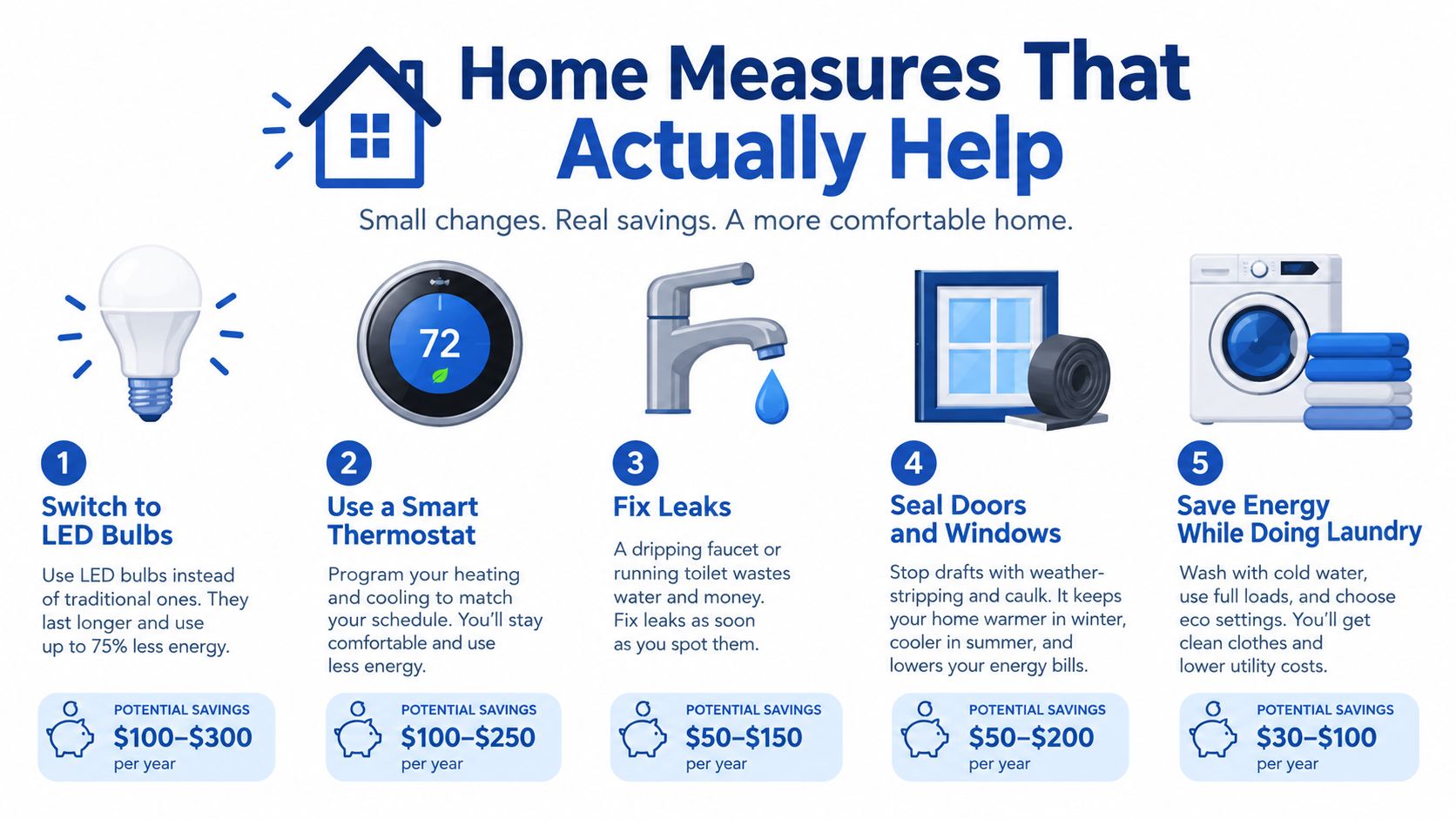
Home Measures That Actually Help
Home care works when it's organized around mechanism, not folklore. Elevation, movement, and compression each do something specific, and none of them substitutes for diagnosis when swelling persists.
Build a Daily Routine
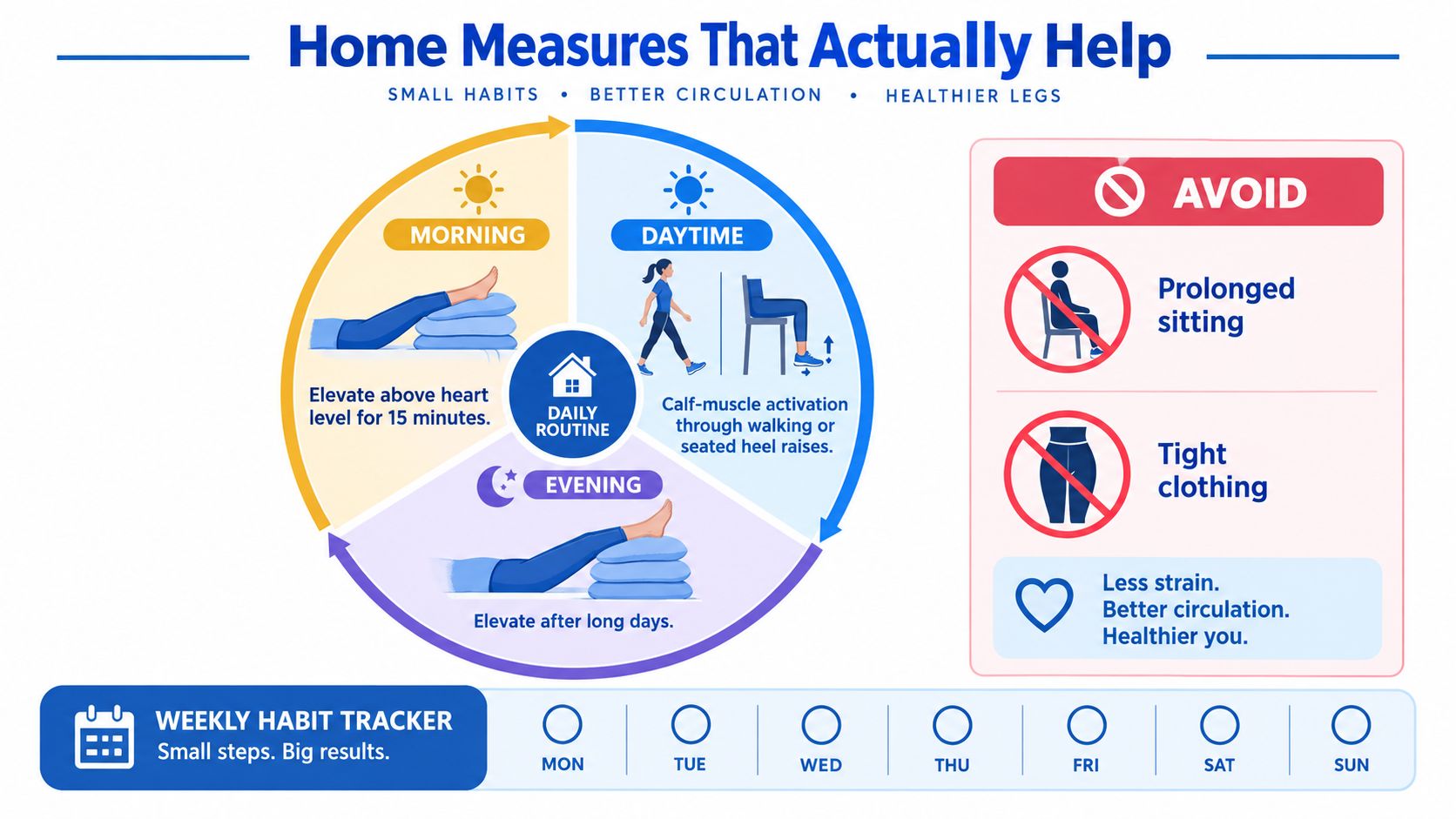
Elevation uses gravity in your favor. Raise legs above heart level on pillows after long days and whenever swelling peaks. Propping feet on a low stool while seated helps less because the ankle stays below the heart.
Calf activation is the engine. Walking is ideal, but seated heel raises, ankle pumps, and short movement breaks during desk work or travel also squeeze the pump. Structured options such as GrabGains mobility exercises can give you guided, low impact movements to rotate through during the day if a walk isn't possible. Consistency beats intensity here. Frequent brief activation moves more fluid than one heroic workout followed by hours of stillness.
Weight management reduces load on venous return where excess weight is a factor, and moderating sodium can limit fluid retention in salt sensitive swelling. Neither is a moral judgment. Both are pressure variables you can influence gradually.
Compression With Guardrails
Compression improves calf pump efficiency and raises external tissue pressure so less fluid escapes into tissue. It's a first line treatment for chronic edema when arterial insufficiency has been excluded, and guidance cites an ankle brachial index of at least 0.8 as a typical threshold for standard external compression. Chronic leg wounds in that guidance are estimated at approximately 70% venous, 25% arterial, and 5% other causes, which is exactly why classification comes before squeezing.
Skip self prescribed compression and get arterial assessment first if you have diabetes, smoking history, foot pain at rest, cool or pale feet, weak pulses, or any ulcer of uncertain cause. Stop and seek review if compression increases pain or changes foot color. More pressure isn't universally better.
Protect the skin while you do all of this. Moisturize intact skin, wear breathable well fitted footwear, and inspect ankles daily for cracks or weeping. Small breaks in swollen skin become entry points for infection and slow healing wounds.
Treatment Pathways Through a Vein and Wound Practice
Treatment follows the map, not the symptom. Once evaluation identifies reflux, obstruction, lymphatic failure, arterial disease, or a systemic driver, the plan targets that mechanism and monitors whether heaviness and swelling recede.
When Venous Reflux Is the Driver
Minimally invasive endovenous procedures close or remove failing veins so blood reroutes through healthy channels. Options include endovenous laser ablation and radiofrequency ablation, which use heat inside the vein, and VenaSeal, which uses medical adhesive. Varithena and ClariVein address selected segments with foam or combined mechanical and chemical treatment, while ultrasound guided foam sclerotherapy treats visible or deeper tributaries under imaging. Ambulatory phlebectomy removes bulging surface veins through tiny incisions.
These aren't interchangeable menu items. Vein diameter, depth, tortuosity, prior clot, and nearby nerves influence which approach fits. That's why duplex mapping precedes any recommendation, and why treating a cosmetic looking vein without fixing upstream reflux often disappoints.
When Skin and Wounds Are Involved
Active ulceration changes the sequence but not the principle. Wound care may involve debridement, infection management, appropriate dressings, bioengineered skin substitutes or grafts in selected cases, and compression once arterial status allows. Treating underlying reflux alongside the wound, rather than dressing the surface for months in isolation, addresses the pressure that caused breakdown and helps reduce recurrence.
That recurrence risk is real. Venous ulcers can return despite standard treatment when venous hypertension persists, so follow up imaging and maintenance compression often continue after the skin closes. A closed wound isn't the same as a corrected circulation problem.
The right procedure on the wrong diagnosis still fails. Sequence matters more than technology.
Lymphedema follows a different pathway centered on decongestive therapy, meticulous skin care, exercise, and compression garments fitted for lymphatic drainage. Systemic causes require coordination, with referral to cardiology, nephrology, or hepatology when testing points that way, and medication review with the prescribing clinician rather than stopping drugs on your own.
An integrated practice can hold these threads together. Venous treatment, wound protocols, and referral coordination sit in one care plan, so your legs feel heavy and swollen for a reason that gets named, treated, and rechecked instead of repeatedly reassured.
Your Next Step Tonight
Run through these prompts before bed tonight.
- Is swelling new, sudden, one sided, or painful: Seek same day care, especially with redness or calf tenderness.
- Is there chest pain, breathlessness, fainting, or coughing blood: Seek emergency care now.
- Is swelling persistent, both sided, and worse by evening: Book a routine vein evaluation with duplex ultrasound, particularly if it's lasted weeks or is worsening.
- Is skin darkening, itching, weeping, or breaking down: Don't mask it with compression alone. Get assessed promptly.
Heaviness and swelling are common and usually manageable. Outcomes improve when the underlying cause is identified early rather than covered up.
If your legs feel heavy and swollen most evenings, or you're dealing with skin changes or a wound that won't close, a focused evaluation with duplex ultrasound can identify whether venous reflux, lymphatic problems, or another cause is driving your symptoms. The team at Vein and Wound Institute provides minimally invasive vein treatment and advanced wound care across Southern California, and you can book a consultation to get a clear diagnosis and a plan built around it.