Quick Answer
A wound not healing may be caused by poor circulation, diabetes, wound infection, pressure on the wound, inadequate nutrition, or other underlying health issues. If your wound doesn’t seem to be healing after a few weeks, or if it gets more painful or inflamed or starts to discharge fluid, visit a doctor. Early wound care can prevent complications and support wound healing.
5 Things You Can Learn From This Article
● When to see a wound specialist?
● Why certain wounds take longer to heal than others.
● Most common causes of non-healing wounds.
● Signs of a wound that is not healing well.
● Treatment options for non-healing wounds.
Introduction
Most tiny cuts and wounds start healing within a few days and progress over the next few weeks. But certain wounds don’t heal, or heal a lot more slowly than you’d think. If you have an open wound that is not healing, it might interfere with your daily life. If left untreated, it can get infected.
A wound not healing is often one of the earliest signs of delayed wound healing and should not be ignored.
Delayed wound healing usually indicates that something is preventing your body from repairing injured tissue correctly. Knowing why a wound won’t heal can help you receive the proper therapy before the situation grows worse.
What Does It Signify If a Wound Will Not Heal?
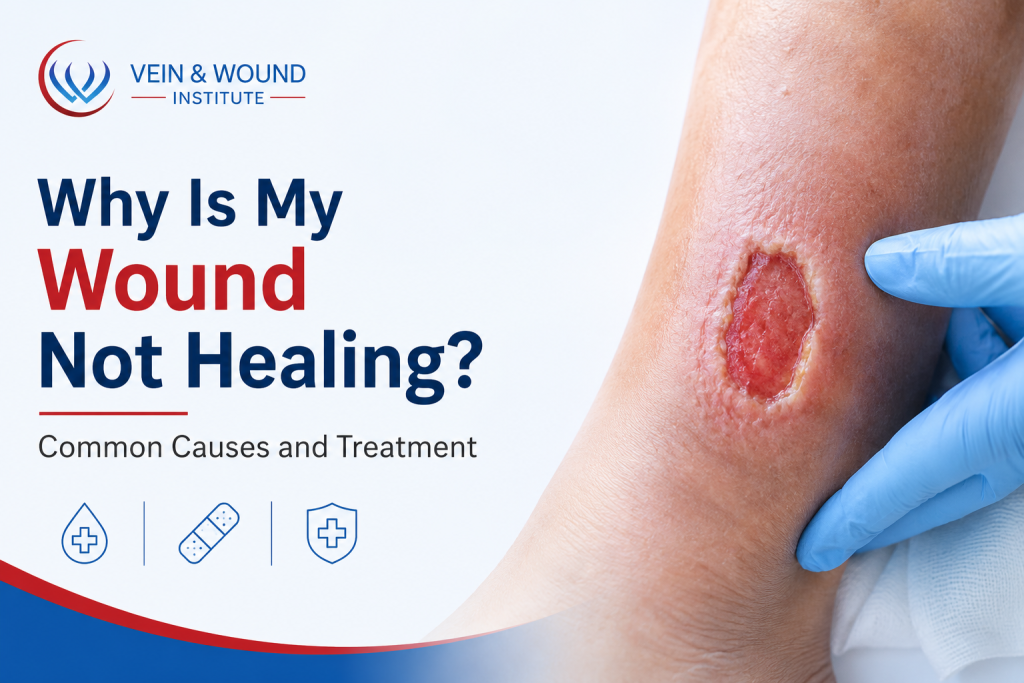
A non-healing wound is a wound that has not improved in the expected time frame. The wound may not contract and heal slowly but remain open, continue to ooze fluid or become more painful.
A wound not healing may be caused by an underlying health condition that slows the body’s natural healing process.
Delayed wound healing is a term typically used to describe a wound that does not heal. This is what happens when an underlying condition interferes with or prevents the body’s normal healing process.
The importance of early diagnosis is that if wounds are not treated, they might develop into a chronic wound that needs specialist treatment.
Reasons Why a Wound May Not Heal
Several medical conditions and lifestyle factors can cause a wound not healing or lead to slow healing wounds.
Bad Blood Flow
Good blood flow supplies oxygen and nutrients to help repair the injured tissue. Poor circulation means less oxygen is getting to the wound—and that might delay wound healing.
You may also be more likely to develop leg ulcers if you have problems with your circulation.
Diabetes
Diabetes is one of the most common causes of delayed wound healing. High blood sugar can also damage blood vessels and nerves, making diabetes wound healing more difficult and raising the risk of infection.
Infection
A wound infection can take a long time to heal. Bacteria can invade healthy tissue and stop the formation of new tissue. If not adequately treated, the infection might spread and lead to more serious problems.
Pressure of Wound
People who don’t go around much can find that persistent pressure on a wound hinders the healing process. Less pressure allows damaged tissue the ability to heal better.
Poor Nutrition
Your body needs protein, vitamins and minerals to repair damaged skin. A poor diet can slow the healing of a wound, because the body doesn’t have the resources to produce new tissue.
Smoking Tobacco
Smoking reduces the content of oxygen given to the tissues and it affects the blood circulation. This can slow down the body’s natural healing and make wound problems more likely.
Chronic Medical Conditions
Chronic health issues such as chronic venous insufficiency, renal illness and immune system diseases might impact wound healing and raise the likelihood of a chronic wound.
How to Tell If Your Wound Isn’t Healing Properly
Slowly. A healed wound should be getting smaller and less painful. If you experience any of these symptoms, you might have to see a doctor to get the wound treated.
- The wound remains open for a few weeks.
- The wound doesn’t shrink it swells.
- Increased redness or swelling surrounding the wound.
- Yellow, green or bad smelling discharge.
- Pain that is worsening instead of improving.
- Black or dead tissue around the incision.
- Fever or evidence of infection.
- Wound is healing slowly with appropriate care.
These indicators could be signs of slow healing wounds, delayed wound healing, or that there is some medical disease behind that needs to be treated.
What Do We Do With a Wound That Doesn’t Heal?
Treatment for a wound not healing depends on the cause of the wound. Your health care expert will look at the wound and pick the best treatment approach. Early wound care can improve healing and reduce complications.
How to Clean a Wound Properly
Washing the wound removes microorganisms and reduces the risk of infection. And changing of the dressing regularly offers a healthy environment for healing.
Debridement
Sometimes dead or damaged tissue needs to be removed. This process, called debridement, promotes healthy tissue growth and facilitates recovery.
Infection Control
If there is a wound infection, it may be necessary to treat the infection before it can heal.
Progressive Wound Dressings
Modern dressings on wounds keep the right amount of moisture in the wound and protect the wound while new tissue is forming.
Improved Circulation
If poor circulation is slowing wound healing, increasing the blood flow may improve the wound healing. Treating the underlying venous problems might also promote healing.
Managing Underlying Health Conditions
Better diabetes control, improved diet, eliminating smoking and managing other medical conditions can help wounds heal better.
When Should You See a Doctor?
If you should receive medical help:
- Your wound has not healed in the last weeks.
- The agony is more intense.
- The redness or swelling is increasing.
- You detect pus or discharge that smells bad.
- You take a temperature.
- You have diabetes. You have a wound that isn’t healing well.
- The wound doesn’t grow smaller, it gets bigger.
Early treatment can prevent the wound from becoming a chronic wound.
Can I Cure a Non-Healing Wound?
You cannot avoid all wounds, but you can lessen the likelihood of delayed healing by:
- Treat wounds immediately.
- Covering wounds with proper dressings.
- Diabetes and other chronic diseases control.
- No smoking allowed.
- Keeping a healthy diet.
- Physical activity for improved circulation.
- If healing takes longer than you expect, get medical attention.
Proper wound care and treatment are crucial steps in preventing long term issues.
Summary
A wound not healing may be caused by diabetes, poor circulation, wound infection, poor nutrition, smoking or other medical conditions that affect wound healing. Delayed wound healing is no small matter because untreated wounds can become a chronic wound and develop problems.
Early identification of warning symptoms and adequate wound care can help a wound heal and prevent more serious issues. If your wound does not heal, or if it becomes infected, you should contact a doctor for proper examination and treatment.
Frequently Asked Questions
[sp_easyaccordion id=”18434″]