Quick Summary
- Chronic venous insufficiency occurs when leg veins cannot efficiently return blood to the heart.
- Common symptoms include leg swelling, heaviness, varicose veins, skin changes, and leg pain.
- Risk factors include aging, obesity, prolonged sitting or standing, and a history of blood clots.
- Early diagnosis and treatment help prevent complications such as leg ulcers.
- Treatment options include compression therapy, lifestyle changes, leg elevation, and minimally invasive vein procedures.
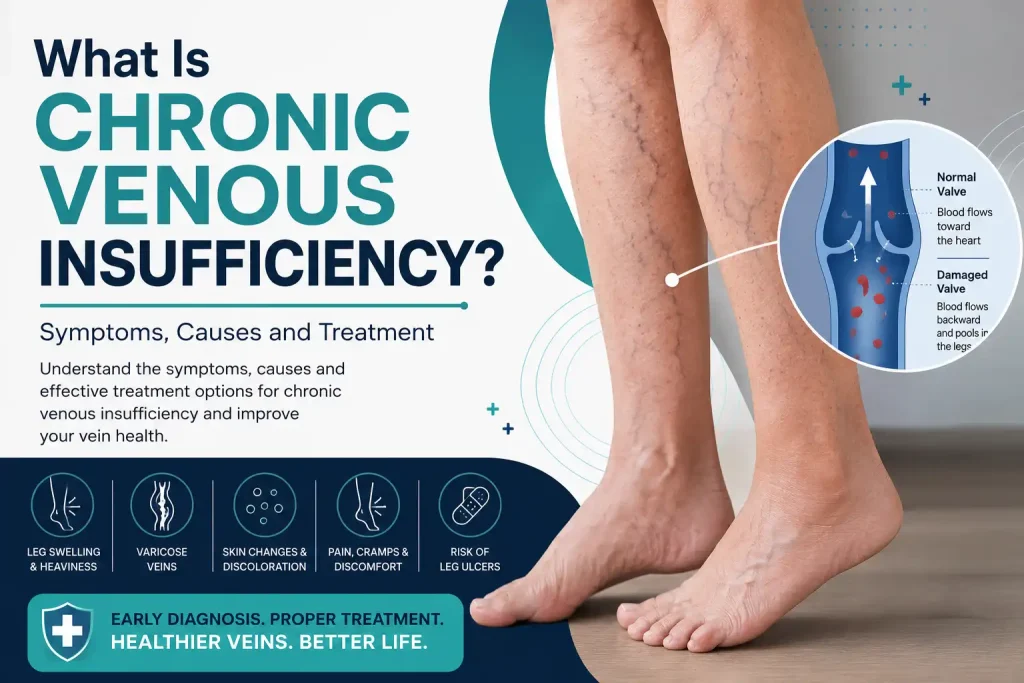
Healthy veins carry blood back to your heart from your legs. Small valves in the veins make sure the blood always flows the appropriate way. These valves might be weak or cracked. Such damage allows blood to flow backward and pool in the legs.
This condition is named chronic venous insufficiency. This is a very common vein condition many individuals have. Without treatment, it might develop worse over time. Knowing the indications, causes, and remedies helps get people medical attention more quickly.
What is venous stasis?
Venous insufficiency disease has attracted many people’s attention. The veins are weakened and can’t return the blood correctly to the heart.
Chronic venous insufficiency (CVI) is a condition where the veins in a person’s legs aren’t functioning well enough to send blood back to the heart. Valves in veins generally prevent blood flowing backwards. If these valves fail, blood might pool in the legs.
This added pressure can alter the flow of blood and result in a multitude of issues. The problem frequently grows worse with time, but don’t ignore it.
Many people who search for “chronic venous insufficiency” are startled to realize that it is one of the main reasons legs swell, pain, and develop skin problems.
Chronic Venous Insufficiency: Symptoms and Signs
Chronic venous insufficiency can affect people in numerous ways. There are those with moderate symptoms and people with more serious difficulties.
Swelling of the legs
One of the most typical symptoms is swelling in the lower legs and feet. It can develop worse after sitting or standing for long periods.
Legs that feel heavy or fatigued
Many people experience leg pain, heaviness, or tiredness, especially at the end of the day.
Spider vein
Large, twisted veins are common in people with severe venous insufficiency. These lines may become increasingly prominent over time.
Changes in Skin
When the blood supply is reduced, the skin may alter. Your feet may become darker, thicker, or inflamed.
Leg pain and cramps
Some people have a challenging time going about their regular lives because of leg cramps, heat, itching, or soreness.
Wounds healed by mistake
Wounds that take a long time to heal could indicate that your blood flow is not excellent. If left untreated, vein insufficiency can result in leg ulcers that require adequate wound treatment.
What causes venous insufficiency?
There are several causes of chronic venous insufficiency.
Damaged vein valves
The most common cause is damage to the valves of the veins. If the valves don’t function properly, blood can flow backward and pool in the legs.
Clot formation
Having a history of blood clots can damage veins and put you at risk for chronic venous insufficiency.
Age
Some vein valves get weaker with age, increasing the risk of venous insufficiency.
Having excess weight
Extra weight makes it difficult for blood to return to the heart, because that puts greater stress on the valves.
Spending plenty of time sitting or standing
Sitting or standing for long periods of time might reduce the blood flow to your legs.
Family history
A family history of vein illness may put patients at a higher risk for developing chronic venous insufficiency.
How to know whether you have chronic venous insufficiency:
Diagnosis usually begins with a medical exam and discussion of your symptoms.
Examination of the body
The doctor or nurse will check the legs for signs of venous disease, such as varicose veins, skin changes, swelling, and more.
Ultrasound scan
Often they will use an ultrasound to observe how the blood is traveling through the tubes. It’s beneficial for finding circulation problems and busted valves.
Early detection of the problem allows for early treatment, preventing further deterioration.
How to Cure Chronic Venous Insufficiency
The way in which you tackle the problem depends on how serious it is. There are many therapies for chronic venous insufficiency that can improve your circulation and help relieve your symptoms.
Magnetic Therapy With Compression
Compression tights can assist in improving blood flow and reducing swelling in the legs.
Lifestyle changes
Staying at a healthy weight, exercising regularly, and not sitting or standing for extended periods will help enhance circulation.
Lifting the legs
Raising the legs many times a day may help get rid of stiffness and improve blood circulation.
Endovenous Vein Treatment
With today’s vein therapies, damaged veins can be repaired and blood flow restored. These techniques typically don’t entail much surgery and can ease discomfort.
The treatment of venous insufficiency depends on the severity of the condition and the person’s overall health.
Does chronic venous insufficiency induce leg ulcers?
Many people seek to understand if persistent venous insufficiency is risky. If left untreated, it can cause changes in the skin, poor circulation, and leg wounds.
If there is too much pressure in the veins, it might damage the skin and tissues nearby. This could mean that cuts might take a long time to heal or not heal at all.
Leg sores can be caused by inadequate blood supply to the legs. Finding out what causes leg ulcers and seeking treatment immediately helps prevent problems from worsening.
What to Do?
Chronic venous insufficiency is a condition that affects many people and prevents blood from flowing properly in the legs. Symptoms include swelling, heavy legs, varicose veins, changes to the skin, and slow healing of cuts.
If you have chronic venous insufficiency, understanding the warning signs and reasons will help you obtain care earlier. With appropriate examination, lifestyle modifications, compression therapy, and medicinal treatment, many individuals can manage their symptoms and enhance their vein health.
FAQ
[sp_easyaccordion id=”18144″]