
Compression Therapy
A non-invasive approach that supports venous circulation, reduces swelling and can help promote healing in venous leg ulcers.
Compression therapy uses specially designed stockings, wraps or bandage systems to apply controlled pressure to the legs. This pressure helps reduce blood pooling in superficial veins and supports the return of blood toward the heart.
Request an Appointment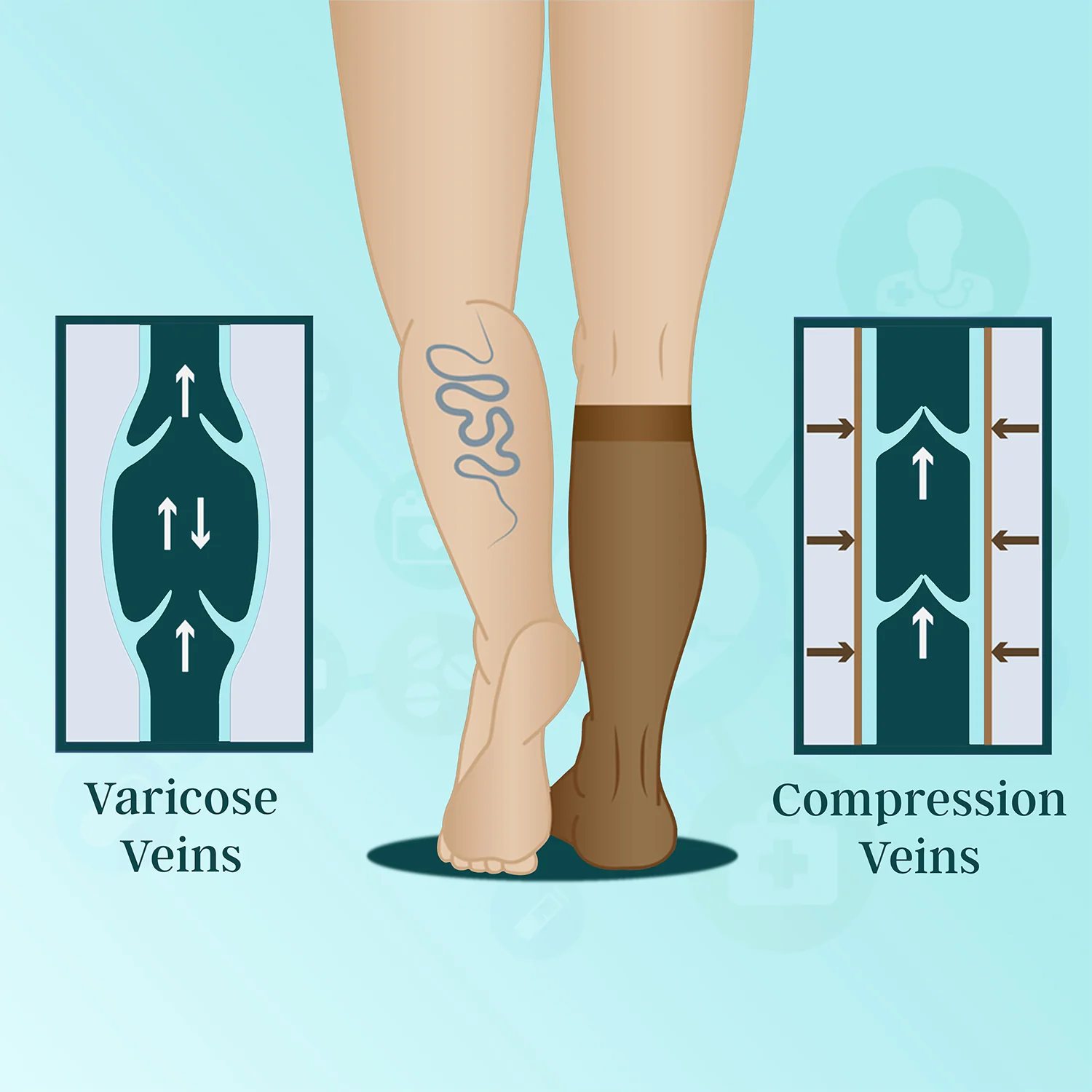
Supporting Better Blood Flow in the Legs
When the valves inside the leg veins do not work properly, blood can flow backward and collect in the lower extremities. Compression applies external pressure that helps move blood from superficial veins toward deeper veins, where it can return more efficiently to the heart.
Improves Venous Return
External pressure helps support the upward movement of blood through the leg veins.
Reduces Swelling
Compression can help limit fluid buildup in the lower legs and ankles.
Supports Wound Healing
For appropriate patients with venous leg ulcers, compression may improve healing and help reduce recurrence.
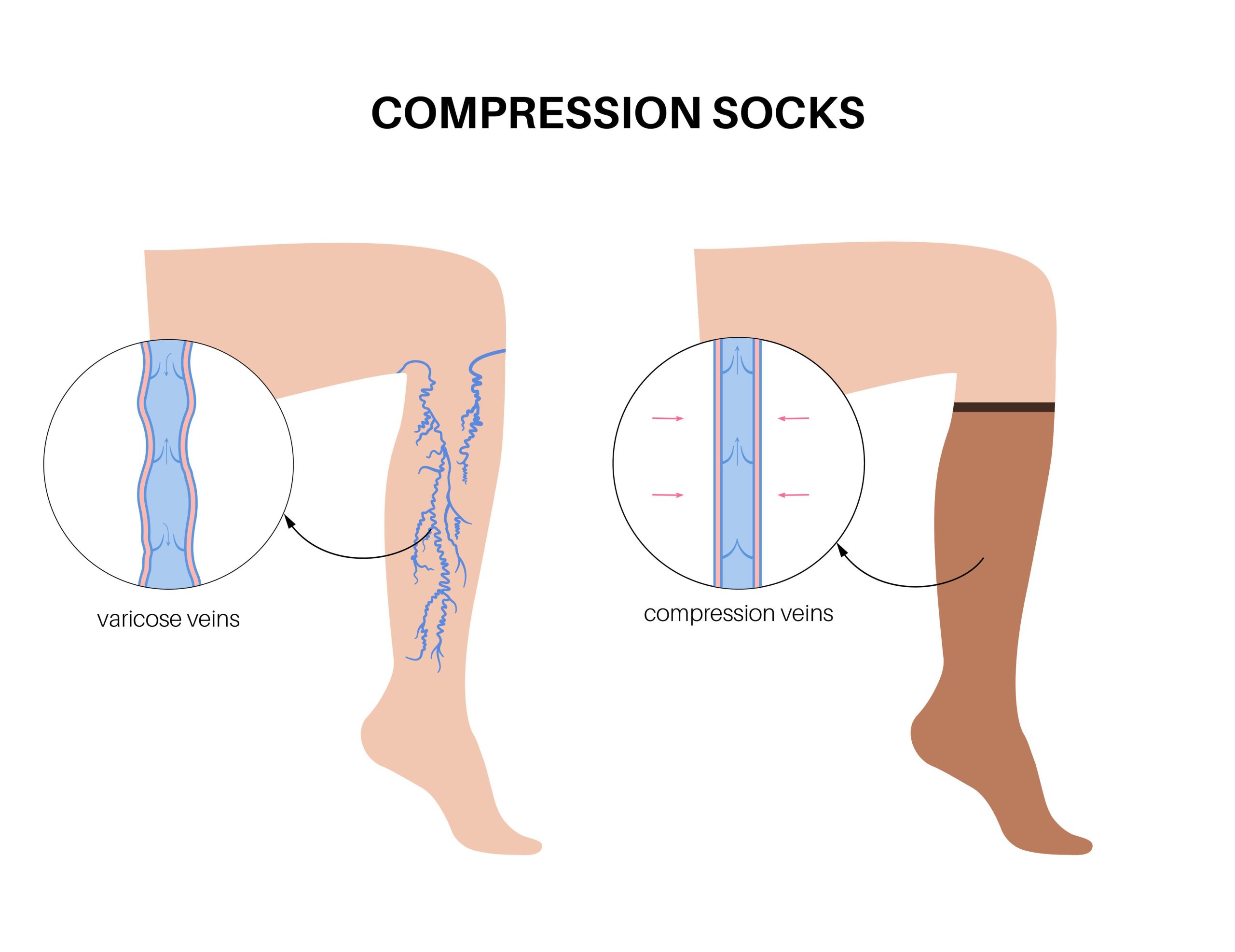
Controlled Pressure, Better Circulation
Compression systems may include elastic stockings, inelastic wraps or multi-layer bandages. The goal is to provide enough pressure to support circulation at rest while continuing to work effectively as you move throughout the day.
Different Systems for Different Needs
The right compression system depends on your diagnosis, symptoms, mobility and the recommendation of your vein specialist. Fit and application matter just as much as the compression level itself.
Compression Stockings
Medical-grade hosiery provides graduated pressure and is commonly used for ongoing venous symptom management.
Elastic Bandaging
Elastic wraps can provide sustained pressure and may be used when swelling or wound care needs make stockings less practical.
Multi-Layer Systems
Layered bandage systems can provide structured compression and are often used in venous ulcer management.
Compression Therapy Is Not Right for Everyone
Compression should be used under the guidance of a qualified medical professional. Patients with peripheral arterial disease or certain circulation problems may not be appropriate candidates because external pressure can further reduce arterial blood flow.
When Compression May Be Recommended
What Patients Often Ask About Compression Therapy
What is compression therapy?
Compression therapy uses stockings, wraps or bandage systems to apply controlled pressure to the legs. This helps support venous blood flow back toward the heart and can reduce swelling and blood pooling.
Who may benefit from compression therapy?
Compression may be recommended for patients with chronic venous insufficiency, venous reflux, leg swelling, venous leg ulcers or after certain vein procedures. A provider should determine whether it is appropriate for you.
Can compression help venous leg ulcers heal?
When arterial circulation is adequate, properly applied compression is an important part of treatment for many venous leg ulcers and can help reduce recurrence.
How do compression stockings work?
Compression stockings apply graduated pressure to the legs, typically with greater pressure near the ankle. This supports blood flow upward and helps reduce swelling and venous pressure.
Do I need compression after a vein procedure?
Compression is often recommended after treatments such as ablation, sclerotherapy or ambulatory phlebectomy. Your provider will tell you what type to use and how long to wear it.
Is compression therapy safe for everyone?
No. Patients with peripheral arterial disease or certain circulation problems may not be appropriate candidates. A medical evaluation is important before beginning compression therapy.