ClariVein
A minimally invasive, catheter-based treatment for unhealthy veins without thermal energy.
ClariVein® is a specialized vein treatment that combines mechanical disruption of the vein wall with controlled delivery of a sclerosant solution. A thin catheter with a rotating wire tip is positioned inside the targeted vein to help close the vessel and redirect blood through healthier veins.
Request an Appointment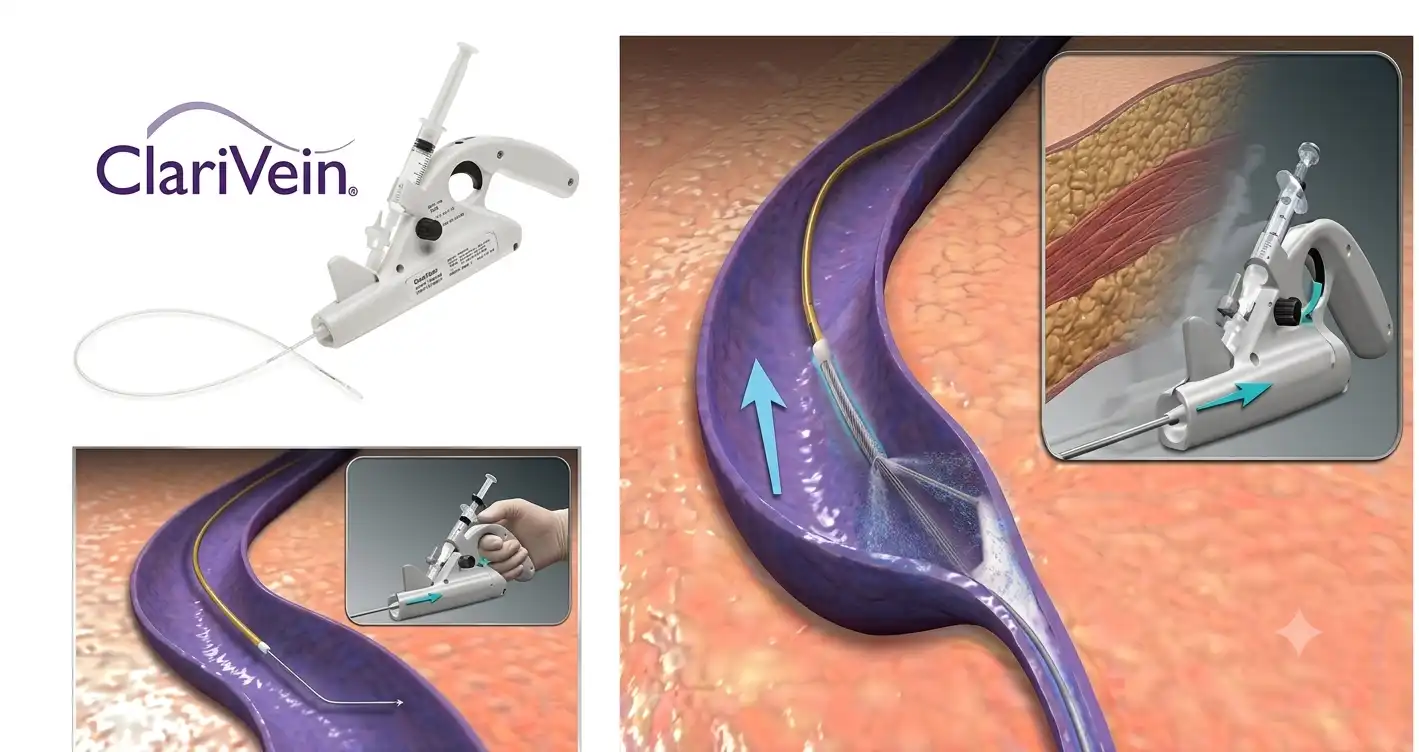
Mechanical And Chemical Vein Closure In One Treatment
ClariVein uses a rotating wire inside the vein while sclerosant is dispersed around the treatment area. This dual-action approach irritates the inner vein wall and helps the vein close, allowing blood to reroute through healthier vessels.
A thin catheter is inserted through a pin-sized access point into the targeted vein.
The catheter is advanced to the treatment area using image guidance.
The internal wire rotates to mechanically treat the vein wall.
Sclerosant is dispersed throughout the treated segment to promote vein closure.
Designed For A Comfortable Office-Based Experience
Because ClariVein does not rely on laser or radiofrequency heat, it typically does not require multiple injections of tumescent anesthesia along the length of the vein. This can make the treatment experience more comfortable for many patients.
Is ClariVein Right For You?
ClariVein may be considered for patients with certain types of symptomatic venous insufficiency or varicose veins. The right treatment depends on your vein anatomy, symptoms, ultrasound findings and overall health.
A Non-Thermal Alternative For Vein Closure
ClariVein offers another minimally invasive option for treating problem veins without using heat inside the vessel.
No Thermal Energy
The treatment closes the vein through mechanical action and sclerosant rather than laser or radiofrequency heat.
Small Access Point
The catheter is introduced through a pin-sized entry point rather than a surgical incision.
Less Need For Tumescent Anesthesia
Because the procedure is non-thermal, multiple injections around the vein may not be required.
Office-Based Treatment
ClariVein can be performed in an outpatient office setting with a relatively quick return to normal activity.
What Patients Often Ask About ClariVein
What is ClariVein?
ClariVein is a minimally invasive vein treatment that uses a rotating wire inside a catheter along with a sclerosant solution to help close an unhealthy vein.
Does ClariVein use laser or radiofrequency energy?
No. ClariVein is a non-thermal treatment, meaning it does not use laser or radiofrequency heat to close the vein.
Is anesthesia required?
A small amount of local anesthesia may be used at the catheter entry site. Because ClariVein does not use thermal energy, multiple injections of tumescent anesthesia along the vein are generally not needed.
What happens after treatment?
Patients are typically encouraged to walk after the procedure. Compression stockings are commonly worn for about a week or longer depending on your provider's instructions.
Will I need a follow-up ultrasound?
Yes. A follow-up duplex ultrasound is typically scheduled to confirm that the treated vein has closed as expected.
How do I know if I am a candidate for ClariVein?
Your provider will evaluate your symptoms, medical history and ultrasound findings to determine whether ClariVein or another vein treatment is best suited to your condition.